Carson Wood Flooring has handled wood-flooring in Alondra Park for more than 20 years, and a large share of that work is for owners who intend to stay in their houses for good. That goal changes what a good floor is. A glossy finish that photographs well can be the wrong call for someone who walks with a cane, and a new floor that stands a half inch proud of the hallway becomes an edge to catch a toe on.
So we plan these jobs around the person living in the house as much as around the boards. We talk through sheen and traction before a finish is chosen, measure every doorway where two surfaces meet, and sequence the rooms so a bedroom, a bathroom and the kitchen stay usable throughout. We also open and check the subfloor before pricing anything, because a soft spot found after the new floor is down means a second disruption nobody wants.
What follows covers the decisions that matter most when the aim is a floor someone can live on safely for the next twenty years, along with a plain account of where a county senior repair program fits and where it stops. None of it calls for a remodel. Most of it comes down to choices made at the start of an ordinary floor job, before the first board is cut.
Owners Who Have Stayed, in Houses Built for a Different Era
The numbers behind this page come from the Census Bureau’s American Community Survey. Of the 1,484 owner households in Alondra Park, 694 are headed by someone 65 or older, which is 46.8 percent, and 138 of those are headed by someone 85 or older. About 30.5 percent of owners moved in during 1989 or earlier, so many of the people we meet here have walked the same hallways for decades.
Who Is Walking on These Floors
A floor for an 85-year-old homeowner has different priorities than a floor for a young family. Traction matters more than showroom shine, a level path from bed to bathroom matters more than a pattern, and the schedule has to respect someone who may not be able to leave for a week. We ask early whether anyone in the house uses a walker, a wheelchair or a cane, because the answer shapes species, finish and transitions.
What a 1950s House Brings to the Job
The 1950s were the peak building decade here, accounting for 38.5 percent of housing units, and 57.2 percent of units went up before 1960. Houses of that age carry layers: carpet over older flooring, patched decking, and sometimes 9x9 asbestos floor tile set in black mastic. We treat old tile and dark adhesive as a possible asbestos question and arrange an asbestos survey before anything is scraped or sanded.
Nearly every house here also predates 1978, so we follow the EPA Renovation, Repair and Painting rule when a job disturbs painted baseboards, door casings or trim. Before any material is ordered we take wood moisture meter readings in the subfloor and write them down. New boards then acclimate in the rooms where they will be installed, with moisture content logged on arrival and again before installation.
Checking What Sits Under the Old Floor
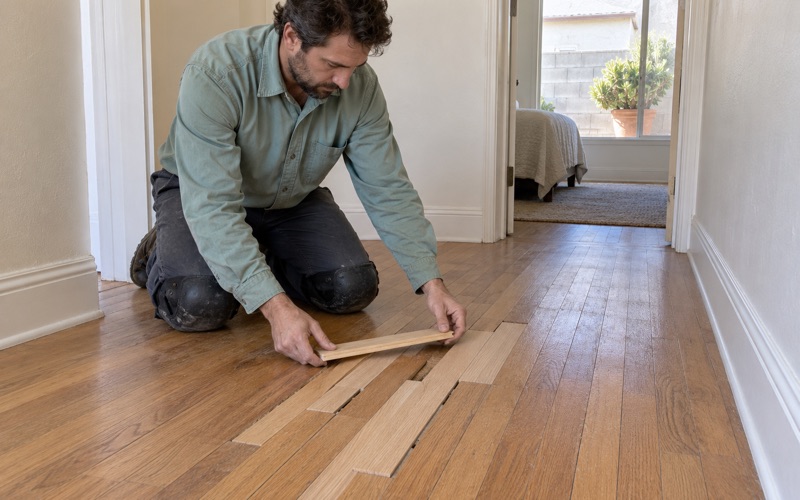
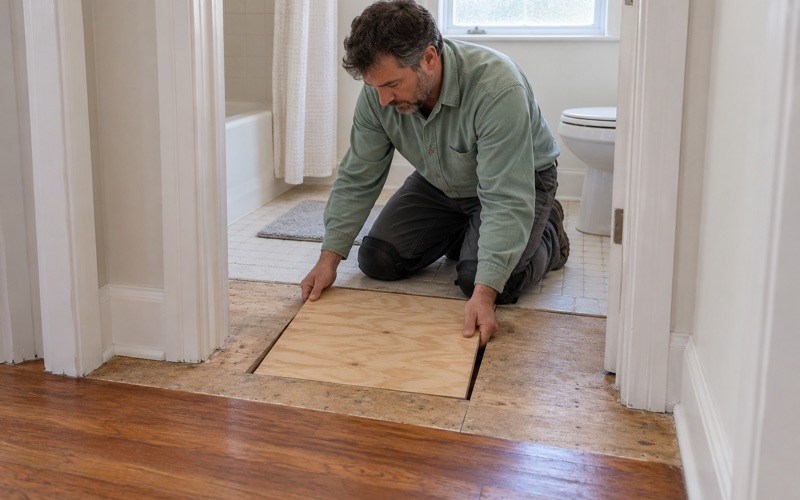
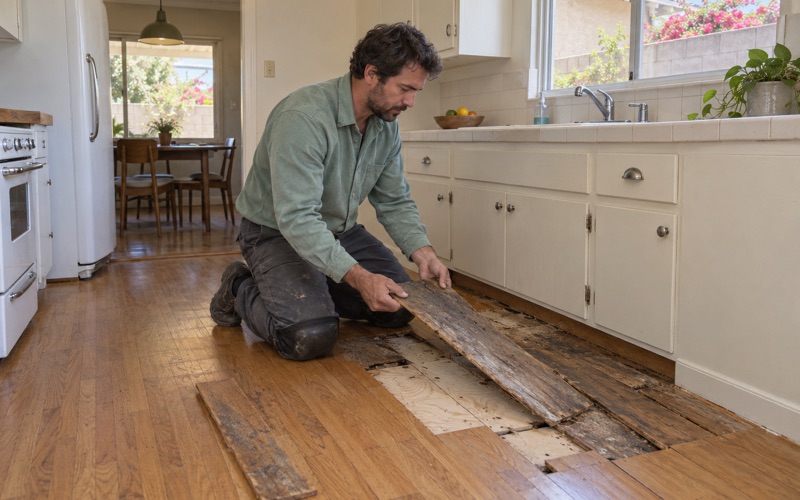
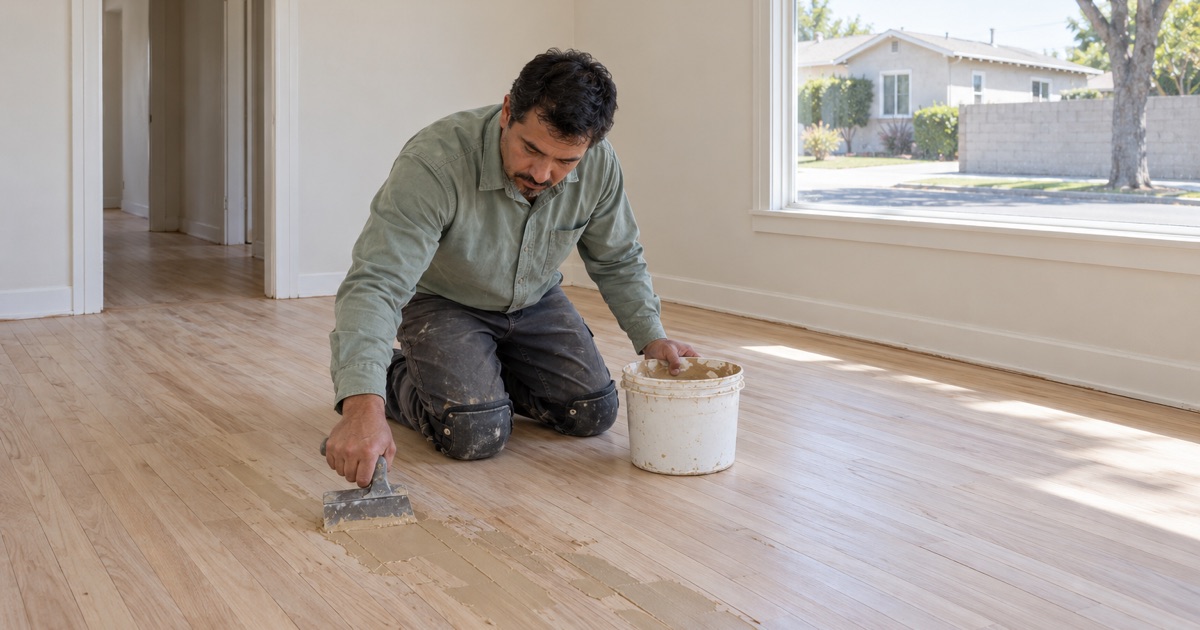
A floor that flexes, dips or squeaks is more than an annoyance for someone unsteady on their feet. Before we price the finish floor, we open the old surface and check the decking and joists for soft spots, water-swollen panels and sloping floors. Where a joist has sagged, sistering a new member alongside it can bring the surface back to level, and we would rather find that now than after new boards are down.
Looking for wood-flooring closer to Long Beach? See Wood-Flooring Services in Long Beach.
Slip Resistance, Finish Choice and Level Transitions
No finish makes a floor slip-proof, and we will not quote a traction number we cannot source. What we can do is steer away from the choices that make wood slicker than it needs to be, and remove the small height changes that cause more falls than the boards themselves.
Sheen and the Choice of Finish
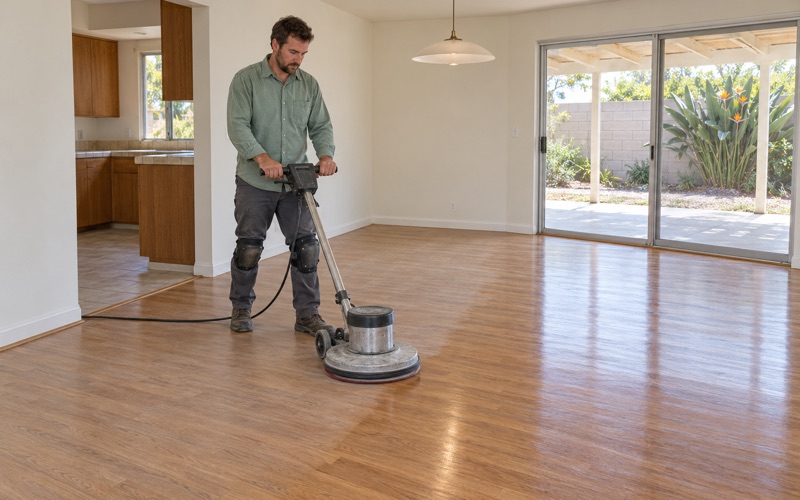
Sheen level affects how a floor feels underfoot and how much glare it throws back at aging eyes. We usually recommend a matte or satin waterborne polyurethane for households focused on safety, since high-gloss coats can look wet and show every scuff. A hardwax oil finish is another option with a low-luster, textured feel, though it needs more routine maintenance than a cured polyurethane.
Whatever the product, it has to be legal to apply in the South Coast air basin. Under SCAQMD Rule 1113, wood coatings are capped at 275 g/L of VOC, and we choose finishes within that limit. Lower-odor waterborne products also suit a house where someone will be sleeping a room or two away from wet finish.
Species, Hardness and Wheels
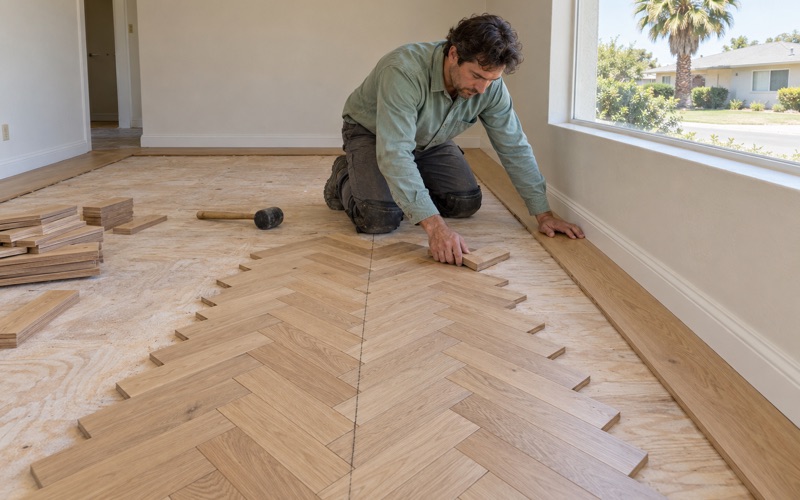
Walkers, wheelchairs and rolling shower chairs are hard on a soft floor. The Janka hardness rating gives a fair comparison between species, and harder choices such as white oak, hickory or maple resist denting better than softer woods. We also look at wear layer thickness on engineered boards, since a thicker layer leaves room for a future sanding instead of a replacement.
Thresholds Between Rooms
The most common hazard we find in older homes is not the floor surface but the edge where it changes. A new floor laid over an existing one can sit well above the tile in a bathroom or the vinyl in a kitchen, leaving a lip at every doorway. We choose board thickness and installation method with those neighboring floors in mind so the finished surfaces meet as close to flush as the house allows.
Where a small height difference remains, a low-profile reducer strip or T-molding tapers it instead of leaving a square step. We measure each opening before ordering material, and we set shoe molding tight to the baseboard so there is no gap at the wall for a walker leg to catch. Loose rugs are the other culprit, so we suggest removing them or using a gripping pad once the new floor is in.
Taking Layers Out Instead of Building Up
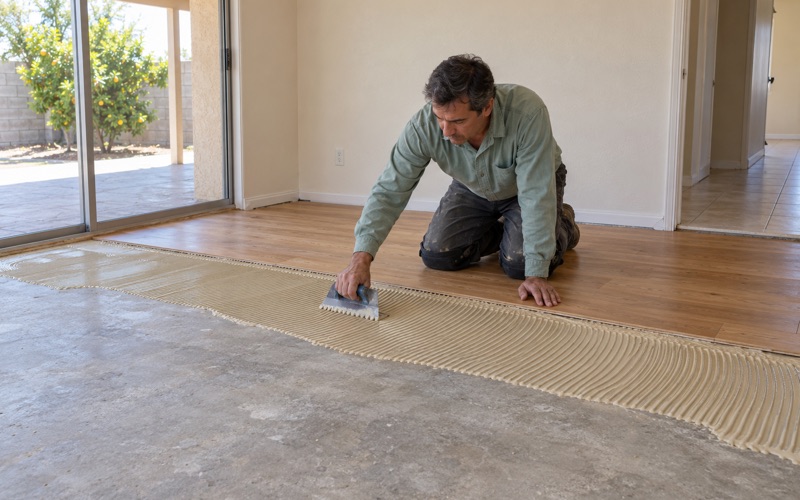
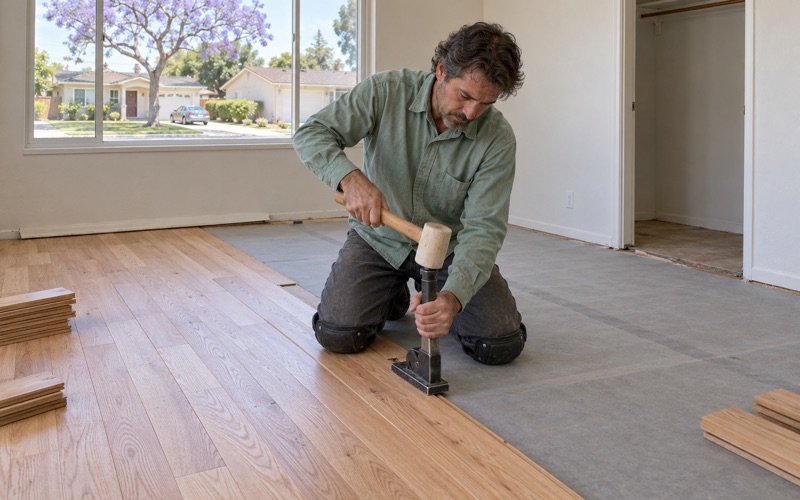
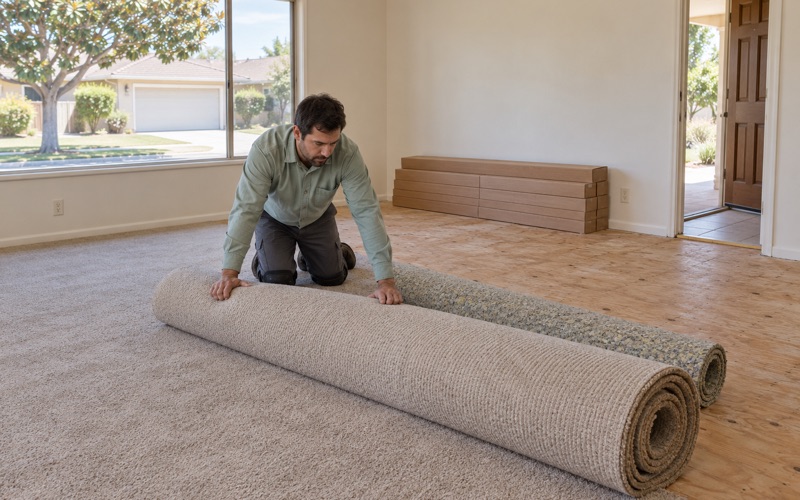
The easiest way to keep doorways level is often to remove the old flooring rather than cover it. Pulling up worn carpet, pad and tack strip usually gains back enough height that a new floor can meet the adjoining rooms cleanly. We also weigh how the floor feels underfoot: a nail-down or glue-down installation gives a solid, quiet surface, while a floating installation over a pad can feel softer and shift slightly under a walker or wheelchair.
Entry Steps and Stairs
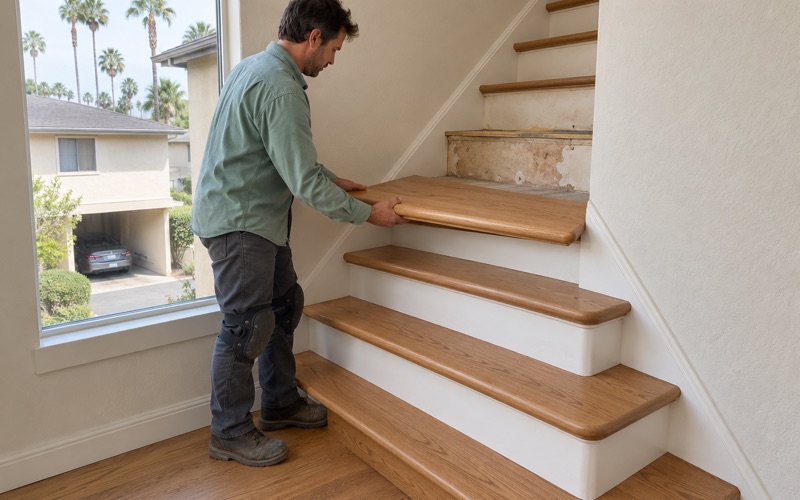
Where a house has an entry step, a sunken room or a short flight of stairs, the edges deserve the same attention as the flat floor. We fit a solid stair nosing with a clear, square profile and match the finish on each stair tread to the room it serves, keeping traction consistent from one surface to the next. Stairs are priced per tread and riser rather than folded into a square-foot number, so the cost of making them safer shows up on its own line.
Floor Work While Someone Lives in the House
Many owners here cannot simply move out for a week, and some should not have to. We build the job around the resident rather than asking the resident to work around the job.
Phasing Room by Room
We split the house into stages so a working bedroom, a bathroom and a way in and out stay open at every point. Furniture moves into rooms that are already finished or not yet started, and we agree on the order in writing before the first board comes up. If the bedroom has to be done, we plan it so the resident spends as few nights elsewhere in the house as possible.
Dust, Odor and Cure Times
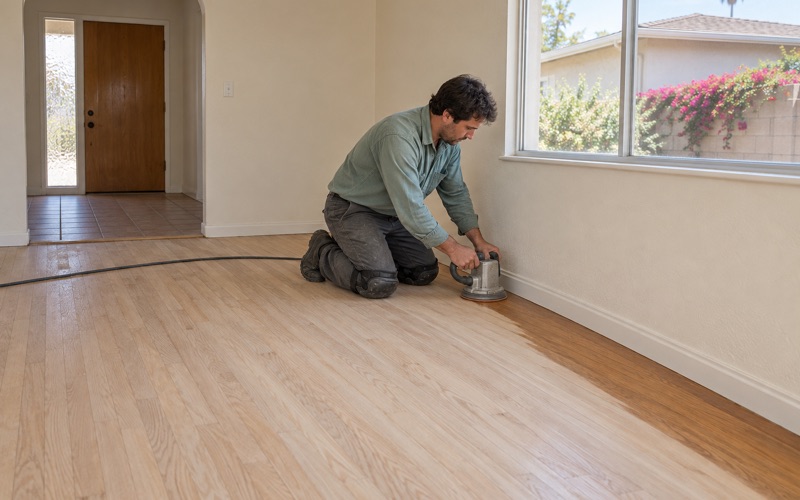
Sanding an old floor makes fine dust, which is a real concern for older lungs. We use a dustless sanding system connected to the drum sander, edger and orbital sander, and we seal the work zone with plastic barriers and closed doorways. That containment matters twice over in a pre-1978 house, where dust from painted trim is kept separate from living space.
Every household gets a written cure schedule showing when each room can take socks, when it can take shoes, and when furniture and rugs can return. That schedule tells a caregiver exactly when a walker can cross a floor again, instead of leaving the family to guess.
Keeping a Clear Path
We keep a marked, clear route through the house each working day, with cords taped down and tools out of the walkway. At the end of each day we sweep and leave the path open, so a resident moving at night does not meet a surprise. If a caregiver visits on a set schedule, we plan around those hours too.
What the County Senior Grant Does and Does Not Cover
Alondra Park is unincorporated Los Angeles County, and it is also known as El Camino Village, which the Second Supervisorial District lists among its unincorporated communities. That matters because the Los Angeles County Development Authority runs a Senior Grant Program for owner-occupants 62 or older in unincorporated Supervisorial Districts 1, 2, 4 and 5. The maximum grant amount is $20,000.
What the Program Lists
The program’s eligible items include wheelchair ramps, grab bars, widened doorways, non-slip floor covering and conversions from tubs to roll-in showers, along with deferred maintenance repairs such as roofing, plumbing, electrical or heating. It also sets conditions: the home must be a single-family house, condominium or townhome, the applicant must live there as a primary residence, ownership must be at least 12 months old, and household income must fall under a cap set at 80 percent of the county median.
The program’s list does not name hardwood refinishing or installation, and the county decides eligibility and scope, not us. The separate LACDA Handyworker Program covers only the First, Fourth and Fifth Districts and lists no floor repairs, so it is not a route for a floor here.
How We Fit Around It
If a household is applying, we can provide a written estimate that describes each floor item separately, including any transition work and subfloor repair, so the application reflects the actual scope. A threshold change, a reducer strip and a repaired section of decking each get their own line, which makes the work easier for a reviewer to match against the program’s list. Any decision about what the grant will fund stays with the county.
- 20+ Years on Wood Floors
- Moisture Readings in Writing
- Air-Basin-Compliant Finishes