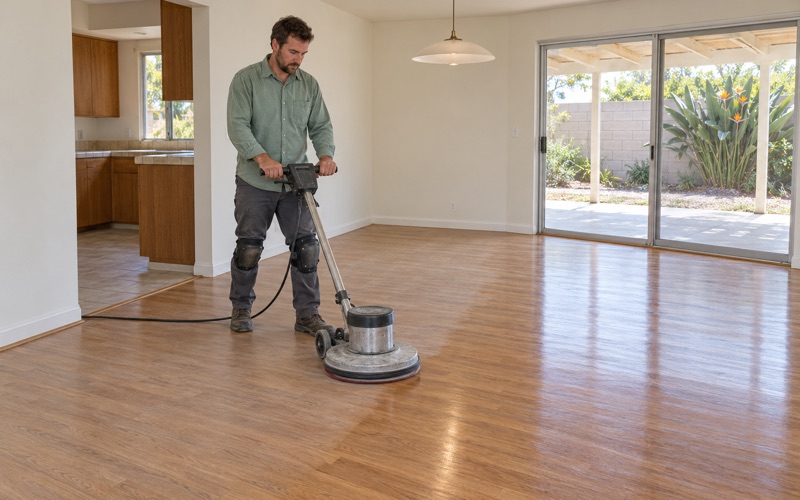
Carson Wood Flooring has handled wood flooring in Commerce for more than 20 years, and the work here is shifting because the city is adding homes again. For most of that time, a Commerce floor job meant an existing house: sanding a worn finish, replacing damaged boards, or pulling up an old covering to put something new down. That is still most of what we do, but a second kind of floor is now on the way.
Newly permitted units and accessory dwelling units bring floors that start life on the first day of occupancy, installed by whoever built the unit. Those floors need different attention than a floor that has carried decades of foot traffic. We plan for both, and we explain which kind of care your floor actually needs before we price anything.
Whether you own an older house, rent one out, or expect to move into something newly built, the approach stays the same. We measure moisture, check what is underneath, and put the numbers in writing so the estimate rests on the floor you have rather than a guess.
Commerce Is Building Homes Again
A Housing Stock That Stood Still
The American Community Survey’s 2024 five-year estimates count 3,381 housing units in Commerce and none built in 2010 or later. More than half of the city’s homes, 52.2 percent, went up between 1940 and 1959. For a flooring contractor, that means a floor in Commerce is often either original to an older house or a replacement laid in place of one.
That count is an estimate from a survey sample, and it runs on a different basis and a different time window than a city permit log. It describes the housing that existed when the survey was taken, which is why we use it as context rather than as the last word on what is underway now.
What the Housing Element Record Shows
The City of Commerce 2021-2029 Housing Element Update, received by the State Clearinghouse in July 2024, sets out an assigned regional housing allocation of 247 units for the planning period. As of May 2023, the record says, the city had issued permits for 31 new units and approved entitlement for 102 more. It also counts 16 projected ADUs toward the target, and with those the city reports it has met its allocation for above moderate income units and a portion of its lower and moderate income units.
The remaining need, 105 units, falls in the extremely low, very low, low and moderate income categories. The record places 29 of those on City-owned vacant and underutilized sites in existing residential zones and the other 76 on City-owned nonresidential sites the city is proposing to redesignate as mixed use. A permit or an entitlement is a step in the process, not a finished home, so we treat these numbers as a pipeline rather than a count of new floors already in place.
Why This Matters for Floors
New construction changes what homeowners ask us. Instead of how to save a worn floor, the question becomes how to protect a new one and what to do the first time something goes wrong with it. Commerce has not had to ask that question in a long time, and the answers are not the same ones that fit a mid-century house.
Looking for wood-flooring closer to La Palma? See La Palma Wood-Flooring.
Floors in a Newly Built Home or ADU
What Arrives With the Unit
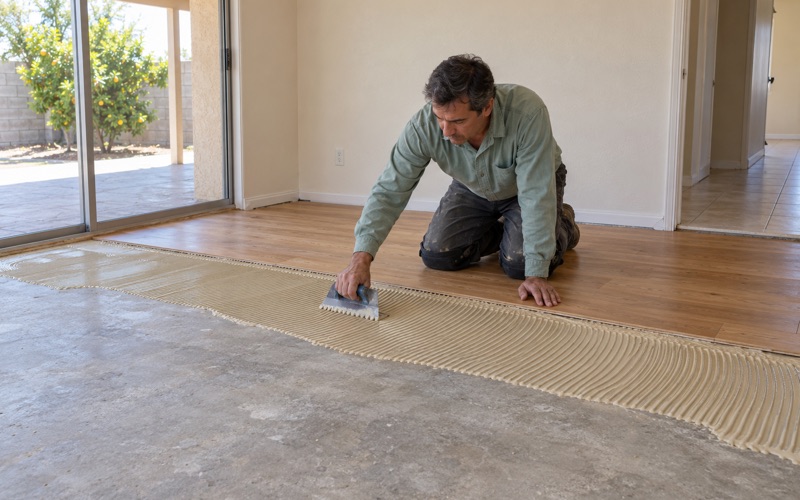
A new home or ADU comes with whatever floor the builder chose, and we cannot tell you in advance what that will be. It may be site-finished solid hardwood, a prefinished engineered plank, or something that is not wood at all. The first thing we do on a new-construction floor is identify what it is and whether it went down as a nail-down, glue-down or floating installation, because each one is repaired differently.
Engineered flooring deserves a closer look than it usually gets. The wear layer thickness decides how many times the surface can be sanded, if at all, and a thin layer may accept a screen and recoat but not a full sand. Knowing that number before the first scratch appears saves an owner from assuming a refinish is always an option.
Moisture in a Brand-New Building
New buildings can hold construction moisture in framing, drywall and any concrete for months. Before we add to, repair or replace a floor in a recently built unit, we take readings with a wood moisture meter and, where concrete is involved, run an ASTM F2170 in-situ relative humidity test or a calcium chloride test. The readings go on paper so you have a record of the conditions at the time of the work.
That record matters if a problem appears later. Cupping, crowning or gapping in a new floor often traces back to moisture that was present before anyone moved in, and a dated reading helps separate a building condition from an installation or care issue.
Adding Wood to a New Unit
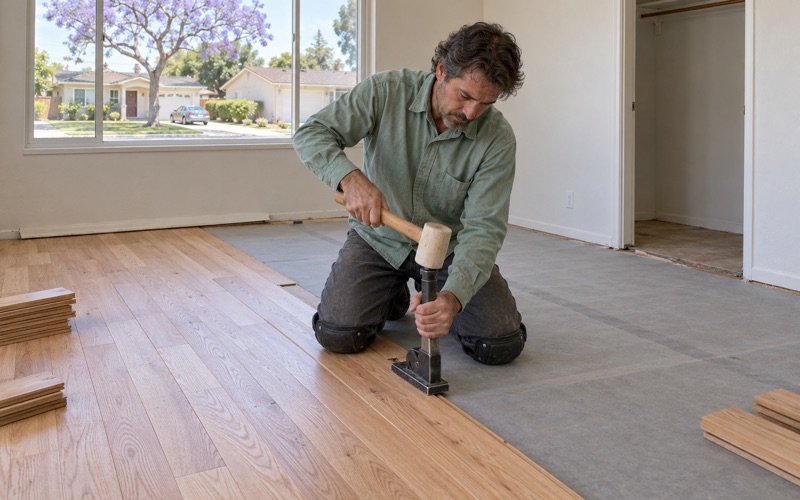
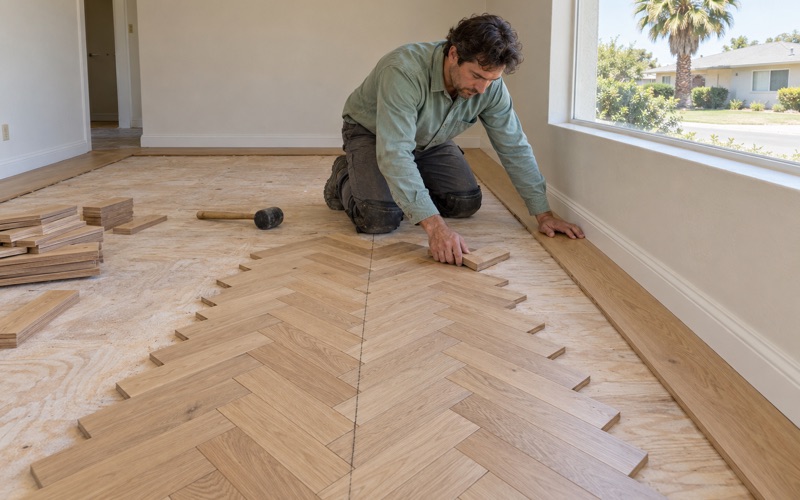
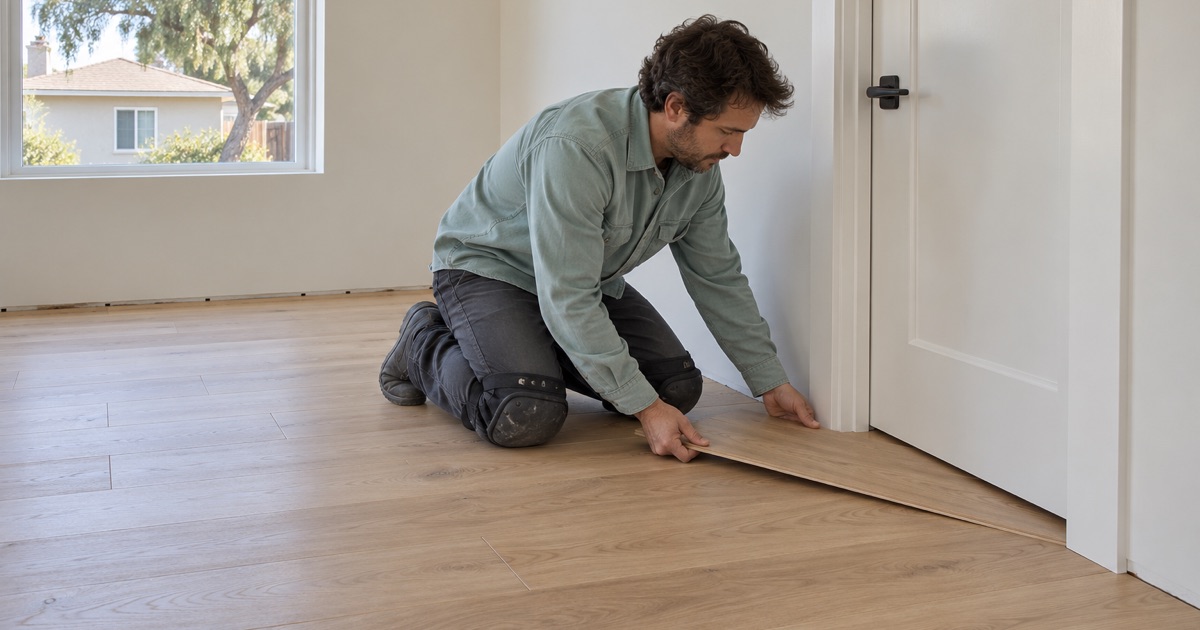
Some owners of new units want to replace the original floor or extend wood into a room that was finished in something else. When new material comes into the home, we acclimate it in the rooms where it will be installed and log its moisture content on arrival and again before installation. We follow NWFA installation guidelines for fastening, expansion gaps and transitions such as T-molding and reducer strips, so the new section behaves like part of the floor rather than a patch beside it.
Caring for a New Floor in Its First Years
The First Season
A new floor goes through its first full cycle of seasons after move-in, and some movement is normal. Small board gaps that open in drier months and close again are part of how solid wood behaves. What we look for is the movement that does not reverse: persistent cupping, raised edges or buckling, which point to a moisture source that needs to be found.
Furniture pads, a doormat at every exterior entry and a cleaner approved by the finish manufacturer do more for a new floor than any product sold as a restorer. Wet mopping and steam cleaners are the most common ways we see a young floor’s finish dulled or its seams swollen.
Screen and Recoat Before It Needs a Sand
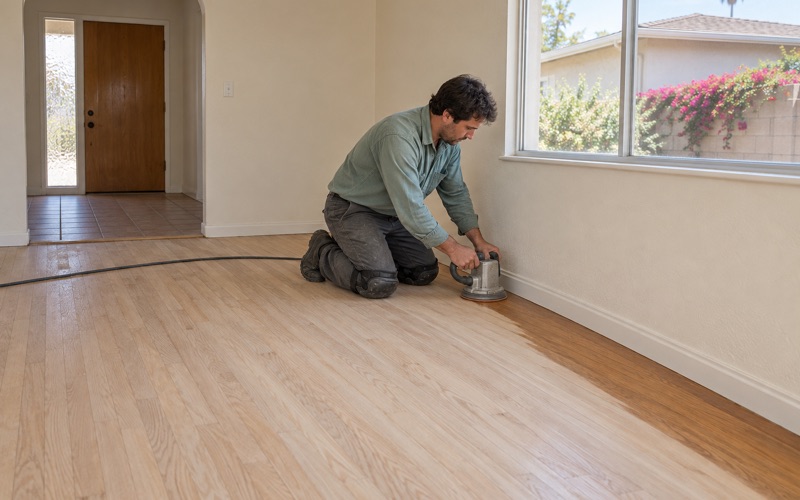
A factory or site-applied finish wears first in walkways, near entries and in front of kitchen counters. If the wear is still only in the finish and not into the wood, a screen and recoat can refresh the surface without sanding into the wear layer. On an engineered floor with a thin wear layer, that is often the best maintenance available, and doing it on time extends the life of the floor.
When we recoat, we use finishes legal to apply in the South Coast air basin under SCAQMD Rule 1113, which caps wood coatings at 275 g/L of VOC. Waterborne polyurethane is the usual choice in an occupied home because it dries faster and carries less odor. You also get a written cure schedule showing when each room can take foot traffic and when furniture can go back.
Documenting Problems on a Young Floor
If a newly built home is still inside a builder’s warranty period, read the warranty terms before hiring anyone to alter the floor. We can document what we find, including photos and moisture readings, so you can bring it to the builder or an insurance adjuster. Our assessment is written for you as the owner or tenant, not for anyone else involved in the building.
When a Newer Floor Sits Beside an Older House
Two Kinds of Floors on One Block
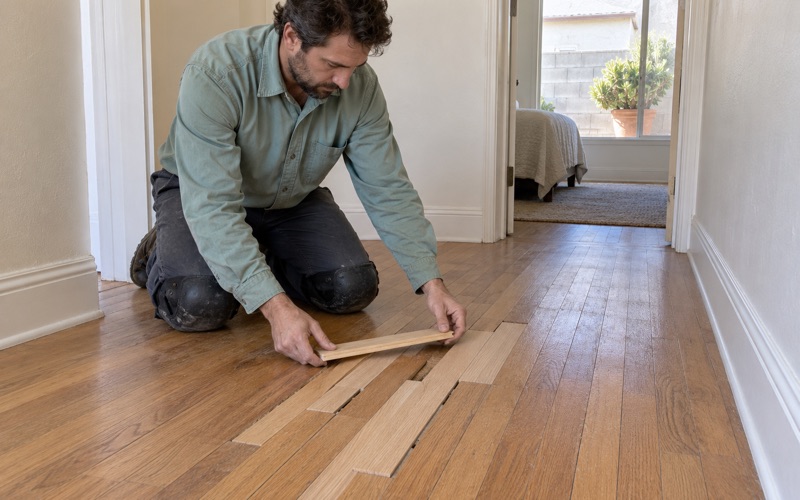
Commerce’s new units, wherever they end up, will stand among houses built largely in the 1940s and 1950s. The floors in those older houses need refinishing, board replacement, squeak repair and sometimes structural work beneath the boards, which is a different job from caring for a floor that went down a few years ago. We price them differently because the risks are different.
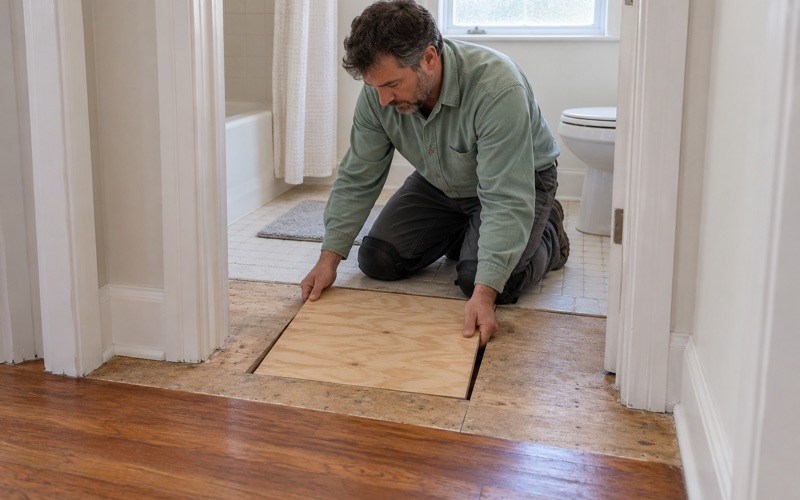
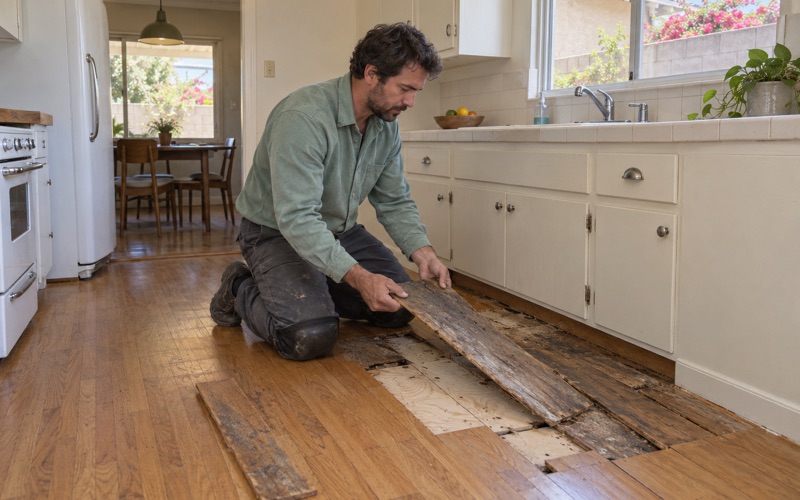
In an older house, we open and check the subfloor before any finish floor is priced, looking for soft spots, water-swollen decking and floor joists that need sistering. A sloping floor or a persistent squeak usually has a cause below the surface, and fixing only what you can see just produces a callback.
What Changes in Pre-1978 Housing
The survey estimates put 57.2 percent of Commerce’s housing units before 1960, well inside the pre-1978 housing the EPA Renovation, Repair and Painting rule addresses. On those houses we follow lead-safe work practices: containment, dust control and cleanup built around the possibility of lead in old paint on baseboards, shoe molding and stairs.
Old flooring layers raise a second question. Where 9x9 floor tile or black mastic turns up under a covering, we treat it as a possible asbestos issue and stop before anything is sanded or scraped, since SCAQMD Rule 1403 and an asbestos survey govern what happens next. A newer unit does not carry those concerns in the same way, which is one more reason the two kinds of jobs are estimated separately.
Matching Old and New
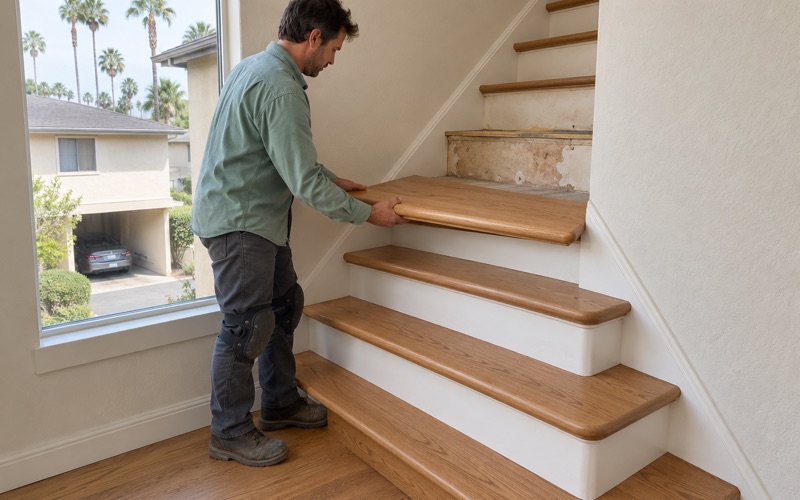
Owners sometimes want an older home’s floor to look like the newer construction around it, or the reverse. Refinishing can change a floor’s color and sheen level substantially, and weave-in repairs let new boards blend into an existing field when the species and width can be matched. Stairs are priced per tread and riser, so a stair refresh does not get buried in a square-foot number.
Written Estimates That Hold Up
Every estimate and invoice we write itemizes the work, which helps a landlord document repair costs at move-out under California’s security deposit law. The same paperwork serves a new-unit owner sorting out a warranty or insurance question. In both kinds of Commerce homes, the floor gets measured, tested and written up before anyone touches it with a sander.
- 20+ Years on Wood Floors
- Moisture Readings in Writing
- Air-Basin-Compliant Finishes