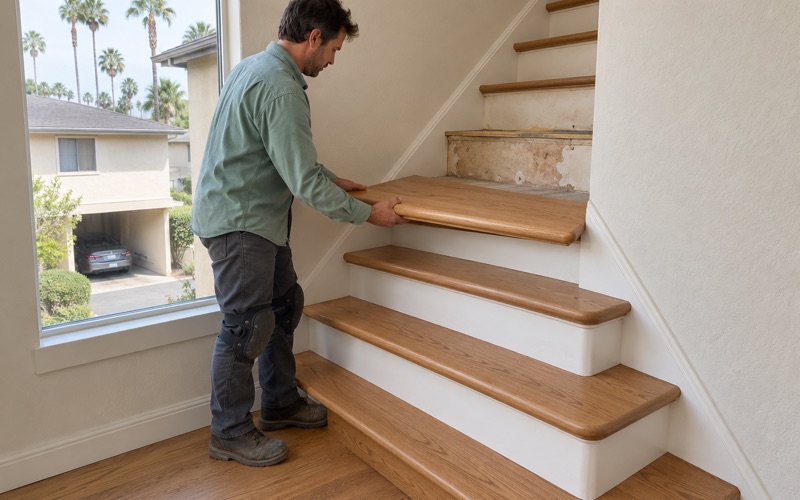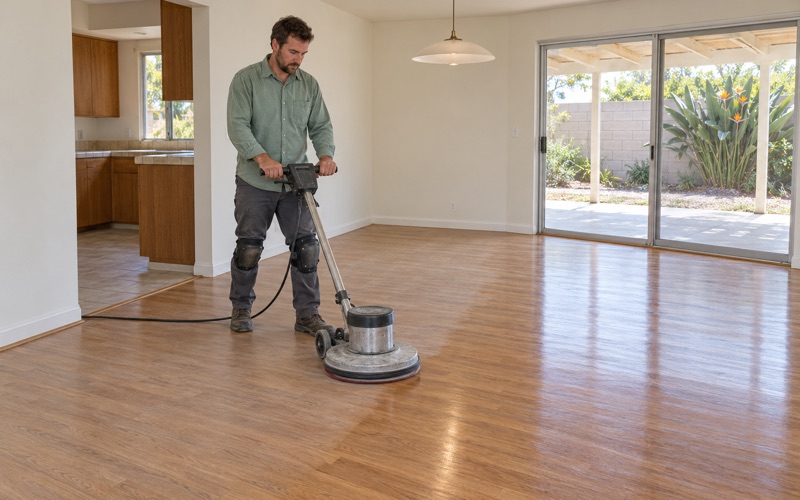
Carson Wood Flooring has spent more than 20 years on wood flooring in Compton and the neighboring cities, and much of that work happens in houses that are halfway through a larger repair. The owner has usually already dealt with a leak, a roof or a termite report, and the floor is the last thing standing between the house and a finished job. Our part is to tell you honestly which boards can be saved, which cannot, and when in the sequence the floor should be touched.
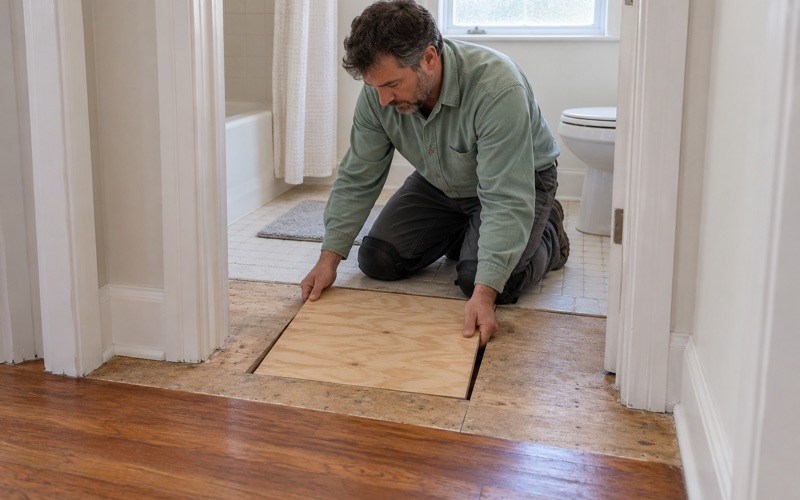
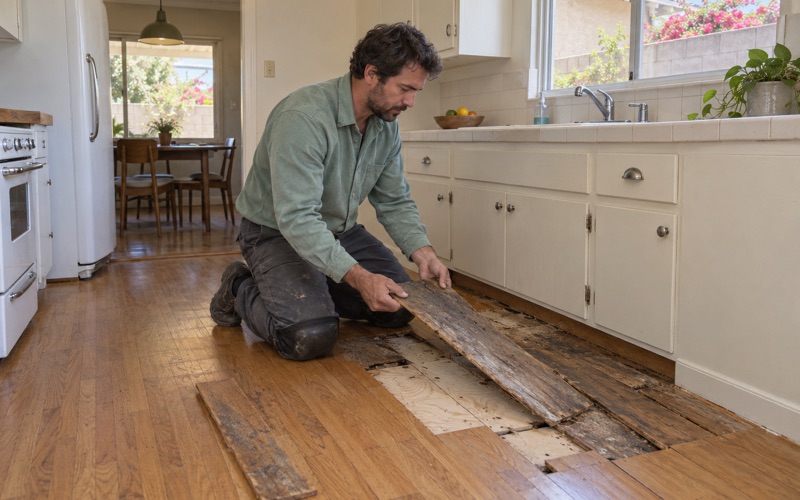
That honesty starts with a look underneath. Before we price anything, we open the floor at a damaged spot and check the decking and framing below, so a soft area or a swollen panel shows up in the estimate rather than halfway through installation. We measure moisture in the existing wood with a meter and write the readings down, because a floor that is still wet from a recent plumbing repair will move after it is sanded or replaced.
The result is a written plan: what gets repaired, what gets replaced, what has to wait for another trade, and what each step costs. If you are fixing up a house to live in, rent out or sell, that plan is what lets you schedule the rest of the job around the floor instead of the other way around.
What Compton’s Own Housing Survey Found
The clearest picture of the work in this city comes from the city itself. Compton’s housing element, adopted in 2020, reports that in a 2011 survey city staff estimated approximately 45 percent of housing units required substantial rehabilitation. That was a staff estimate made more than a decade ago, not a count of substandard homes today, but it describes the kind of house we are usually called into: one with several overdue repairs stacked on top of each other.
The Age of the Housing Stock
The same document explains why. A majority of residential building in Compton happened between 1940 and 1959, and census figures put 58.6 percent of the city’s housing units before 1960, with the 1950s the single busiest decade at 28.5 percent. The housing element notes that housing over 30 years old typically needs some form of major rehabilitation, such as a new roof, foundation work and plumbing. By that yardstick, nearly every older house in the city has been due for that kind of attention for a long time.
Mostly Detached Houses, Mostly Owner-Run Projects
Among Compton’s owner households, 90.7 percent live in detached houses. That matters for floor work because a detached house puts every decision in one set of hands: nobody else’s unit sits above or below, and the owner controls the order of repairs. It also means the owner carries the whole sequence, from the roofer to the plumber to the floor crew, and a mistake in that order is paid for twice.
Why the Floor Comes Near the End
Wood flooring is one of the most finish-sensitive parts of a house. It reacts to water, to foot traffic from other trades and to changes in humidity. In a house with a long repair list, the floor is the part we most want to protect from the rest of the work, which is why our first recommendation is usually about timing rather than material.
Looking for wood-flooring closer to Wilmington? See Wilmington Wood-Flooring.
Repairing Boards or Replacing the Floor
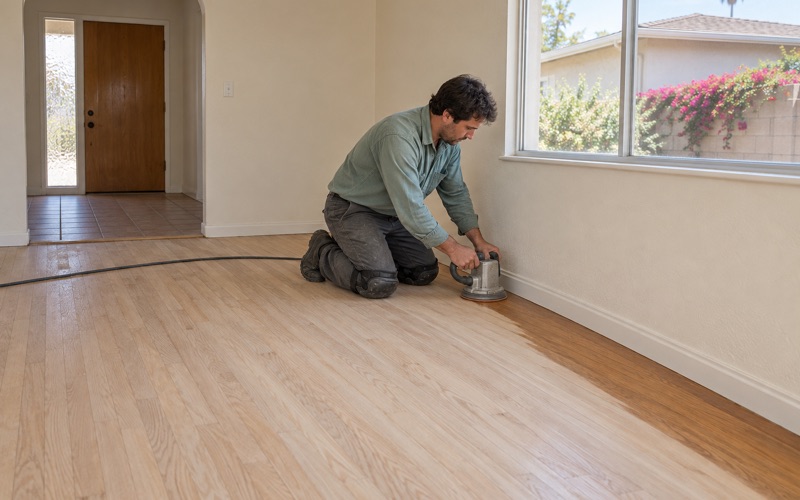
The question we hear most in older Compton houses is whether a worn, stained or damaged floor can be brought back. Often it can. A solid wood floor that has lost its finish, grayed in traffic lanes or picked up pet urine stains may only need a careful sanding and a new finish. The deciding factors are how much wood is left above the tongue, how widespread the damage is and whether the boards are still flat.
When Board Replacement Works
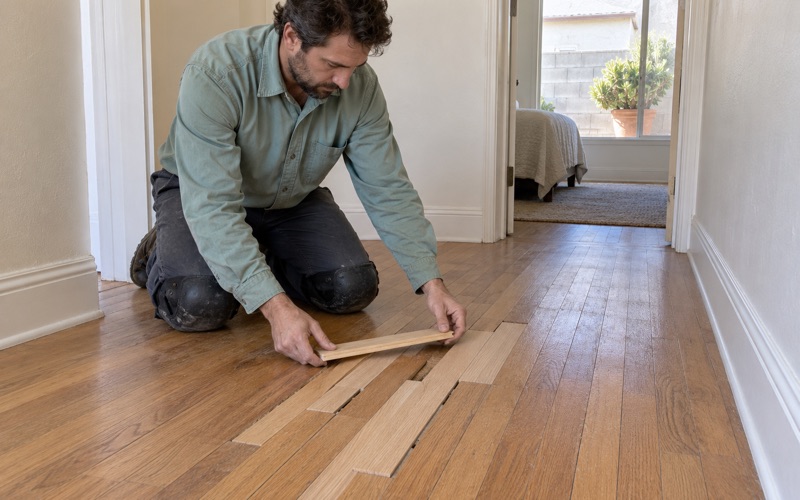
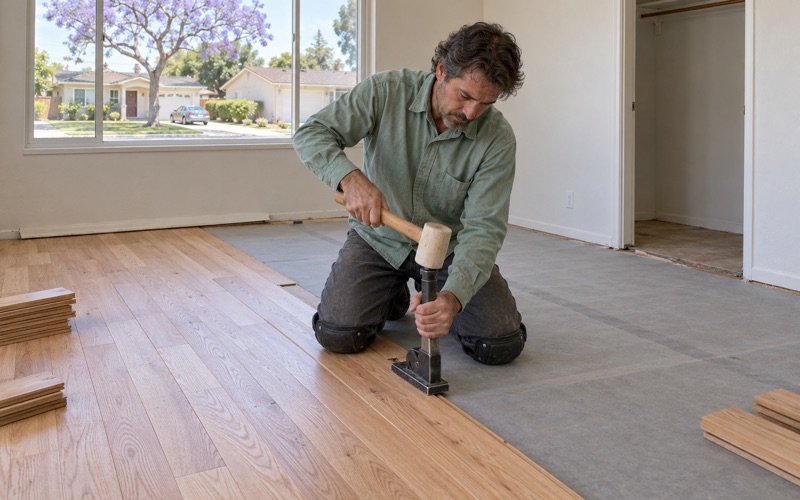
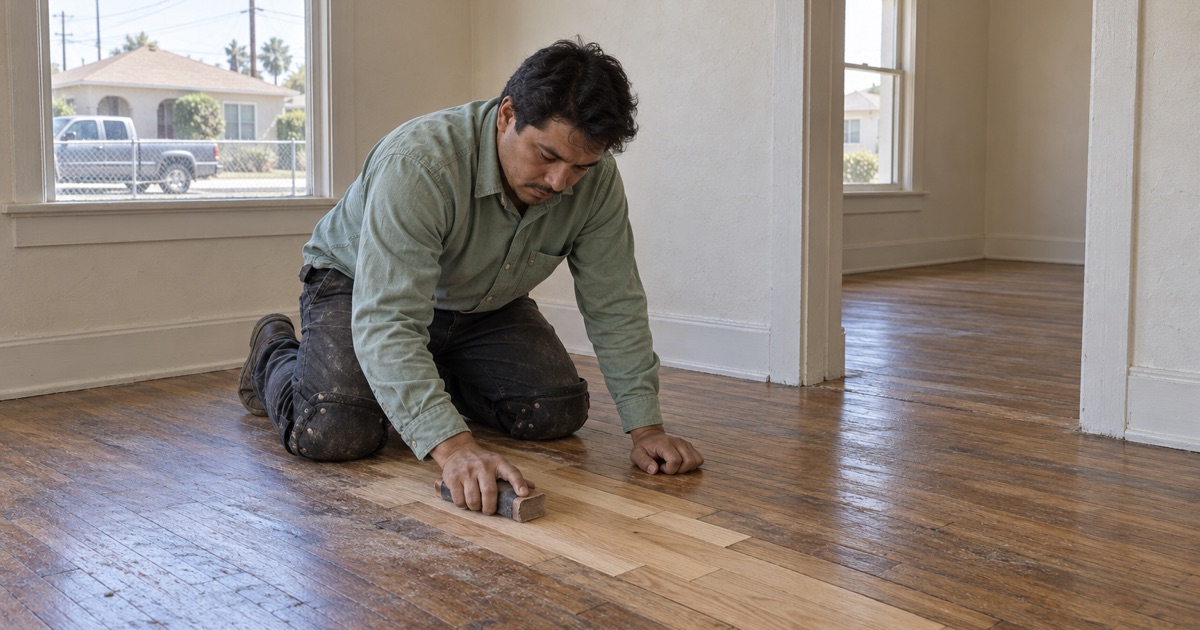
Where damage is local, such as a few boards around a leaking dishwasher, a toilet flange or a doorway worn through, we cut out the affected boards and weave new ones into the existing field. A weave-in repair staggers the new board ends into the old floor so the patch does not read as a square. We match species, width and thickness as closely as the existing boards allow, then sand the whole room so the repaired area and the original floor take the same finish together.
When the Floor Has to Come Out
Some floors are past saving. Boards that have been sanded too many times show exposed tongues or nail heads. Floors that stayed wet long enough can show cupping, crowning or buckling that sanding will not correct, and floors with extensive termite frass or powderpost beetle damage have lost structure, not just appearance. In those cases we recommend replacement and explain why in writing, with photos of the boards and the moisture readings that led to that call.
What Might Be Under the Floor
In a house this age, we do not assume the top layer is the only layer. Old 9x9 floor tile and black mastic were common in mid-century houses, and both are treated as a possible asbestos question before anything is sanded or scraped. Paint on base trim and door casings in pre-1978 housing is handled under EPA Renovation, Repair and Painting rule work practices. Neither issue decides whether a floor is repaired or replaced, but each one changes how the work is done and what it costs.
Floors After Termite, Roof and Plumbing Work
The housing element lists roofs, foundations and plumbing as the major repairs older houses need, and those are exactly the repairs that damage a finished floor. The order of work matters. We would rather install or refinish once, after the house is dry and the other trades are out, than refinish a floor that a plumber has to open again next month.
After Termite Treatment
Drywood termite work often uncovers damage in trim, baseboards and floor boards near exterior walls. Kick-out holes and frass along a baseboard do not always mean the floor is affected, so we probe and inspect the boards once treatment is done. Damaged boards come out and are replaced, and if the damage reaches a floor joist we stop and bring the owner into the decision before anything is covered, because joist repair belongs ahead of any finish floor.
After a Roof or Plumbing Repair
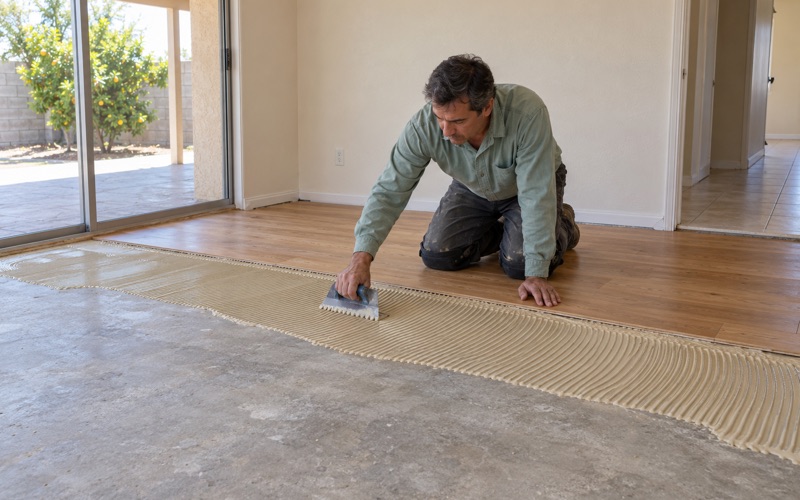
A roof leak or a burst supply line can leave water in the subfloor long after the surface looks dry. We trace the water back to its source and take moisture readings in the wood and in any concrete below before recommending repair or replacement. Photos and readings are recorded so they can go to an insurance adjuster if a claim is involved. New flooring material is acclimated in the rooms where it will be installed, with its moisture content logged on arrival and again before it goes down.
Keeping Other Trades Off a New Finish
When the floor is finished last, we give the owner a written cure schedule that says when each room can be walked on, when furniture can return and when rugs can go down. Dust containment during sanding keeps the rest of the house usable. The finishes we apply are chosen from products that meet the South Coast Air Quality Management District’s 275 g/L VOC limit for wood coatings under Rule 1113, which applies across Compton and the rest of the basin.
Correction Notices and Planning the Work
Compton has adopted property maintenance codes that define conditions for substandard properties and set requirements for keeping property maintained. The city’s Code Enforcement Division enforces state and local laws for health and safety, basic property maintenance standards and land use regulations. The city also runs a systematic, block-by-block program of enforcing nuisance laws alongside complaint-based enforcement, so an owner may receive a notice without anyone having filed a complaint.
Where the Floor Fits in a Correction
A correction notice does not usually name a floor finish. What it may name is a condition, such as a leak, damaged framing or deteriorated materials, whose repair ends at the floor. Once that underlying item is fixed, the floor over it often has to be patched or replaced to close out the work. We read the notice with the owner, identify which items touch the floor and plan our part so it follows the repairs the notice actually addresses.
Building and Safety Is Compton’s Own
Compton runs its own Building and Safety department at 205 S. Willowbrook Avenue rather than contracting with the county. When a floor project is part of a larger rehabilitation that involves framing, plumbing or other permitted work, we confirm the permit questions for the whole scope with that office before we schedule our part, and we keep our work out of anything an inspector still needs to see.
Money and Scheduling
The city’s HOME-funded Residential Rehabilitation Grant, run by the Grants Division, lists repairs such as painting, windows, termite treatment, electrical, roofing and plumbing for eligible low-income owner-occupants. Flooring is not among the named items, so owners using the program often schedule the grant work first and plan the floor as a separate phase. Our written estimate breaks the floor into rooms, stairs per tread and riser, and any board replacement, so the phase can be sized to the budget.
Rentals and Resale
For owners fixing up a house to rent, our estimates and invoices are itemized in a form a landlord can use at move-out, since California deposit law requires itemized repair costs. For houses heading to sale, we can scope a refinish of existing floors against a full replacement so the owner can compare the two before listing. Either way, the plan is written before any sanding starts, and it tells you exactly where the floor sits in the order of the rest of the work.
- 20+ Years on Wood Floors
- Moisture Readings in Writing
- Air-Basin-Compliant Finishes