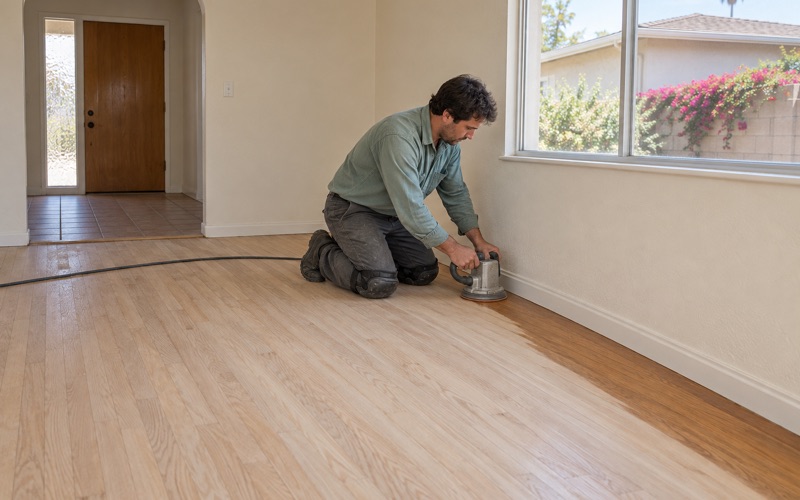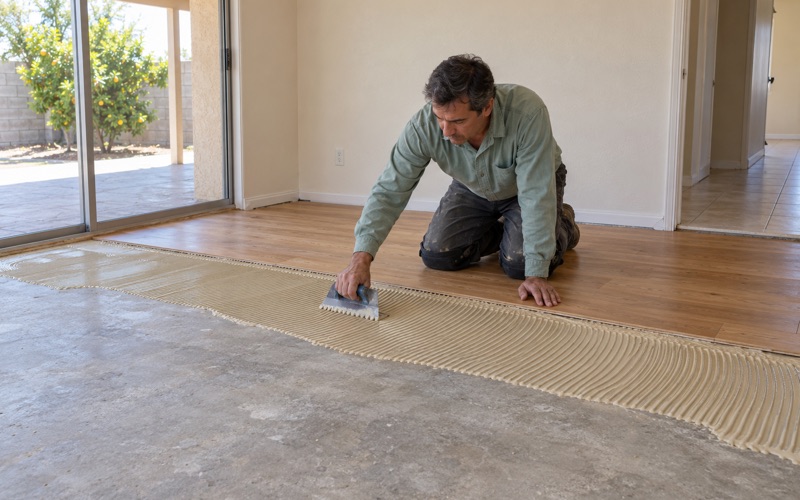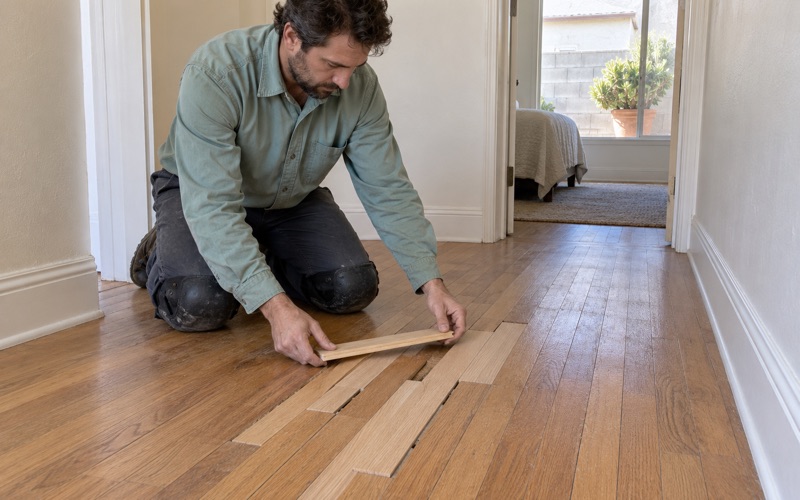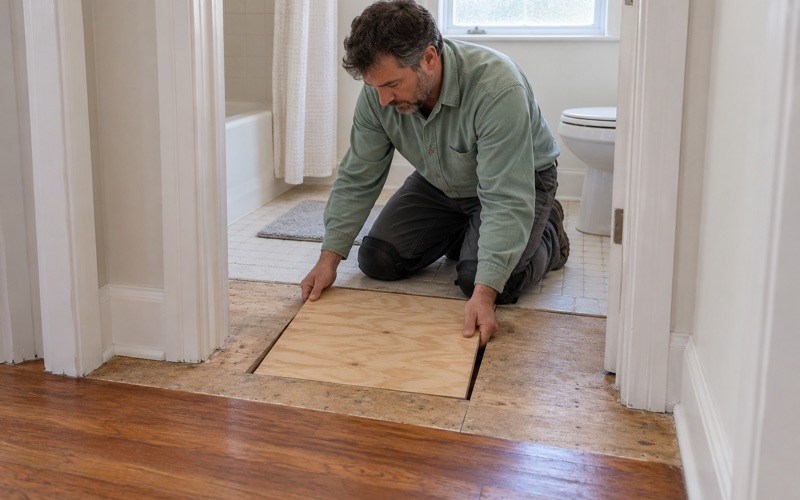
Carson Wood Flooring handles wood-flooring in El Segundo for homeowners, condo owners and landlords, drawing on more than 20 years of sanding, finishing, repairing and installing hardwood. Most of the calls we take from this city are about refinishing: a worn floor that needs sanding back to bare wood, a fresh coat over a tired finish, or a few boards replaced before the whole room is brought back together. Installation, stair work and water-damage repair make up the rest.
What sets a job here apart is less the wood than the finish and the air it cures in. We choose coatings from products legal to apply in the South Coast air basin, plan how each room will be ventilated while the finish cures, and hand over a written schedule that says when each space can be walked on and furnished. Those steps matter in any occupied house, and they matter a little more in a city that shares its map with a refinery.
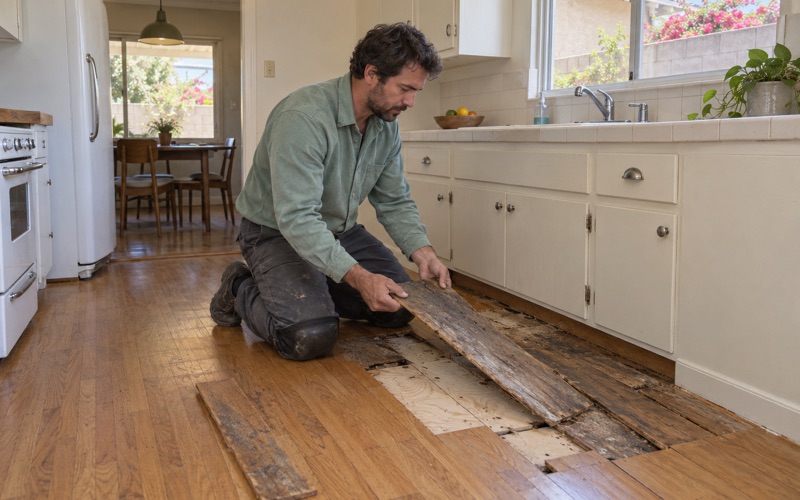
Before any finish floor is priced, we open and check the subfloor so soft decking or a failing joist turns up now rather than as a callback. Moisture readings in the wood, and in any concrete underneath, are taken and written down before we order material.
Refinishing Floors on the Refinery’s Doorstep
El Segundo takes its name from Standard Oil’s second West Coast refinery, built after the company bought 840 acres here in 1911, and the Chevron refinery still occupies more than a quarter of the city. The residential side is compact by comparison. South Coast AQMD’s 2025 community air monitoring plan describes El Segundo as primarily residential, with a thin band of roughly one block of commercial use running along the refinery’s northern fenceline.
An Older Housing Stock
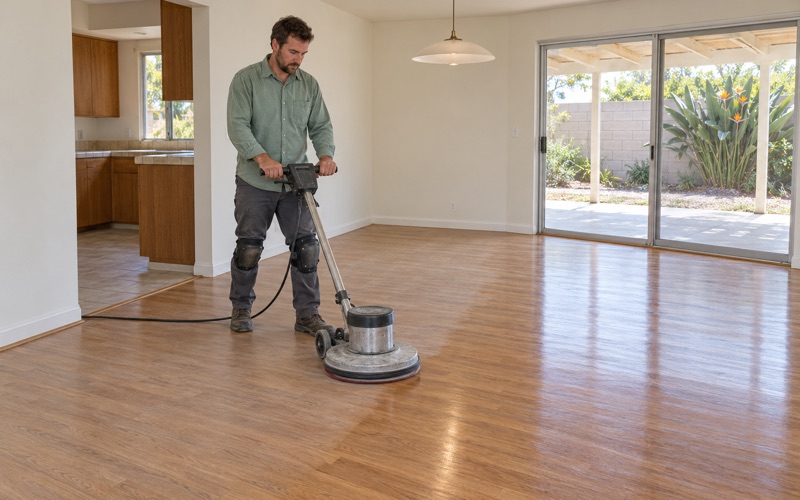
Census figures place 73.4 percent of El Segundo’s housing units before 1980 and 40.7 percent before 1960, with the 1960s the busiest single decade for construction. A floor that has lived through fifty or sixty years usually carries several generations of finish, patched boards and a few spots where an old repair never quite matched. Sanding back is often the right call, but we check wear layer thickness, board condition and signs of past sanding before we recommend a full refinish over a screen and recoat.
Older rooms can also hide 9x9 asbestos floor tile or black mastic under carpet or a later floor. We treat either one as a possible asbestos question and stop for an asbestos survey before anything is sanded or scraped.
Lead-Safe Preparation
Houses built before 1978 fall under the EPA Renovation, Repair and Painting rule, and in a city where most homes predate 1980 that describes a large share of our jobs. On those houses we follow lead-safe work practices, from containment at doorways to careful removal of painted baseboard and shoe molding and a thorough cleanup. Our dustless sanding system and sealed room openings also keep fine wood dust out of the parts of the home still in use.
Floors in Rental Buildings
Renters hold 57.5 percent of El Segundo’s occupied units, and the most common renter building is a five-to-nine-unit property, home to about a third of renter households. Owners turning one of those units usually want a floor sanded or screened between tenants on a tight schedule. Our estimates and invoices itemize each repair, which gives a landlord the paper trail California deposit law expects under Civil Code 1950.5 when a move-out deduction is on the table.
Looking for wood-flooring closer to Los Alamitos? See Wood-Flooring in Los Alamitos.
Who Watches the Air, and Who Sets the Finish Rules
South Coast AQMD is the agency responsible for air quality across large parts of Los Angeles, Orange, Riverside and San Bernardino counties, and in El Segundo its work is visible on the ground. Under Rule 1180, the district runs community air monitoring near refineries, and its plan for this area places one station at St. Anthony School, north of the refinery, with a second at Pacific Elementary to the south. The same plan notes that, given prevailing winds, the eastern end of the monitored region is the part most likely to be affected by refinery emissions.
We mention this not because it changes how a floor is sanded, but because it explains the setting. The district that watches the fenceline is also the agency that writes the rules for the coatings we put on floors, and those rules decide which finishes can go down in an El Segundo living room at all.
Rule 1113 and Floor Finishes
SCAQMD Rule 1113 sets VOC content limits for architectural coatings, and wood coatings, floor finishes included, fall under it. The wood coating limit we work to is 275 grams per liter, and every stain, sealer and topcoat we bring onto a job is chosen from products legal to apply in the South Coast air basin. Some finishes sold online or in other states do not meet that limit, so we do not use a product just because a homeowner saw it recommended somewhere else.
Waterborne or Oil-Modified
Within the legal range, the choice usually comes down to waterborne polyurethane or a compliant oil-modified polyurethane, with a hardwax oil finish as a third option on some floors. Waterborne finishes stay clearer, dry faster between coats and carry a milder odor, which suits occupied homes and lighter species like white oak or maple. Oil-modified finishes add an amber tone many owners like on red oak, but they take longer to cure and call for more planning around who stays in the house.
Sheen level is its own decision. Satin and matte hide everyday scratches and grit better than gloss, and they are what we recommend most often in busy households. We lay samples on boards of the actual species so you can compare them in your own light before the first coat goes down.
Ventilation and Cure Time Inside the House
A finish is dry to the touch long before it is cured, and most of the floor problems we see start in that gap. Furniture dragged across a floor a day after the last coat, or rugs laid down before the film has hardened, leave marks that only another sanding removes. That is why each job gets a written cure schedule, room by room.
Moving Air While the Finish Cures
Ventilation during curing is the practical question homeowners here ask most, and our answer does not depend on which side of town the house sits on. We plan air movement with fans and open windows where the weather allows, keep thermostat settings steady, and avoid pushing air straight across a wet coat, which can pull dust into the film and leave ripples. Lower-VOC waterborne systems reduce odor, but they still need moving air and moderate temperatures to cure properly.
Coastal Air and Moisture Content
El Segundo sits on Santa Monica Bay, inside the National Weather Service forecast zone named Los Angeles County Beaches, and damp coastal air can stretch drying times between coats. It also affects how wood moves once it is installed. We log the moisture content of new material on arrival and again before it goes down, let boards acclimate in the rooms where they will live, and check the existing floor with a wood moisture meter before any sanding starts.
Occupied Homes and Condos
Many El Segundo households live in multi-unit buildings, where a family cannot simply move out for a week. We sequence rooms so bedrooms or a kitchen stay usable, contain dust at each doorway, and tell residents when they can walk on a floor in socks, when shoes are fine and when furniture can go back. In condos we also check with the association on any alteration its rules cover, so the work fits the building.
Planning a Wood Floor Project in El Segundo
Most projects start with a walk-through. We measure, look at how the existing floor was put down, check for squeaks, cupping, board gaps or sloping floors, and open the subfloor wherever anything feels soft before we price the finish floor. Water-damaged floors get traced back to the leak, and we document what we find with photos and moisture readings an insurance adjuster can use.
Installation and Repair
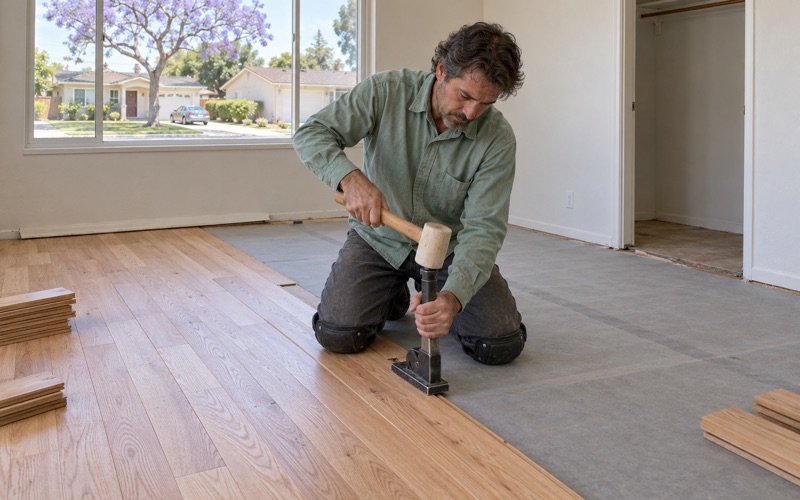
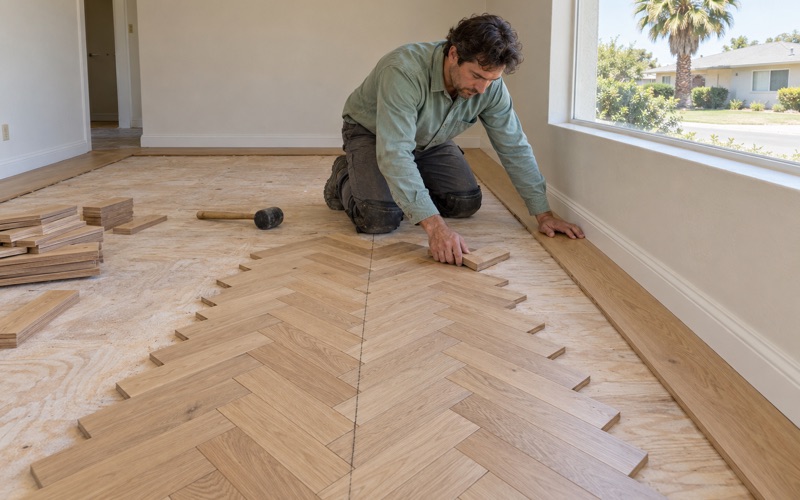
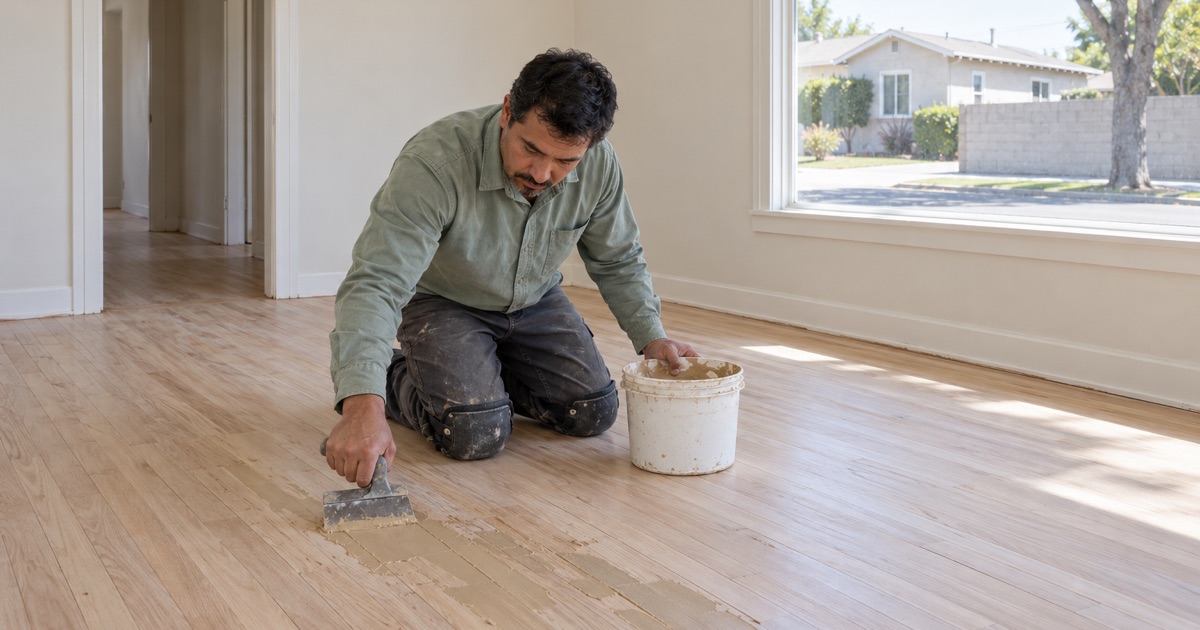
For new floors we help you weigh solid against engineered core construction, pick a species whose Janka hardness rating fits the household, and choose nail-down, glue-down or floating installation based on what the subfloor will support. We follow NWFA installation guidelines, including the expansion gap at walls, and where concrete sits under a floor we test it with ASTM F2170 in-situ relative humidity probes before any wood goes down. Smaller jobs, like board replacement or a weave-in repair where a wall came out, can often be blended into a refinish so the patch disappears.
Stairs, Trim and Transitions
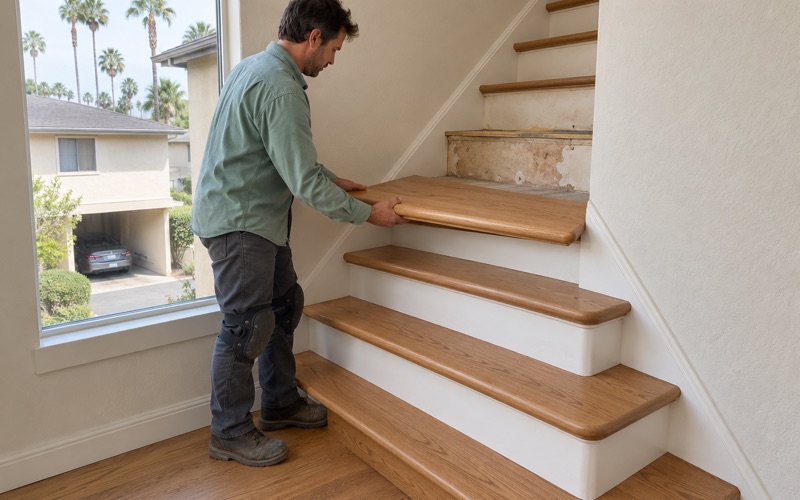
Stairs are priced per tread and riser rather than folded into a square-foot number, since a staircase takes far more hand work than an open room. Reducer strips, T-molding and stair nosing are matched to the new finish so the transitions between rooms do not stand out.
Who Signs Off on What
The City of El Segundo’s Community Development Department, through its Building and Safety Division, handles plan review, permit issuance and inspection for work in the city. El Segundo’s Local Coastal Program was effectively certified in 1982, and when a project reaches beyond the floor itself, we point owners to the city to confirm what applies. Our written estimate then separates prep, repairs, stairs and finish, names the product we plan to use, and lays out the cure schedule you can expect.
- 20+ Years on Wood Floors
- Moisture Readings in Writing
- Air-Basin-Compliant Finishes