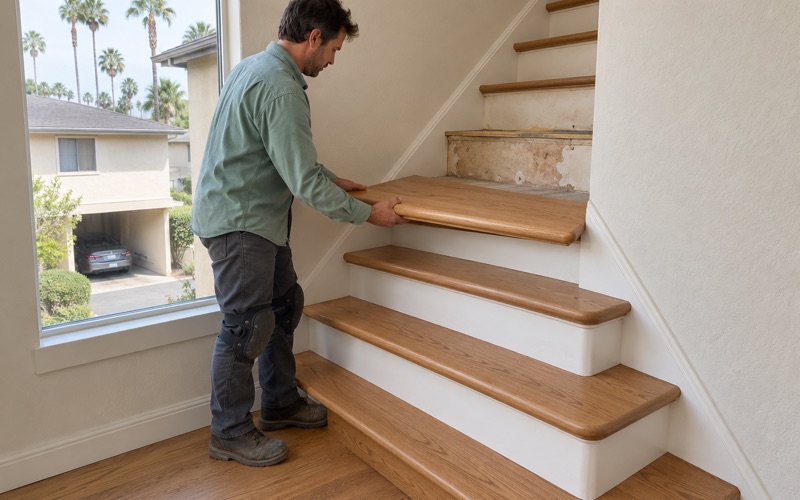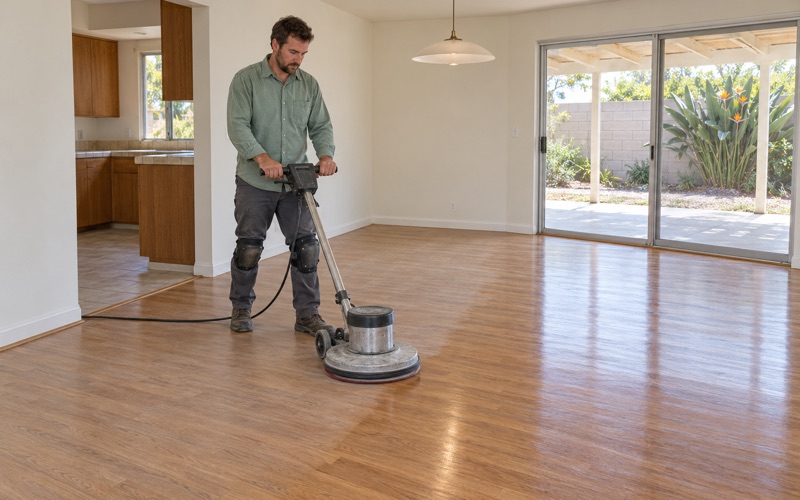
Carson Wood Flooring has spent more than 20 years on wood-flooring in Gardena and across the South Bay, and a good share of our calls here begin after some other repair is already finished. A plumber has replaced a leaking supply line, a fumigation tent has come down, or a new water heater has gone in, and the floor sitting over or beside that work now needs its own attention. We come in at that point, look at what the earlier repair left behind, and price the floor as a job of its own.
That separation matters in Gardena because the city has run repair programs for owner-occupants that can help pay for plumbing, roofing or electrical work, yet do not list flooring. Knowing where the funded work stops and the floor starts lets an owner plan both jobs without surprises. Our part stays straightforward: the subfloor opened and checked, moisture measured and written down, and an estimate that stands on its own.
Whether a floor needs a few boards woven in, a full sand and refinish, or new hardwood over a rebuilt subfloor, we schedule it after the other trades are done rather than in the middle of their work. The sections below walk through how that usually plays out in a Gardena house.
What Gardena’s Repair Programs Cover, and What They Leave Out
Gardena’s 2014-2021 housing element describes four housing rehabilitation programs: the Handy-Worker Fix Up program, the Residential Rebate Program, the Owner-Occupied Housing Rehabilitation Loan Program and the Multi-Family Rehabilitation and Code Correction Program. It also listed a separate Mobile Home Rehabilitation Loan of up to $25,000 for low-income mobile home owner-occupants. The figures below are what that element recorded, so check with the city’s Home Improvement Coordinator before counting on any amount.
The Handy-Worker Crew and the Rebate
The Handy-Worker Fix Up program provides a free labor crew with up to $600 in materials for items such as health and safety compliance, smoke alarms, door and window replacement, plumbing, heating and electrical. The Residential Rebate Program pays rebates of 50 percent, to a maximum of $3,000, for repairs such as plumbing, heating, electrical, roofing, handicapped access and other health and safety improvements. The city’s FAQ adds fumigation and concrete work to the rebate list and asks that the owner has lived in the home for six months or longer.
Both programs are built around small, urgent fixes that keep a house safe to live in. That is exactly why they tend to touch the floor indirectly: a repaired drain line, a replaced water heater or a termite treatment all happen next to, under or through finished flooring.
The Deferred Loan for Larger Repairs
For bigger jobs, the element listed zero-interest deferred loans of up to $60,000 under the Owner-Occupied Housing Rehabilitation Loan Program. Loans on that scale are the ones most likely to fund a major plumbing or structural repair that ends up directly beneath a finished floor. When that happens, the floor is usually the last thing standing between the repair and a livable room.
Where Flooring Sits on That List
None of the listed programs names flooring. We are not part of the city’s programs, we do not handle their paperwork, and we cannot tell anyone whether a particular floor repair would count toward one. What we can do is price the floor clearly and separately, so the city-assisted work and the floor work never blur into a single bill.
Looking for wood-flooring closer to Lomita? See Wood-Flooring in Lomita.
Where the Floor Fits After a Plumbing Leak or Fumigation
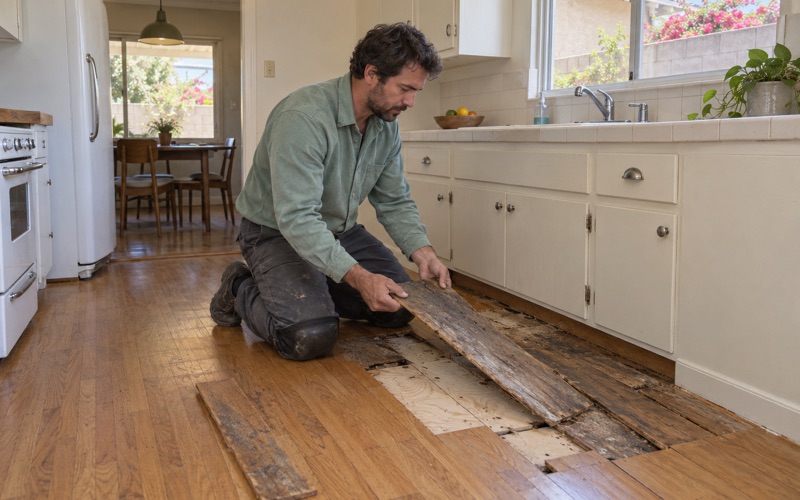
The most common pattern we see starts with water. A slow leak at a toilet flange, a dishwasher line or a corroded pipe gets fixed, sometimes with rebate help, and the plumber’s job ends at the pipe. The boards around it are often cupped, stained dark at the seams or soft underfoot, and the decking beneath may have been wet for months before anyone noticed.
Opening the Floor Before Pricing It
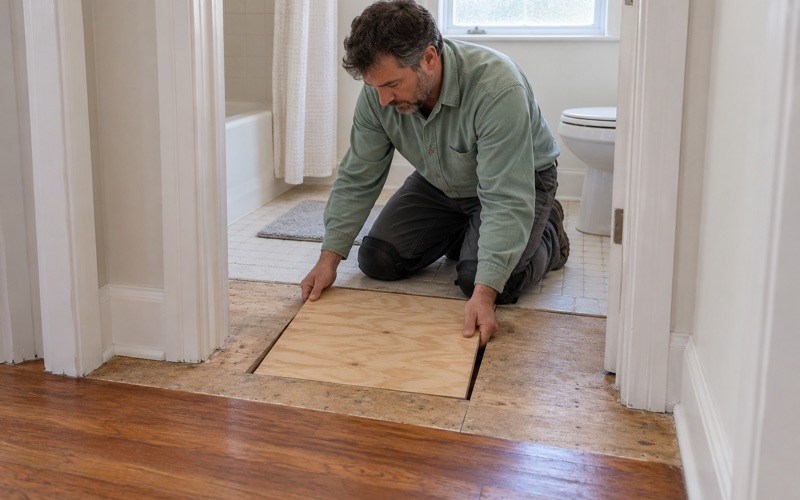
We pull the damaged boards and inspect the subfloor and joists before we quote any finish floor. Water-swollen decking, soft spots and joists that need sistering are far cheaper to fix while the floor is open than after new boards are down. We photograph what we find and record wood moisture meter readings, which also gives an insurance adjuster something concrete to work from if a claim is involved.
Letting the Structure Dry Before Rebuilding
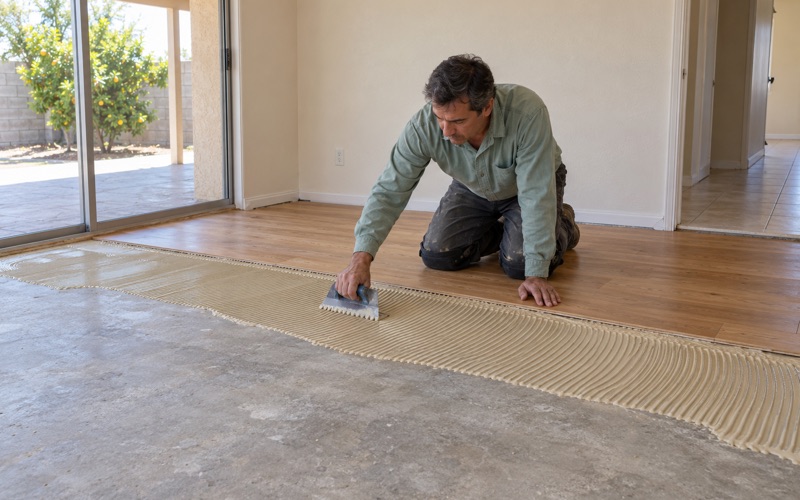
Wood that took on water has to come back toward a normal moisture content before new boards go in beside it. We measure the existing flooring and the subfloor, and if part of the room sits on concrete, we test that as well with a calcium chloride test or ASTM F2170 in-situ relative humidity probes. New material then acclimates in the room it will live in, with moisture content logged on arrival and again before installation.
Rushing this step is how a repaired floor starts cupping or crowning a season later. We would rather tell an owner the room needs another week of drying than install boards that will move once the humidity evens out.
After the Fumigation Tent Comes Off
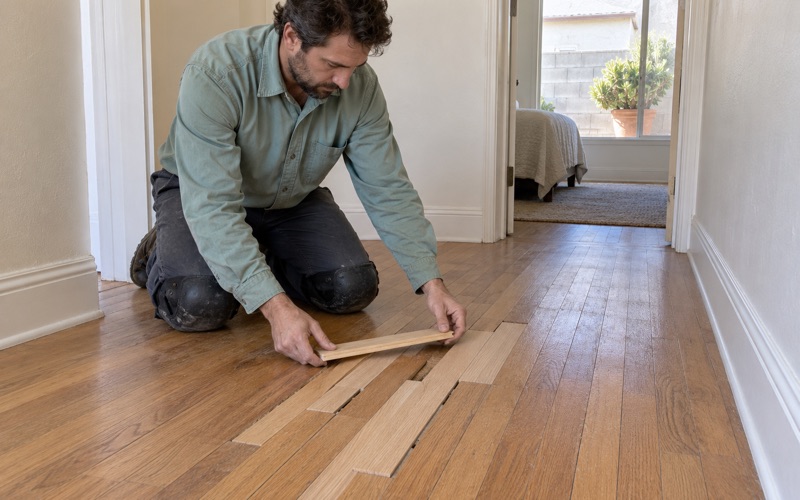
Fumigation for drywood termites treats the structure, but it does not replace the wood the termites already ate. Once the tent is gone, we look for frass, kick-out holes and boards that sound hollow, and we probe anything that feels soft. Damaged pieces can often be cut out and replaced with a weave-in repair that ties new boards into the old ones, followed by sanding the whole room so the patch disappears under one finish.
Planning the Floor as a Separate Owner Project
Once the funded repair is signed off, the floor becomes the owner’s own decision, on the owner’s own schedule and budget. That is not a bad thing. It means the floor can be chosen for how the house is actually lived in, rather than squeezed into someone else’s repair scope.
Sequencing the Two Jobs
We ask owners to let the plumbing, electrical or roofing work finish first, including whatever inspection Gardena’s Building & Safety Division requires for that trade. Floor work that goes in before a wall is opened or a line is rerouted usually gets torn up again. Our written estimate is set up so the floor can start the week after the other trade leaves, or months later if the owner needs time to plan and save.
Repair, Refinish or Replace
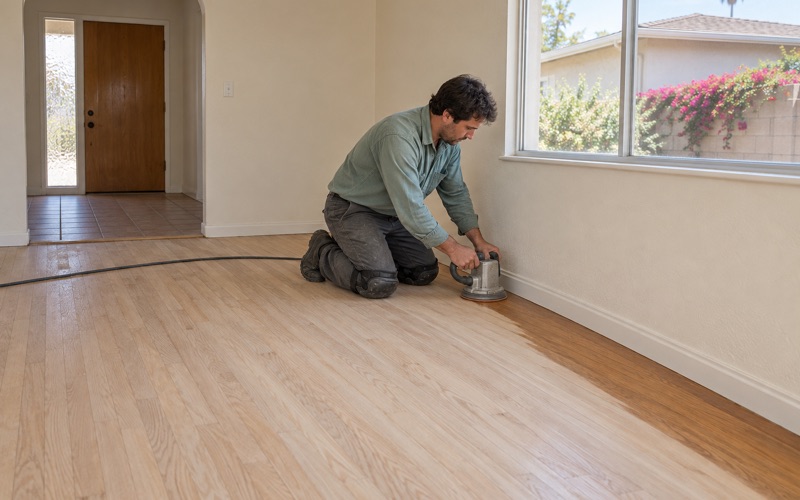
Many floors need less than their owners expect. A floor with enough wear layer left can be sanded through a proper grit sequence and refinished, while a floor with only surface wear may need just a screen and recoat. When damage is concentrated in one room, board replacement and a weave-in repair keep the rest of the house intact, and full replacement makes sense only when the subfloor or the boards themselves are past saving.
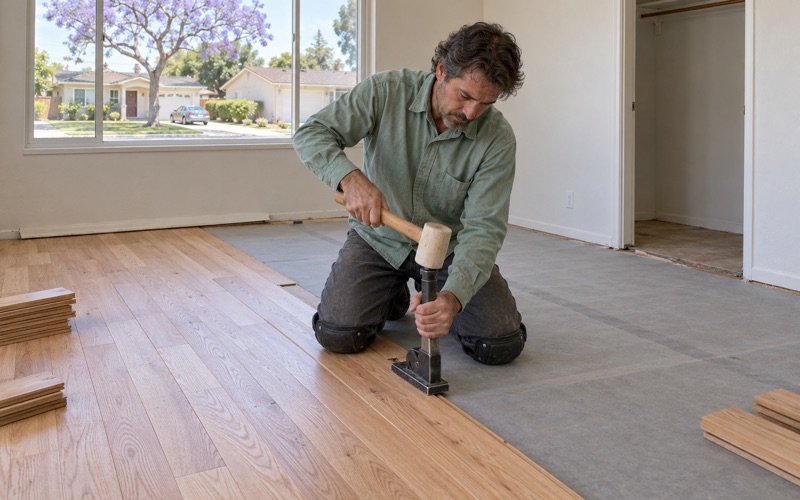
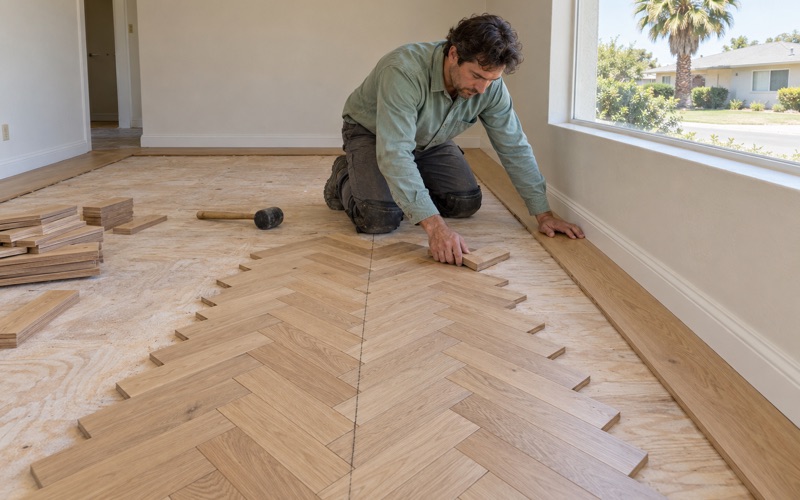
If replacement is the right call, we walk through species and construction with the owner. White oak, red oak, hickory and maple each carry a different Janka hardness rating, and engineered boards with a thick wear layer can be a sensible choice where moisture has been a problem before.
Finishes and Dust in an Occupied Home
Most people stay in their homes during floor work, so we set up dust containment and hand over a written cure schedule showing when each room can be walked on and furnished again. We use finishes that are legal to apply in the South Coast air basin under SCAQMD Rule 1113 and its 275 g/L limit for wood coatings. Depending on the room and the household, that might be a waterborne polyurethane, an oil-modified polyurethane or a hardwax oil finish.
Owners who rent part of a property can also get estimates and invoices written in a form a landlord can use at move-out. California deposit law asks for itemized repair costs, and a clear line-by-line invoice makes that part easy.
A 1950s Gardena House, Room by Room
Gardena’s housing is older than it looks from the street. Of the city’s 21,837 housing units, 43.7 percent were built before 1960, and the 1950s were the peak decade, with 28.4 percent of all units. Among owner households, 72.8 percent live in detached houses, so the typical floor job here is in a mid-century single-family home that has been through several owners and at least one round of repairs.
Kitchen and Bath
These are the rooms where leaks start and where floors fail first. We check the boards at the threshold, around the toilet and in front of the sink base, and we look underneath for staining on the decking. A kitchen that has just had a leak repaired is often the natural place to begin a floor project, because the damaged section needs work anyway.
Living Areas and Bedrooms
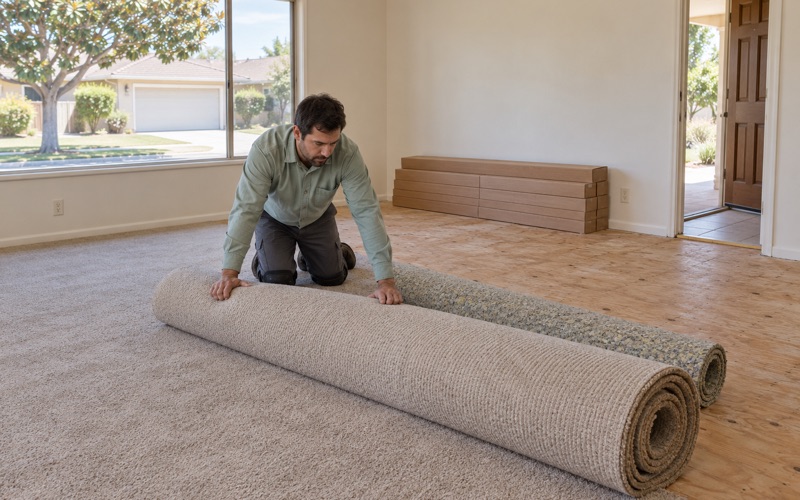
In the larger rooms, the questions are about what is under the current covering and how it has aged. Carpet or sheet vinyl may hide wood, plywood underlayment or old tile, and we do not assume which until we have looked. Squeaks, board gaps and sloping floors usually point to fasteners, joists or subfloor problems that are worth correcting before any refinishing starts.
Older Layers and Safer Removal
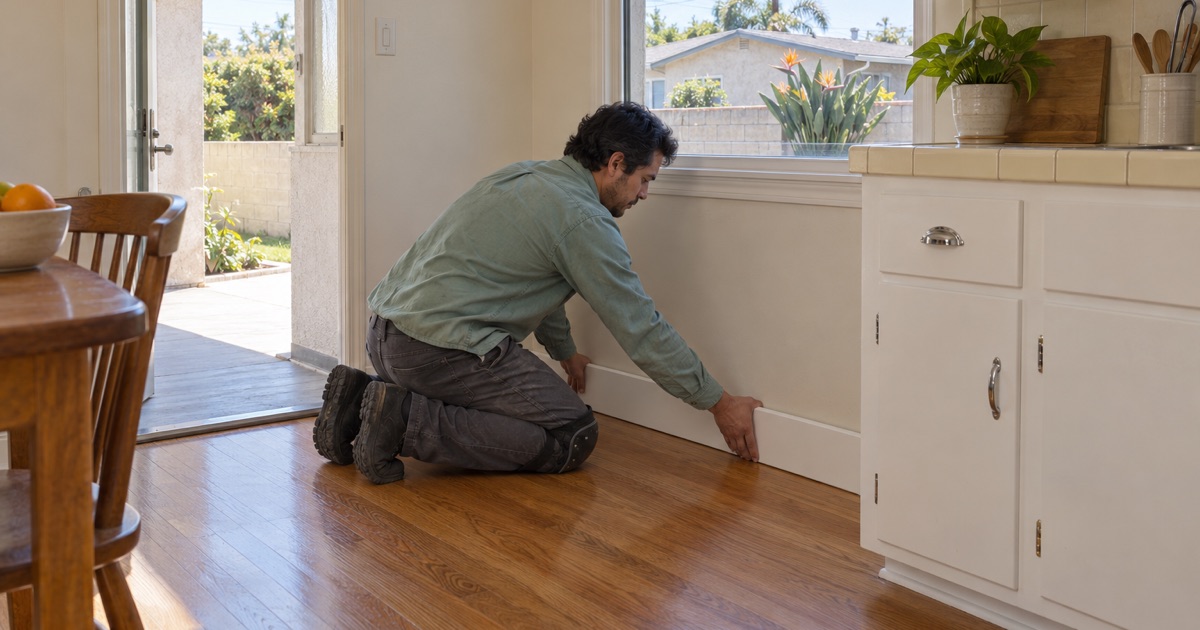
A house built before 1978 may carry lead paint on the baseboards and trim that meet the floor, so we follow lead-safe work practices under the EPA Renovation, Repair and Painting rule. Old 9x9 tile and black mastic are treated as a possible asbestos question before anything is sanded or scraped. Once those layers are sorted out, we can plan a new floor or refinish the old one with nothing hidden underneath it.
A house that has already had its plumbing, wiring or termite problem taken care of is in a good position for floor work. The hard, hidden repairs are done, and the floor can be the project that makes the house feel finished.
- 20+ Years on Wood Floors
- Moisture Readings in Writing
- Air-Basin-Compliant Finishes