Carson Wood Flooring brings more than 20 years of wood-flooring work to La Palma, and this page covers the question homeowners ask us most after a burst supply line, a failed water heater or a hard rain: what happens to a wood floor once water reaches it. We treat every wet floor as its own case. Two houses on the same block can take on water in different ways and dry out on different timelines, so our answer always starts inside the house in front of us.
We find the source before we talk about boards. That means tracing where the water came from, taking moisture readings in the wood and the layers beneath it, and photographing what we find so an insurance adjuster has something usable in hand. Only after that do we say whether a floor can be dried and refinished or needs sections replaced.
The same method carries into ordinary refinishing, new installation and stair work across the city. Water simply shows why it matters, because guessing at a floor’s condition is how a repair turns into a callback.
La Palma Floors and the Whittier Narrows Dam Scenario
What the City Says About the Dam
The City of La Palma describes itself as one of the cities downstream of Whittier Narrows Dam. According to the city, the dam was constructed in 1957 to keep the San Gabriel and Rio Hondo rivers from flooding homes in a stretch of Los Angeles County from Pico Rivera to Long Beach. If the dam, or the channels and levees below it, could not contain the water from an exceptionally large and rare storm, La Palma could be affected.
The city puts numbers on that scenario. It has a 1 in 900, or 0.1 percent, chance of occurring in any given year, and depending on the size of the storm and of any dam breach, La Palma could see flood water anywhere from zero to eight feet. The city’s page draws on the 2018 Whittier Narrows Dam Safety Modification Study and notes that a storm of that size has not been seen since before the dam was built.
Everyday Risk From Nearby Creeks
The rare-storm scenario is not how the city describes ordinary conditions. The same page says La Palma sits in an area with a moderate to low risk of flooding because of its location near various creeks. For most households, the water that actually reaches a wood floor comes from a supply line, a dishwasher, a roof leak or a sliding door during heavy rain.
Why We Assess House by House
Those figures describe a range for the city as a whole, not a reading for any single street. We do not tell anyone how deep water would get at their address, and we do not treat the scenario as a forecast. What the numbers do support is a practical point: when water reaches a floor here, from any source, the right response depends on what that particular house and floor are made of.
Looking for wood-flooring closer to Santa Fe Springs? See Wood-Flooring in Santa Fe Springs.
When Water Reaches a Wood Floor
The First Hours
Stopping the source comes first, followed by pulling standing water off the surface and moving rugs and furniture off the wet area. Area rugs and furniture legs hold water against the boards and can leave stains that outlast the leak itself. Fans and dehumidifiers help, but aggressive heat can dry the top of a board faster than the bottom and make cupping worse.
If the water came from outside, such as storm runoff under a door, treat it as dirtier than a clean supply-line leak. Flooring and padding soaked by outside water usually need a closer evaluation, and we record the water source in our report because it shapes what an adjuster and a homeowner decide next.
Hidden Moisture Paths
Water rarely stays where it first lands. It wicks along the underside of boards, runs under baseboards into the next room and soaks into underlayment that looks fine from above. We check beyond the visible stain, pulling shoe molding or a reducer strip where needed, so the drying plan covers the whole wet area rather than the obvious patch.
Reading the Symptoms
Wood shows how wet it got by the way it moves. Cupping, where the edges of a board rise above its center, usually means more moisture below the board than above it. Crowning is the reverse, and buckling, where boards lift away from the subfloor, signals that the floor has swelled past its expansion gap. Board gaps that open weeks later often mean the wood is shrinking back as it dries.
What Sits Under the Floor
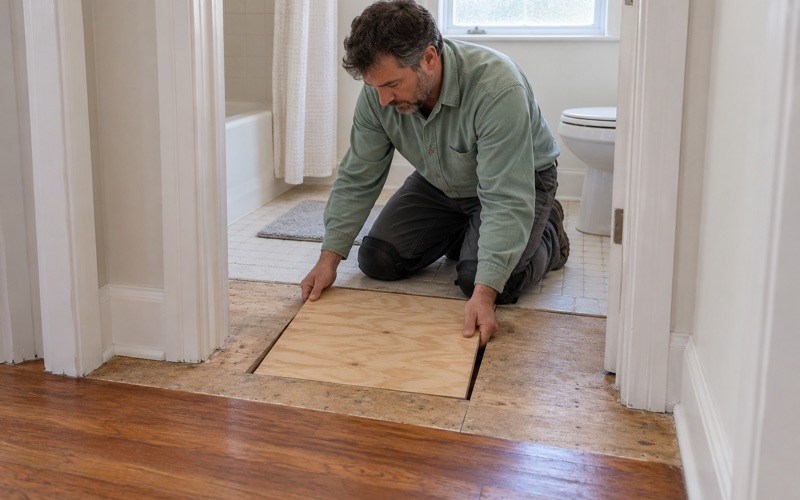
The visible boards are only part of the picture. In La Palma, 75.6 percent of homes were built between 1960 and 1979, and a house of that age can hold decades of patches, repairs and earlier flooring layers under what shows today. We open and check the subfloor before pricing any replacement, because water-swollen decking, soft spots and damaged joists are what turn a simple board swap into a much larger job when they are missed.
That era matters for another reason. Houses built before 1978 may carry lead paint on baseboards, trim and door casings that floor repair disturbs, so we follow the EPA Renovation, Repair and Painting rule on pre-1978 homes. Old 9x9 tile or black mastic found under a wet floor is handled as a possible asbestos question under SCAQMD Rule 1403 before anyone sands or scrapes it.
Drying, Testing and Deciding What to Replace
Measuring Instead of Guessing
A floor that looks dry can still hold enough moisture to fail after refinishing. We use a wood moisture meter to record moisture content in the affected boards and in unaffected boards elsewhere in the house, which sets a baseline for what normal looks like in that home. Where flooring sits over concrete, we test the concrete too, using an ASTM F2170 in-situ relative humidity test or a calcium chloride moisture test depending on the job. Every reading is written down with its date and location.
Readings from the layers under the finish floor matter as much as readings from the boards. Plywood underlayment or particleboard that stays wet can keep feeding moisture into new wood long after the surface looks done, so we measure it separately wherever we have it open.
Drying Before Repair
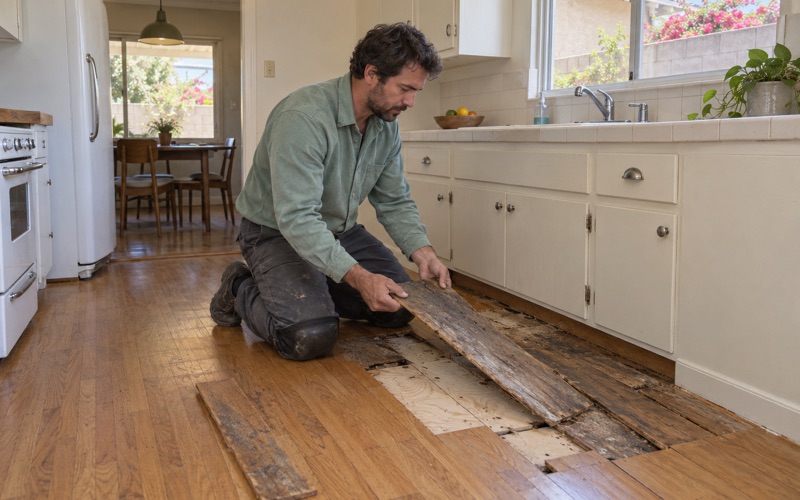
Drying is the step people most want to rush, and rushing it is a common reason a repaired floor cups again. We keep taking readings until the damaged area comes back within range of the baseline, then decide what the floor needs. Sanding a cupped floor before it has flattened on its own can leave the board edges thin once everything settles.
Refinish, Weave In or Replace
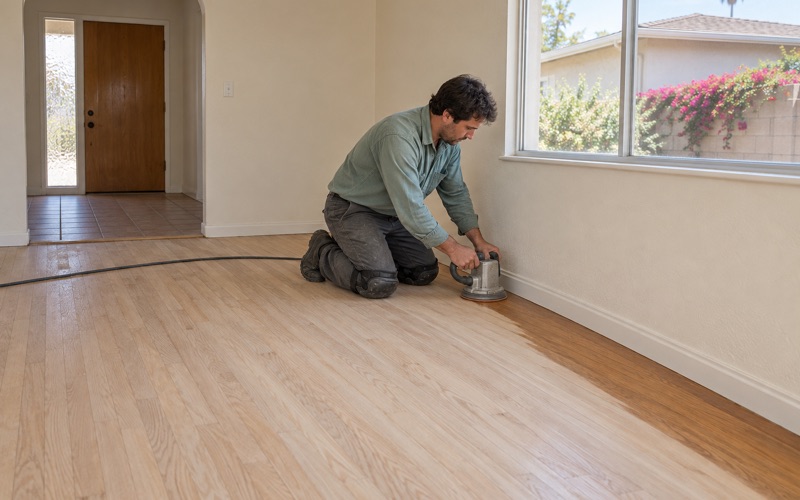
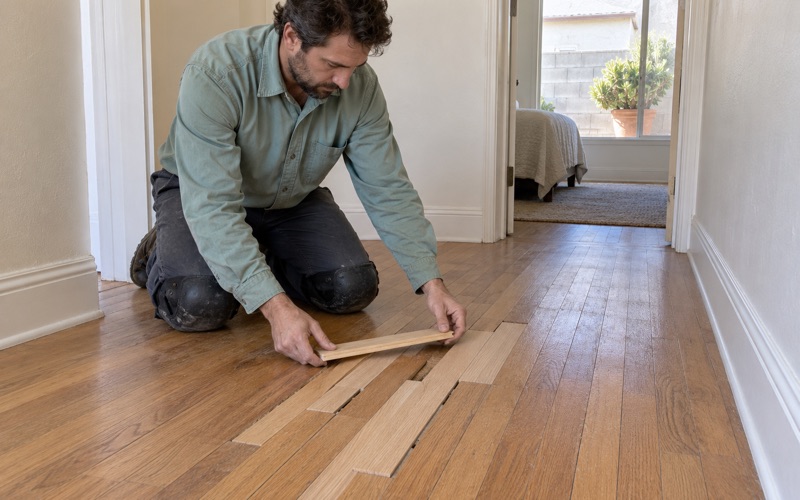
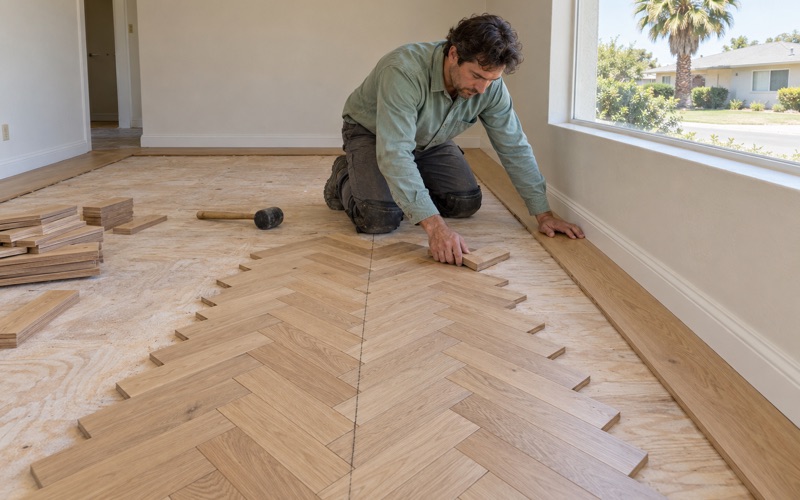
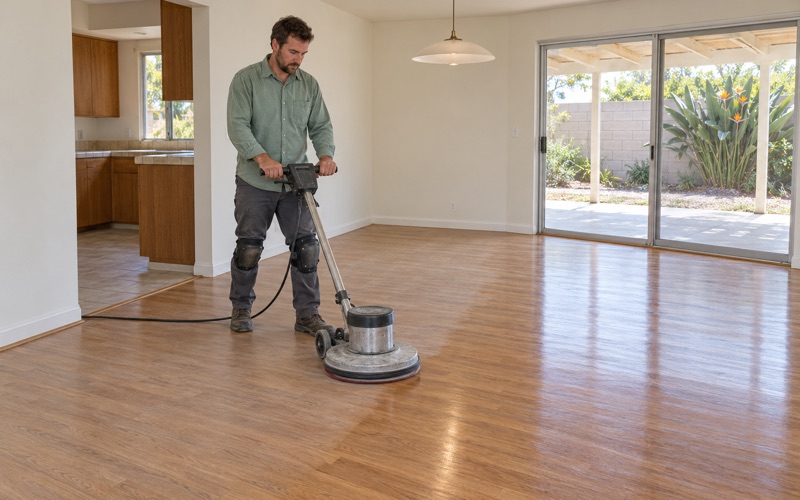
Many water-damaged floors can be saved. Boards that flatten after drying can often be sanded and refinished, and a stained or split section can be cut out and rebuilt with a weave-in repair so new boards interlock with the old ones instead of ending in a straight seam. Where boards have delaminated, turned black or lost their structure, or where the subfloor beneath them is compromised, replacement is the honest answer.
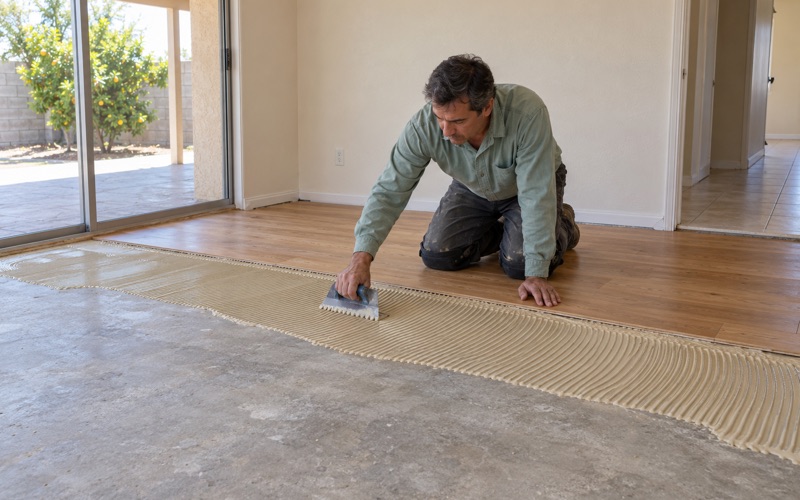
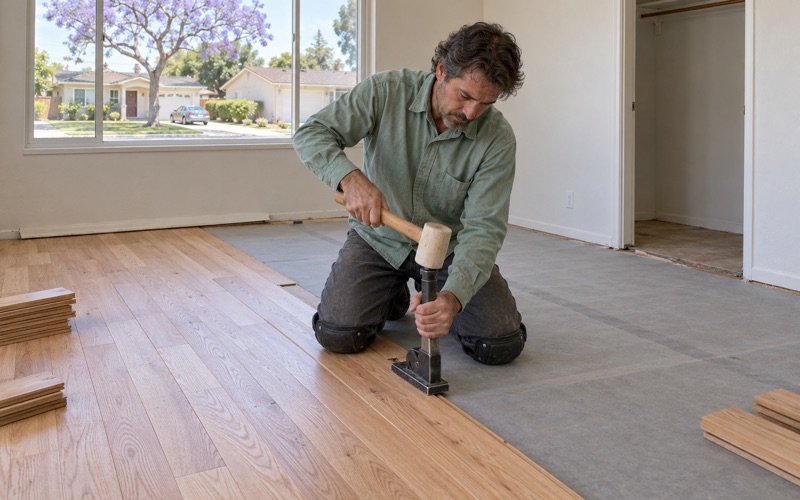
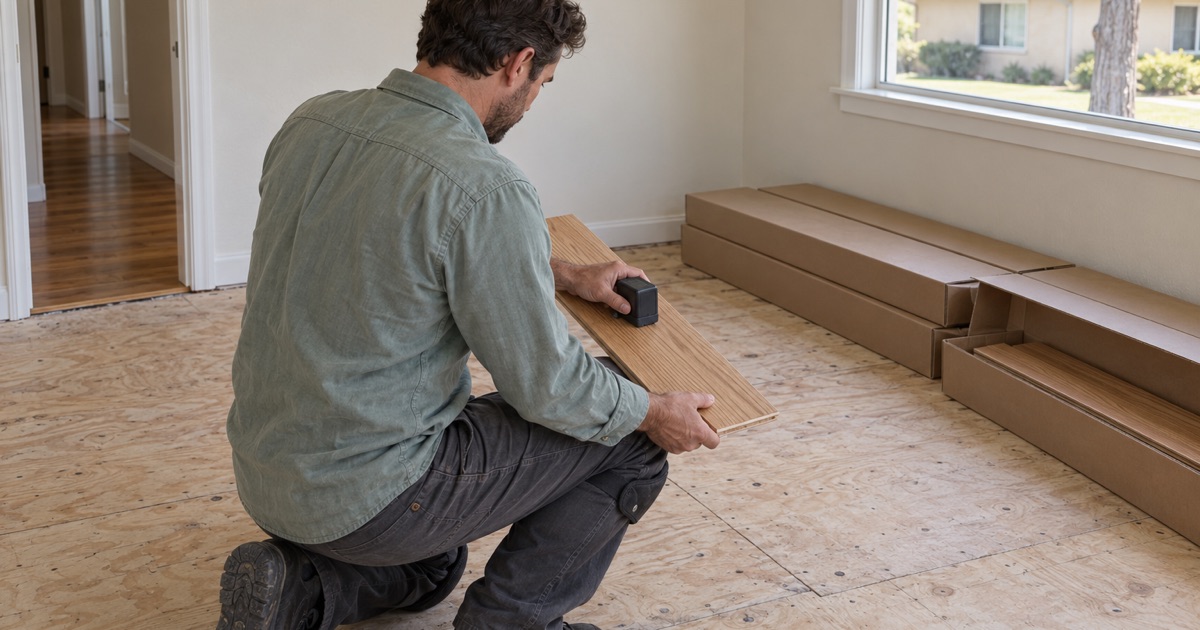
When new material goes in, it is acclimated in the rooms where it will live, with moisture content logged on arrival and again before installation. We follow NWFA installation guidelines for the method in use, whether nail-down, glue-down or floating, and match species, board width and stain as closely as the existing floor allows.
Refinishing after a leak is also a chance to reconsider the finish. An oil-modified polyurethane gives the amber tone some owners like on red oak, while a hardwax oil finish allows spot repair later but asks for more upkeep, and the sheen level changes how much future wear shows. We walk through those tradeoffs before sanding starts and set the grit sequence by how much the boards moved.
Documentation for the Claim
Water damage often involves an insurance claim, and an adjuster works from evidence. We document the source, the extent of the wet area, our moisture readings and the condition of the subfloor with photos and notes. Landlords get written estimates and invoices itemized in a form they can use later, including at move-out under California’s security deposit law.
Planning Floor Work in La Palma
A Small City Built in a Short Window
La Palma was incorporated on October 26, 1955 as Dairyland and took its current name in 1965, after the dairies moved east, drawing on the region’s Spanish heritage and La Palma Avenue. At 1.8 square miles it is the smallest city in Orange County by area. Many of its houses share a general age, but not a shared history, since each has had its own owners, remodels and plumbing repairs since then.
Who Oversees the Work
The City of La Palma Community Development Department carries out Planning, Building & Safety and Code Enforcement. Its Building & Safety Division, at 7822 Walker Street, handles plan checking, permit issuance and inspection, and issues permits digitally through the city’s OpenGov portal. When a repair reaches past the floor covering into framing or other building work, we check with the division before we start.
Finishes and Air Rules
La Palma falls under the South Coast Air Quality Management District, which covers all of Orange County. The finishes we apply come from products legal in the South Coast air basin under the 275 g/L wood-coating VOC limit in SCAQMD Rule 1113. After water damage, a waterborne polyurethane is often a good fit because it carries less odor and lets rooms return to use sooner.
Weather and Timing
La Palma sits in National Weather Service forecast zone CAZ554, Orange County Inland, served by the San Diego office. Humidity shifts through the year affect how quickly a wet floor dries and when new wood is ready to install. We schedule sanding and the finish coats around the moisture readings rather than a date on the calendar.
Living in the House During Repairs
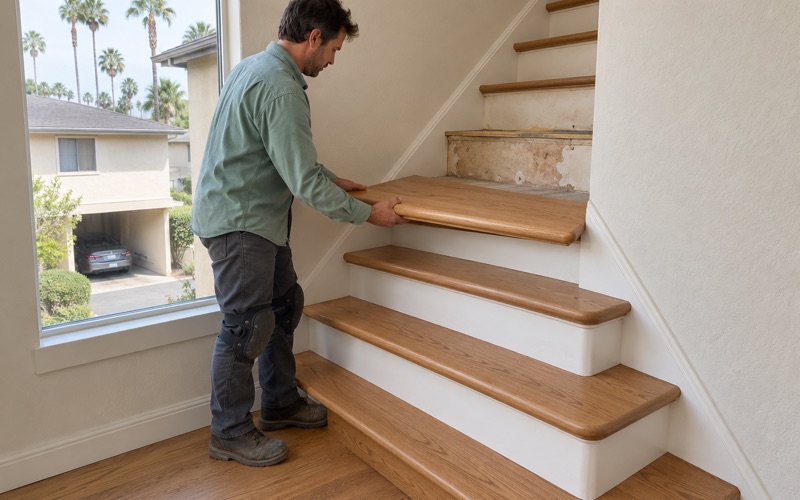
Most La Palma owners live in detached houses, 90.1 percent of owner households by census count, so floor work usually happens around a family still living at home. We set up dust containment, use a dustless sanding system where the job allows, and hand over a written cure schedule so everyone knows when each room can be walked on and when furniture can go back. Stairs are priced per tread and riser rather than folded into a square-foot figure.
- 20+ Years on Wood Floors
- Moisture Readings in Writing
- Air-Basin-Compliant Finishes