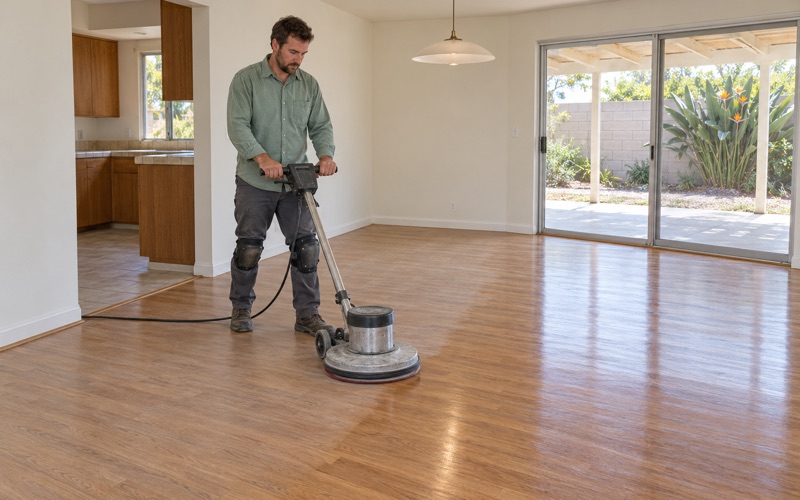
Carson Wood Flooring handles wood flooring in Signal Hill with more than 20 years spent on floors that have already lived a long life. Most of our work here is repair, refinishing and careful replacement in older houses, where the first question is what actually sits under the finish or the carpet. We answer that by opening a small area and looking before we put a number on paper.
That habit matters more in this city than in most, because some of its houses did not start out where they stand today. A floor in a house that has been moved can carry stresses, patches and old repairs that a standard square-foot quote never sees. We price the floor you have, not the floor a listing photo suggests.
Every estimate we hand over is written, every moisture reading is logged, and every room gets a date for when it can be walked on and furnished again. That lets owners and landlords plan around the work instead of guessing at it.
Signal Hill Houses That Came From the Oil Field
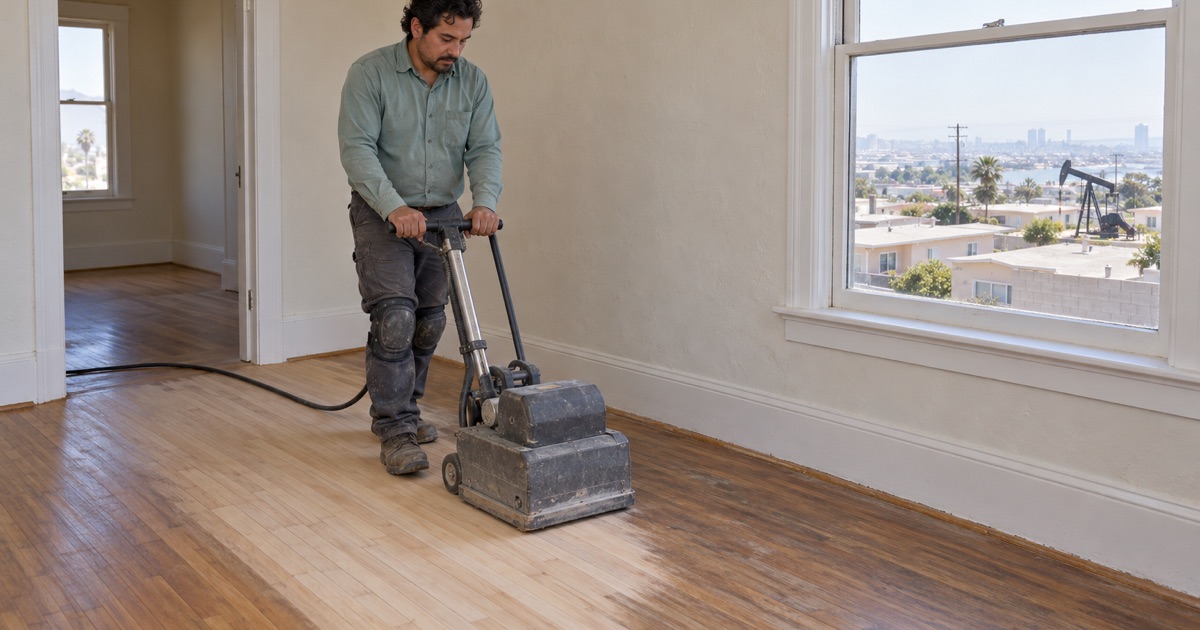
Signal Hill was incorporated on April 22, 1924, roughly three years after oil was discovered on the hill, and the derricks that followed reshaped where people lived. The city’s General Plan Land Use Element, adopted in 2001 and amended in 2022, records two neighborhoods where that history still sits on the lots. Both come up again and again when we are asked to look at an older floor here.
Crescent Heights and Its Historic District Plan
Crescent Heights overlooks the City Hall area and takes its name from the original subdivision map of that part of town. The Land Use Element describes several fine historic homes there that were built before the discovery of oil on Signal Hill, and some that were moved to Crescent Heights from elsewhere in the oil patch. Owners in the neighborhood asked for a historic district to encourage repair and renovation, and the city followed in 2002 with the Crescent Heights Historic District Specific Plan.
City documents describe two historic homes relocated into the neighborhood since 2004, along with two new homes built to historic guidelines. In Crescent Heights, then, house moving is not only a story from the oil years. A floor we work on there may belong to a house that arrived long after the derricks came down.
The North End’s Cottage Homes
The North End was a well-established suburb of Long Beach before Signal Hill incorporated. The Land Use Element says many of the dwellings there were relocated from the oilfield to make way for further petroleum exploration. The neighborhood sits north of the I-405 freeway, on typical residential lots of about 6,375 square feet with street and alley access.
House designs in the North End run from classic Spanish to Victorian and Craftsman, with post-World War II tract homes in single-story stucco mixed in among them. Many properties carry one or more rental dwellings in addition to the main house. That means a single lot can hold two floors of very different ages, and we assess each one on its own terms.
Looking for wood-flooring closer to Willowbrook? See Willowbrook Wood-Flooring.
Floors in a House That Has Been Moved
A house that was lifted, carried across the oil patch and set down on another lot has been through something its floor remembers. We do not assume what it rests on or what species went down first, because none of that appears in anything we have read about these homes. We find out on site, board by board, before we recommend a thing.
Reading the Floor Before Pricing It
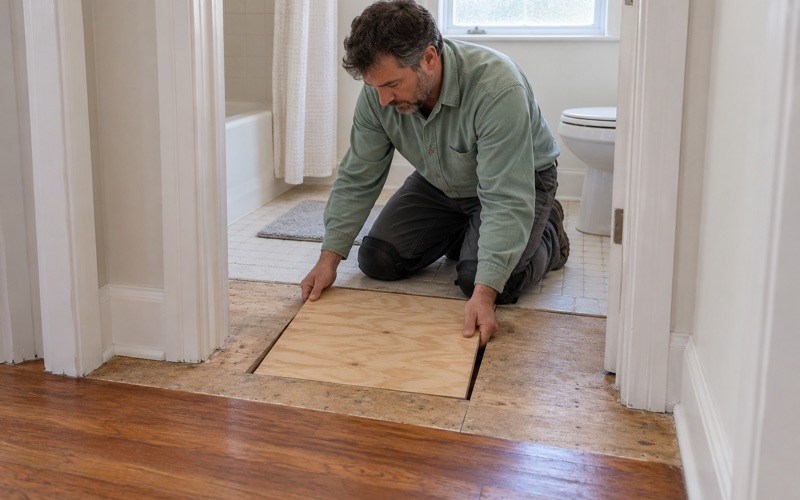
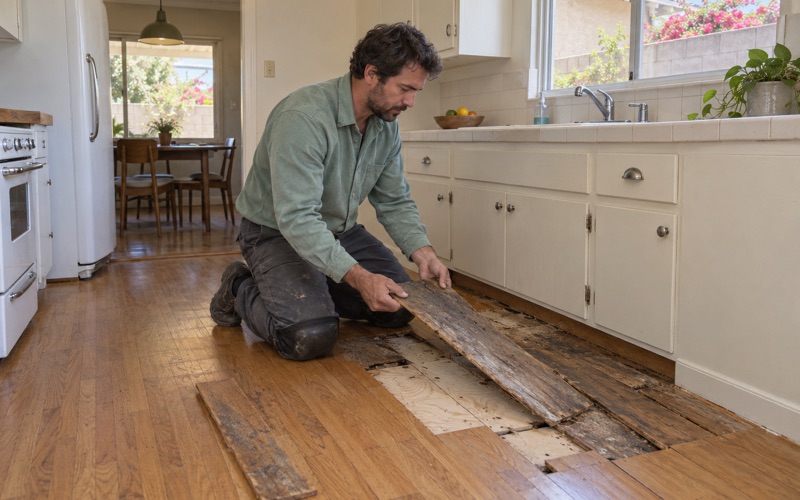
Moved houses and very old ones often share the same symptoms: sloping floors, board gaps that open in one direction, squeaks along a line of framing, and patches where someone swapped in whatever boards were on hand. We open the floor where it tells us to and check the decking and every floor joist we can reach for soft spots, water swelling or earlier cuts. Where a joist has been notched or cracked, joist sistering is often the fix, and we would rather find that now than after new finish is down.
We also look for drywood termite activity, since termite frass and small kick-out holes in old boards tell a different story from ordinary wear. A board that looks sound on top can be hollow underneath. A weave-in repair only works when the boards around the patch are solid enough to hold the new ones.
Moisture and Acclimation
Old wood that has sat in the same rooms for decades has usually settled at its own moisture content, and new boards brought in to match it need to reach that same point. We read the existing floor with a wood moisture meter, log the new material’s moisture content when it arrives, and log it again before a single board goes down. If any part of the job involves a concrete slab, we test it with an ASTM F2170 in-situ relative humidity test or a calcium chloride moisture test before anything is ordered.
Those readings are the difference between a patch that blends in and one that cups or opens a gap by the next season. We keep them on the written estimate so the owner can see them as well.
Putting New Wood Into an Old Frame
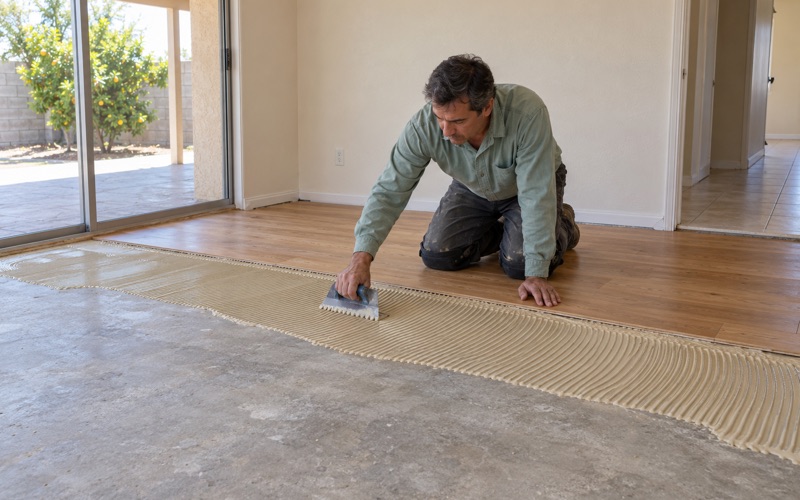
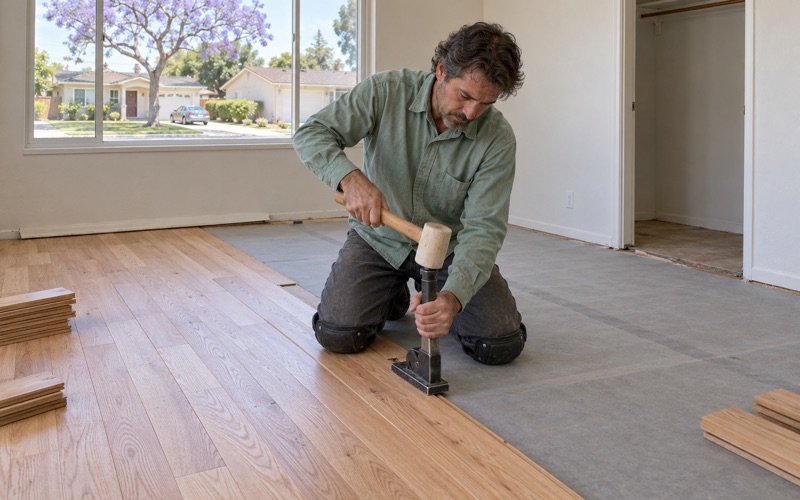
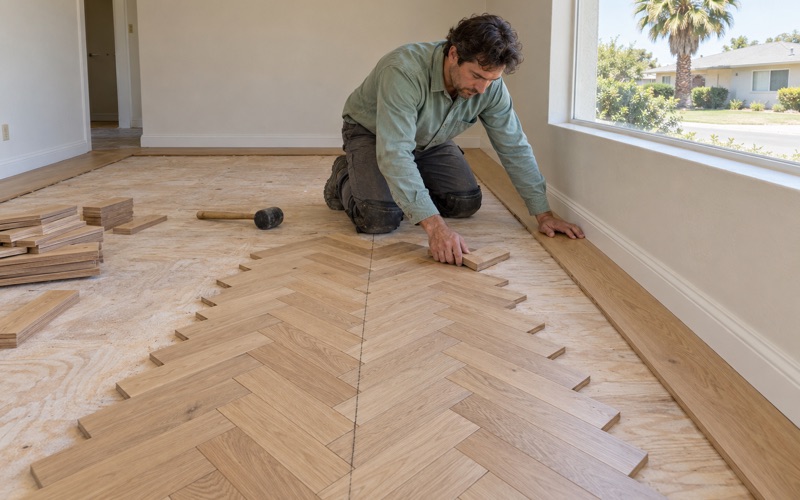
Where a room needs new wood rather than repair, the installation method follows what we find beneath it. Solid boards go down as a nail-down installation, with cleat nails or flooring staples into sound decking, following NWFA installation guidelines for fastener spacing and the expansion gap at every wall. Engineered boards can be glued down or floated instead, and we choose between those methods from the flatness and moisture readings rather than from habit.
Species follows how the room is used. Red oak and white oak are the common choices when new boards have to sit beside older ones, while hickory or maple, with higher Janka hardness ratings, stand up better in a busy kitchen or hallway. Wide plank boards move more as indoor humidity shifts through the year, so we size them to the house rather than to a showroom sample.
Refinishing, Matching and Stairs in Older Homes
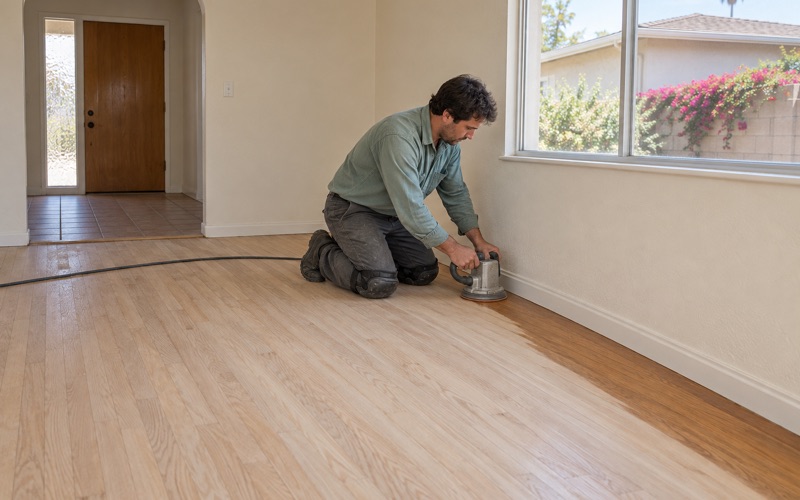
An old floor has a limited amount of wood above the tongue, and each full sanding takes some of it away. Before we recommend a sanding, we pull a floor register or a threshold to see how much wear layer is left. If the finish is only dull or scratched, a screen and recoat can bring it back without cutting into the wood at all.
Matching Boards Where Pieces Are Missing
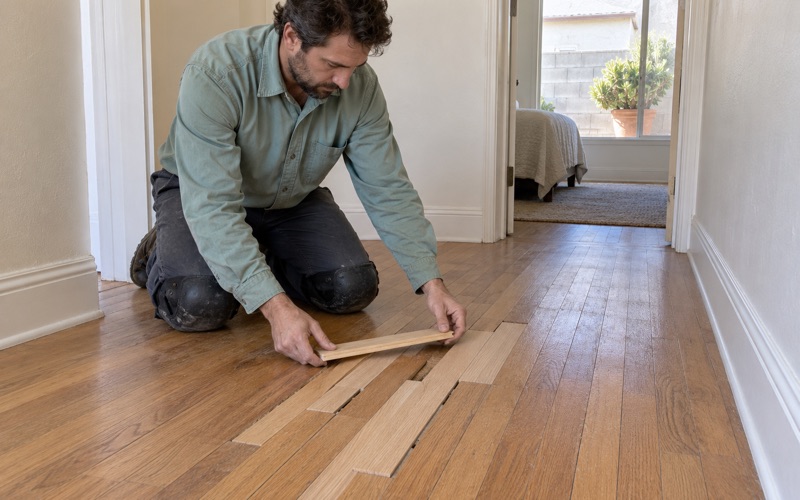
Houses that were moved and reworked often have rooms patched with boards that do not match their neighbors. We identify the species and width on site, then source replacements and plan a grit sequence and stain test that bring the patch and the surrounding boards to the same tone. Blotchy stain is usually a sanding problem rather than a stain problem, so we test on a sample before committing a whole room.
Stairs and Rental Units
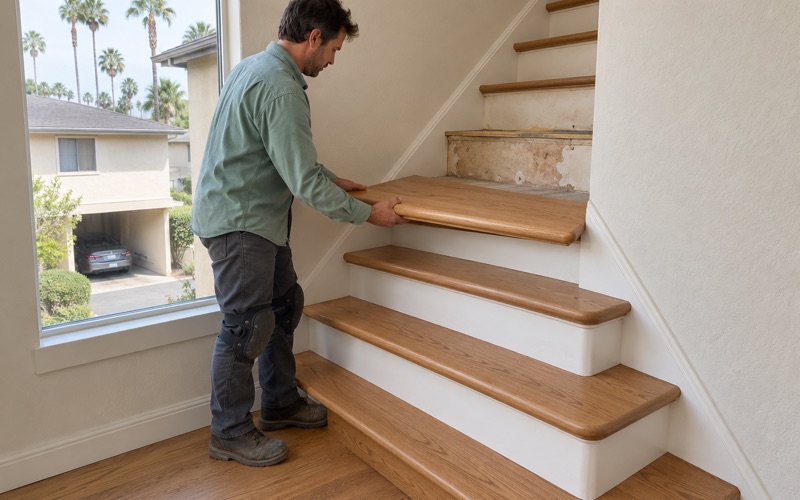
Staircases in older houses tend to have worn nosings and treads that have been sanded before, so we price them per stair tread and stair riser rather than folding them into a square-foot figure. For North End lots with a rental dwelling behind the main house, our written estimates and invoices itemize each repair, giving a landlord the record California deposit law asks for at move-out. The same paperwork serves an owner who simply wants to know what was done and when.
Restoring Older Floors Without Overstating the Rules
Owners of older Signal Hill houses sometimes assume their neighborhood’s history comes with a thick rulebook. It does not, and we try to be precise about what the record actually says. The details below are the ones we have checked.
What the Historic District Plan Does and Does Not Do
Signal Hill does not have a citywide historic preservation ordinance. The Los Angeles Conservancy describes the Crescent Heights plan as providing limited protection for that neighborhood: the city can delay demolition of a historic house in the district for up to three months, but it cannot deny a demolition permit. We have not read the specific plan’s own text, so we do not tell anyone what it says about interior work.
A historic resources survey was completed in 1986, and the district carries the zoning designation SP-11. When a project reaches beyond the floor, the right place to ask is the City of Signal Hill Community Development Department, Building Safety, which reviews plans, issues permits and inspects. Its office is temporarily at the Council Chamber, 2175 Cherry Avenue.
What the City’s Permit Handout Lists
The Community Development Department’s handout “Building Permit Required” lists “Painting, papering, and floor coverings” under work exempt from permit. The same handout says remodeling requires a permit when framing, electrical, plumbing or mechanical systems are repaired, altered or installed, and it states that an exemption does not authorize work in violation of the code or other laws. So if opening a floor turns into joist repair, we raise that with Building Safety before the work goes further.
Finishes, Dust and Old Materials
Most of these houses predate 1978, so we follow lead-safe work practices under the EPA Renovation, Repair and Painting rule whenever old paint on baseboards, shoe molding or stair parts is disturbed. If we find old 9x9 floor tile or black mastic under carpet or a later floor, we treat it as a possible asbestos question and stop before anything is sanded or scraped. An asbestos survey settles it one way or the other.
Signal Hill falls under the South Coast Air Quality Management District, so every finish we apply meets the 275 g/L wood-coating limit in SCAQMD Rule 1113. On an older floor we usually lean toward a waterborne polyurethane or a hardwax oil finish, chosen for the room’s traffic and the sheen level the owner wants. A dustless sanding system and sealed doorways keep the rest of an occupied house livable, and a written cure schedule says when each room is ready again.
- 20+ Years on Wood Floors
- Moisture Readings in Writing
- Air-Basin-Compliant Finishes