Carson Wood Flooring has spent more than 20 years on wood-flooring in Torrance and the rest of the South Bay, and the first thing we do on any job here is sort out what kind of job it really is. A worn living room that needs sanding and three coats of finish is one conversation. A kitchen where the boards feel spongy near the sink is a different one, because the problem may sit below the wood.
That sorting step shapes the estimate, the schedule and who else might need to be involved. We open the floor where it makes sense, take moisture readings in the wood and in any concrete, and write down what we find before a single carton of material is ordered. The homeowner sees the same notes we work from.
This page walks through how we separate surface work from deeper work on a Torrance floor, what the city’s own published documents say and do not say, and how we plan crew days around local construction hours. It is written for owners of older houses, landlords turning over a unit, and anyone who has pulled up carpet and found something they did not expect.
What Torrance’s Permit Handout Lists as Finish Work
The City of Torrance Community Development Department, through its Building and Safety Division, publishes a handout titled “Work Exempt from Building Permits,” dated February 25, 2026. It cites Torrance Municipal Code 81.2.2 and lists categories of work the division treats differently from ordinary construction. Item 7 under the building heading reads “Painting, papering, tiling, carpeting, cabinets, counter tops and similar finish work.”
What the Handout Names and What It Leaves Out
Wood flooring does not appear anywhere on that list. The handout names tiling and carpeting, then closes the item with “similar finish work,” and it leaves the reader to decide what falls inside that phrase. We do not read a verdict into that silence, and we do not tell customers how the division would classify their particular floor. What we can do is describe the document accurately and point people to the Permit Center at 3031 Torrance Boulevard, where the question belongs.
The Sentence Most People Skip
The handout also opens with a caution that is easy to miss. It says an exemption “shall not be deemed to grant authorization for any work to be done in any manner in violation of the provisions of this code or any other laws or ordinances of this jurisdiction.” In plain terms, a category appearing on the list does not make careless work acceptable, and it does not cancel any other rule that applies to the house.
That sentence matters to how we approach every Torrance floor. Whether or not a given task is listed, the joists still have to carry the load, the plumbing still has to be sound, and the finish still has to meet air district limits. We build the job around those requirements first and treat paperwork questions as a separate step for the owner and the city.
Why We Start With the Document, Not a Guess
Plenty of homeowners arrive having read a forum post or heard from a neighbor that floors never involve the city. We would rather show them the actual handout, dated and attributed, than repeat hearsay. It keeps expectations honest, and it means that if a job turns out to reach past the surface, nobody is surprised halfway through.
Looking for wood-flooring closer to Lynwood? See Lynwood Wood-Flooring.
Where Floor Work Stops Being Surface Work
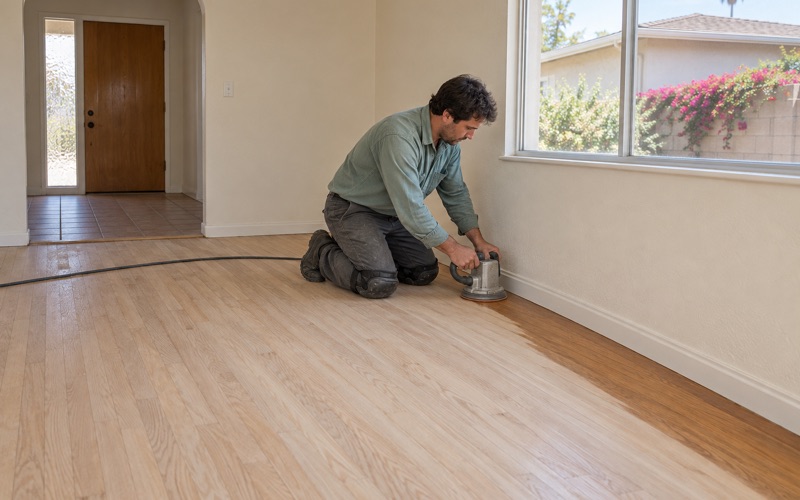
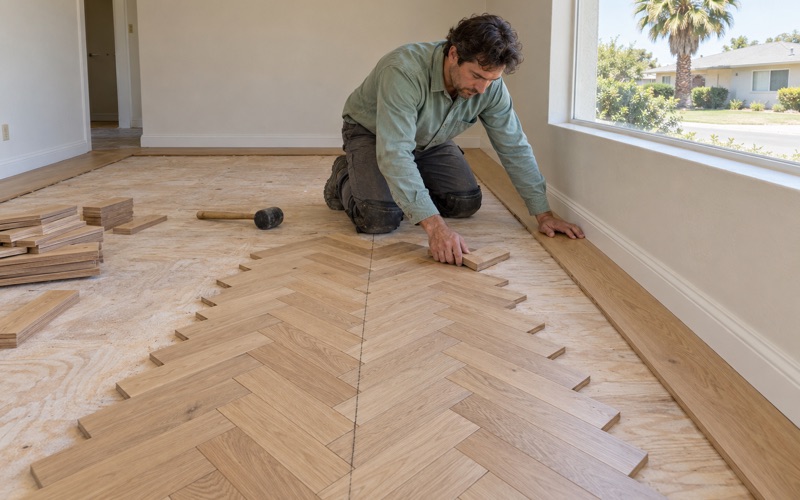
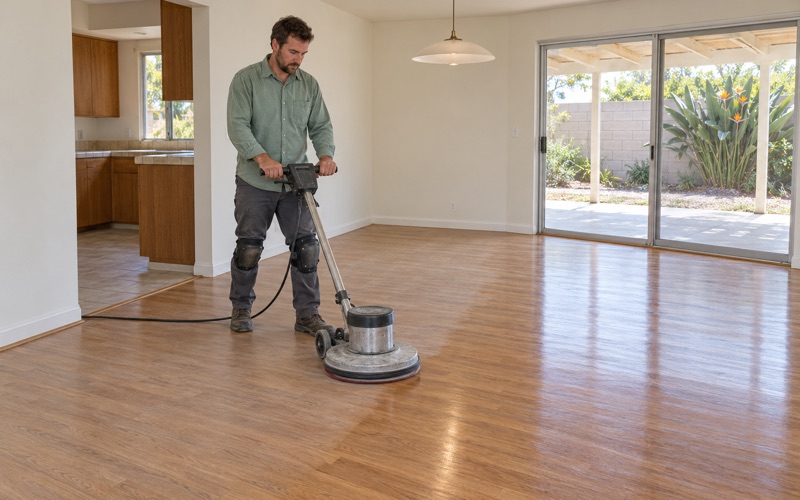
Most wood floor jobs in Torrance stay on the surface. Sanding with a drum sander and edger, working through a proper grit sequence, staining, and laying down a waterborne polyurethane or hardwax oil finish all happen on top of boards that are already fastened to sound decking. A screen and recoat is even lighter, touching only the existing finish layer.
Board Replacement on Sound Framing
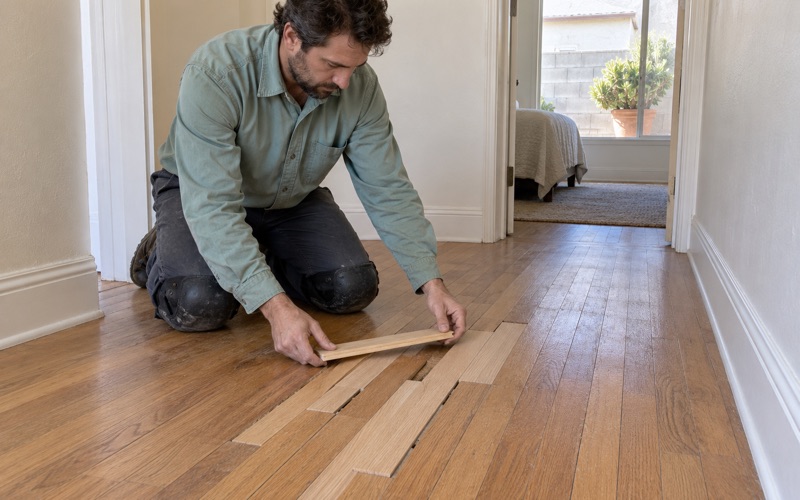
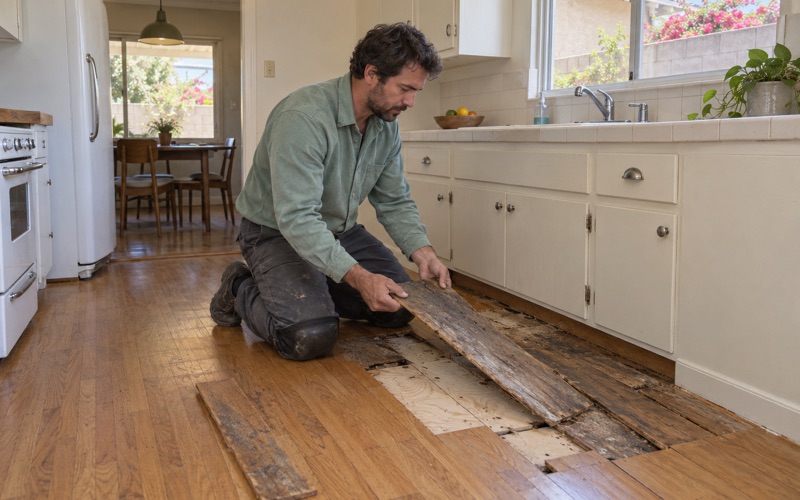
Replacing damaged boards is often still surface work when the framing underneath is healthy. We cut out the stained or split pieces, weave in new boards that match the existing width and species, and blend them in during the sanding pass. Pet urine stains, deep gouges and small areas of cupping from a past leak usually fall into this category once the wood has dried out and the moisture meter agrees.
Signs a Job Is Heading Below the Boards
Some floors tell us early that the trouble runs deeper. Sloping floors, a bounce underfoot near a bathroom or laundry area, squeaks that return after refastening, buckling that tracks along one wall, or decking that crumbles when a board comes up are all signals that the subfloor or framing needs attention. When we see those, we stop and look before quoting a finish price.
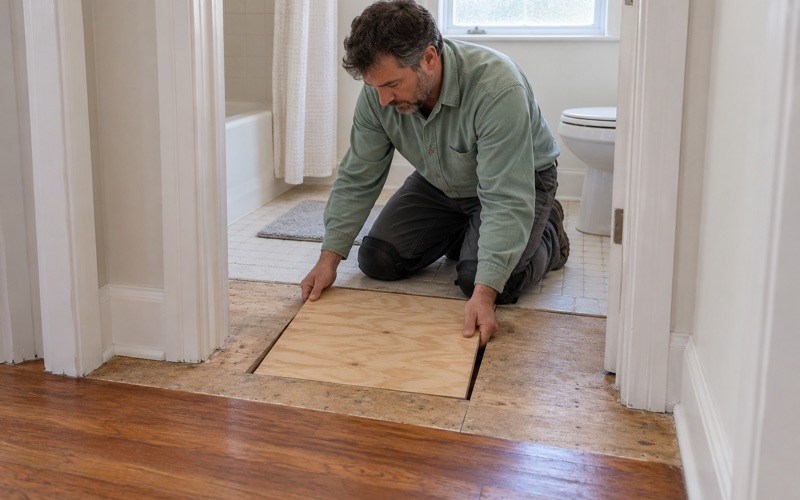
Opening the floor at that point is a deliberate choice rather than an extra charge hunted for after the fact. We photograph what we find, record moisture content in the decking and nearby boards, and explain to the owner which parts of the job are finish work and which parts are not. A finish floor laid over a failing substrate tends to come back as a callback within a season or two.
Water Damage and the Paper Trail
When water is the cause, we trace it to its source before we talk about wood. We document readings and photos in a way an insurance adjuster can follow, so the claim and the repair describe the same thing. That record also helps a landlord, since California deposit law expects itemized repair costs, and our written estimates and invoices are set up to serve that purpose.
Floor Supports, Joists and Concealed Pipes
The two areas where a floor job most often reaches past finish work are the supports underneath it and the pipes running through it. Torrance’s own documents touch on both, and we treat those passages as guidance on where to slow down.
What the City Says About Floor Supports
The city’s Substandard Housing Inspection Checklist, which restates Health and Safety Code 17920.3, lists “Adequate flooring or floor supports are provided” among its structural hazard items. It also asks whether flooring or floor supports are of sufficient size to carry imposed loads with safety. That is the standard we hold a floor to before any new wood goes down.
In practice that means checking joists for rot, termite frass, kick-out holes and past cuts made by other trades. Where a joist is weak, sistering a new member alongside it is a common repair, but it is framing work and we treat it as such in the estimate. We would rather flag it plainly than hide it inside a square-foot number.
Concealed Plumbing Under the Floor
The same February 2026 handout has a plumbing section, and its first item addresses concealed pipes. If a concealed trap, drain, water, soil, waste or vent pipe becomes defective and has to be removed and replaced, the handout states that “such work shall be considered as new work and a permit shall be obtained.” That line comes straight from the city’s own document.
For a flooring crew, the practical meaning is simple. If we lift boards near a kitchen or bath and find a leaking or corroded pipe, that pipe is not ours to replace, and the floor waits until the plumbing is sorted out by the right trade. We dry the area, log moisture readings, and pick the job back up once the source is fixed.
Seismic Retrofit Is a Separate Track
Torrance approved Ordinance No. 3916 on March 14, 2023, which mandates seismic retrofit for soft-story wood buildings and several other vulnerable building types. That program is structural work under its own rules. If a building we are working in falls under it, we coordinate around the retrofit schedule rather than try to fold the two efforts together.
Scheduling Sanding and Refinishing in Older Torrance Houses
A floor schedule in Torrance has two inputs we plan around from the first visit: the age of the house and the city’s published construction hours. Both change how long a job takes and when a family can walk back into a room.
Construction Hours and Noise
Torrance Municipal Code 46.3.1, as amended by O-3712, sets construction hours for residential areas at 7:30 a.m. to 6:00 p.m. Monday through Friday and 9:00 a.m. to 5:00 p.m. on Saturday, with no construction work on Sundays or holidays. Residents working on their own home are held to 10:00 a.m. to 4:00 p.m. The city ties those limits to construction noise heard beyond the property line.
We plan our loud days, the drum sander and edger passes, inside those windows as a matter of courtesy and good sense. Whether the ordinance reaches a given interior task is a question for the city, not one we answer on its behalf, but staying inside the published hours keeps neighbors on side. Quiet steps like finish coats and cure time fill in around them.
A Housing Stock Built Between 1950 and 1969
Torrance was founded in 1912 and incorporated in 1921, but most of its houses came much later. Of the city’s 59,284 housing units, 59.6 percent were built between 1950 and 1969, and 82.8 percent of owner households live in detached houses. That is a large pool of mid-century homes, many now on their second or third floor covering.
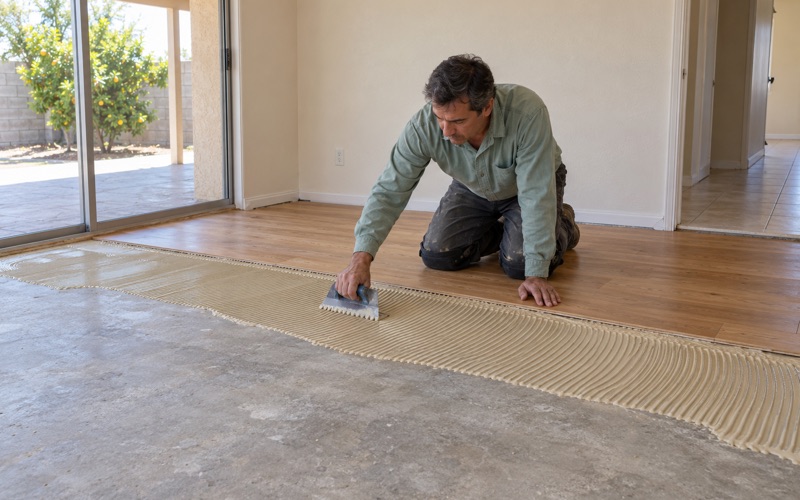
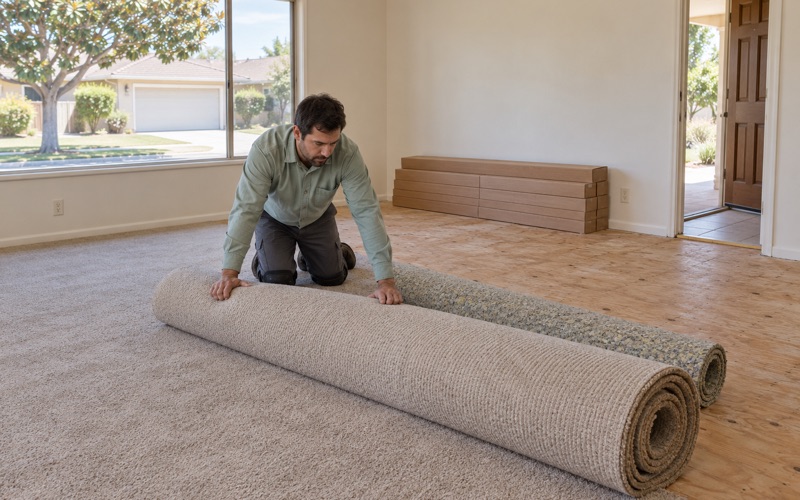
Pulling carpet in houses of that age can turn up wood, old tile, or adhesive, and we do not assume which until we look. Old 9x9 tile and black mastic are treated as a possible asbestos question before anything is sanded or scraped. On any pre-1978 house we follow lead-safe work practices under the EPA Renovation, Repair and Painting rule.
Finishes, Dust and a Written Cure Schedule
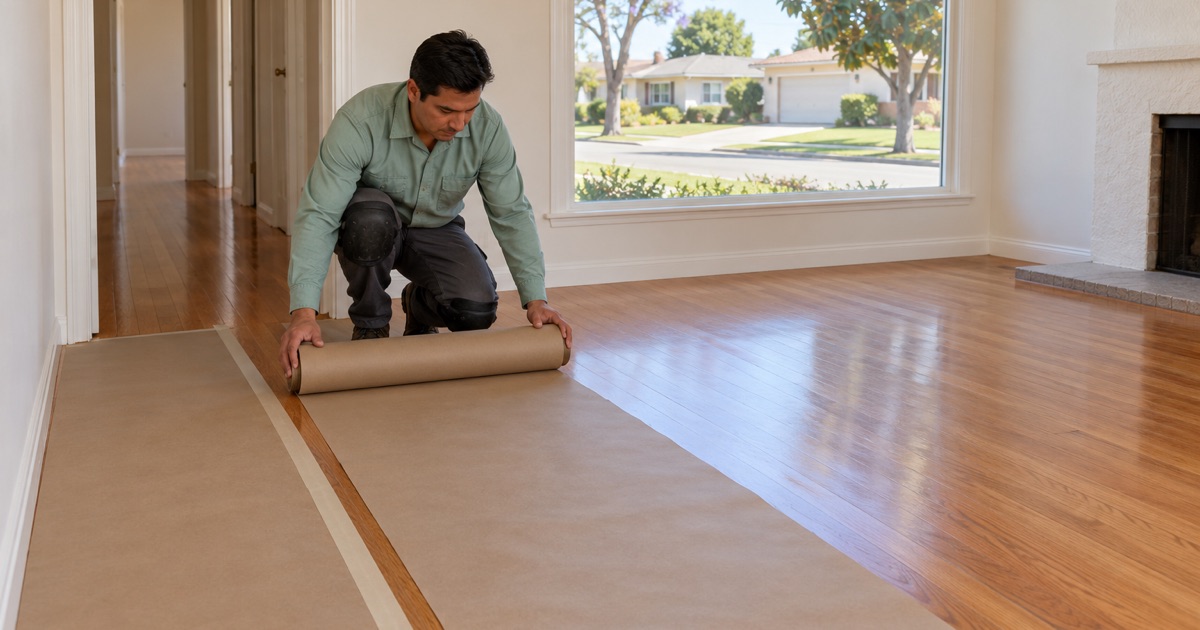
Every finish we apply is chosen from products legal in the South Coast air basin, which sets a 275 g/L VOC limit for wood coatings under SCAQMD Rule 1113. We seal off the work area to hold dust in, and we leave a written cure schedule so an occupied household knows exactly when each room can take foot traffic and furniture again.
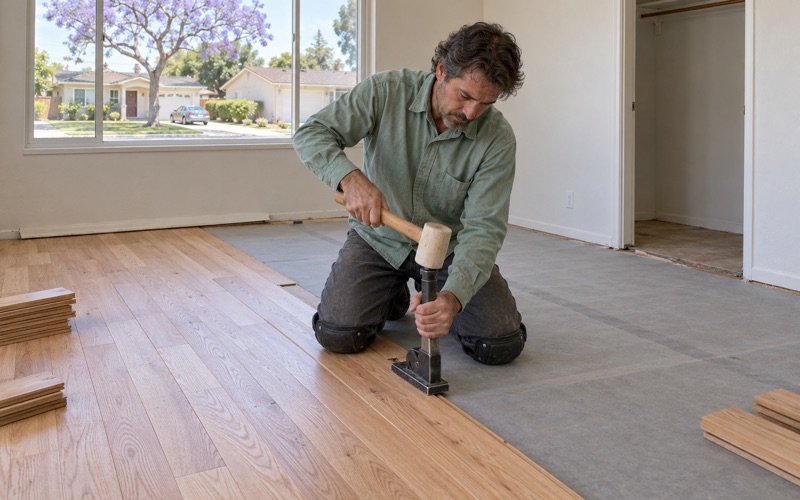
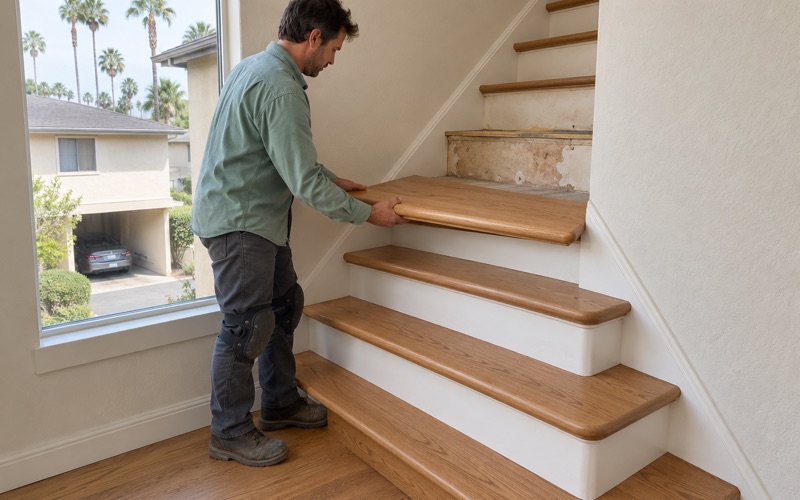
New material is brought into the rooms where it will be installed and left to acclimate. We log its moisture content on arrival and again right before installation, so the numbers are on paper if anyone asks later. Stairs are priced per tread and riser, which keeps a staircase from being buried in a flat room rate.
- 20+ Years on Wood Floors
- Moisture Readings in Writing
- Air-Basin-Compliant Finishes