Carson Wood Flooring brings more than 20 years of work to wood-flooring in Watts, and a good share of it happens in small houses that are older than the neighborhood’s place inside Los Angeles. We refinish, repair and install hardwood and engineered floors, and every job starts with a look at what the house already has before anyone talks about price.
That order matters in an older home. We open and check the subfloor before a finish floor is priced, take moisture readings in the boards and write them down, and tell you plainly whether sanding, a patch or a new floor makes the most sense for the rooms you live in.
Most of the calls we get from this part of South Los Angeles come from owners of detached houses who want the floor to last another few decades. Below we explain what the age of these homes changes about the work, how we choose between refinishing and replacement, and how we stage jobs near the neighborhood’s best-known landmarks.
A City Before It Was a Neighborhood
The houses on many Watts blocks were built for a town that governed itself. Understanding that history explains why so many of the homes are small, old and still standing, and why nothing official protects their floors.
Cityhood From 1907 to 1926
Records most often date Watts cityhood to May 1907, and it remained an independent city until it annexed to Los Angeles effective June 1, 1926. The original subdivision was platted between 1903 and 1905, with lots selling for $100 to $200, and many of the modest houses that went up on those lots are still in use.
Today the neighborhood sits in the City of Los Angeles and Los Angeles County, inside the Southeast Los Angeles Community Plan Area, with its own Watts Neighborhood Council. For an owner planning floor work, the practical point is simple: the house may be older than the city it now belongs to.
The Unrecognized Historic Zone
A federal landscape survey, the Historic American Landscapes Survey record for the Watts Cultural Crescent (HALS CA-160), calls the park there the geographical center of historic Watts. It notes that 103rd Street was formerly known as Main Street during Watts cityhood and lies within “the heart of the unrecognized historic zone of Watts.”
The word unrecognized fits the houses too. Our research found no HPOZ or designated historic district over the residential streets here, so no preservation board reviews what floor goes into a prewar bungalow. The owner makes those calls, which is a freedom and also a responsibility, because nobody else is checking whether an old floor gets saved or hauled away.
How Old the Housing Is
The Census does not publish housing figures for Watts as a neighborhood, so the nearest read is ZIP Code 90002, which does not match the neighborhood boundary. In that ZIP, 23.0 percent of homes were built in 1939 or earlier, the largest single year-built category, and another 21.4 percent date from the 1940s, which puts 44.4 percent before 1950.
Ownership in the same ZIP runs to stand-alone houses. Of 5,114 owner households, 4,589 live in detached homes, or 89.7 percent, even though 60.8 percent of all occupied homes there are rented. The floors we refinish for owners are overwhelmingly in single-family houses, many of them from the cityhood years.
Looking for wood-flooring closer to Lakewood? See Wood-Flooring in Lakewood.
Floors in Small Houses From the 1910s and 1920s
A house built before 1930 has usually had a long life under foot. Its floor may have been sanded several times, covered with linoleum or carpet, patched after a remodel and walked on by several families. None of that is a reason to give up on it, but it does change what we look for first.
How Much Wood Is Left
Every full sanding takes wood off the top of a solid board, and there is only so much above the tongue to give. Before we quote a refinish, we check the remaining thickness at a floor register or a threshold where an edge is visible. If the wear layer is thin, a heavy drum sander pass could expose tongues or nail heads, and we would rather tell you that than find it halfway across the living room.
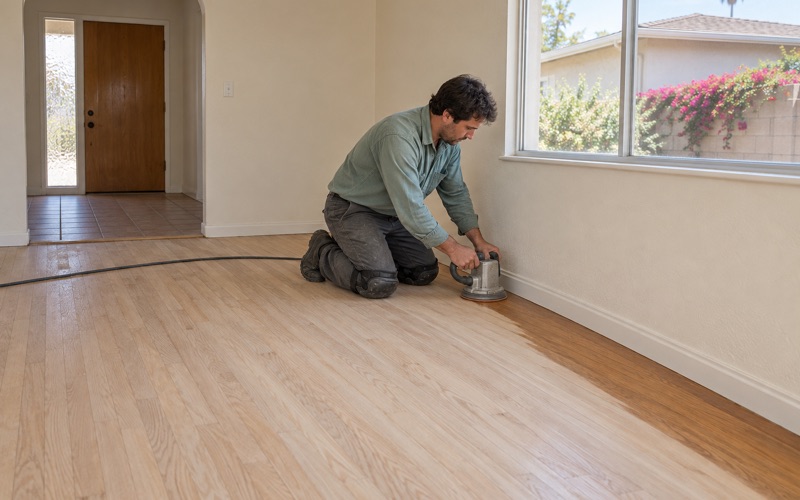
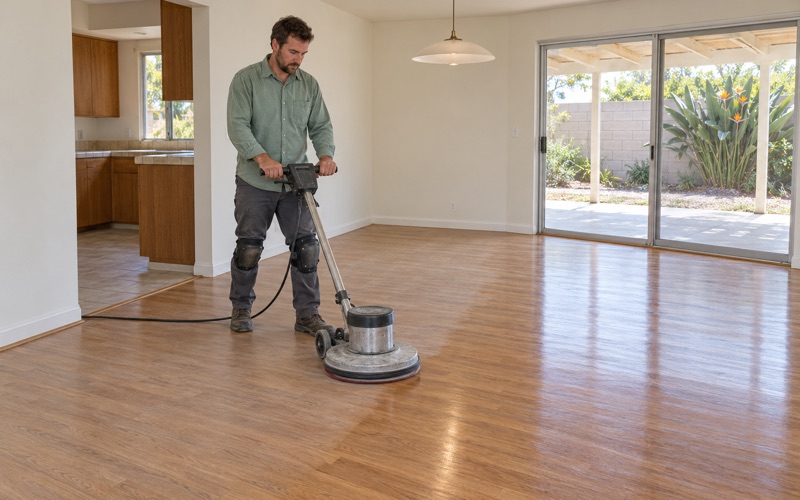
On thinner floors we lean toward a lighter grit sequence with an orbital sander, or a screen and recoat that renews the finish without cutting deep. Where boards still have plenty of wood, a full sand with the drum sander and edger lets us remove blotchy stain, pet urine stains and peeling polyurethane.
Subfloor and Framing in an Old House
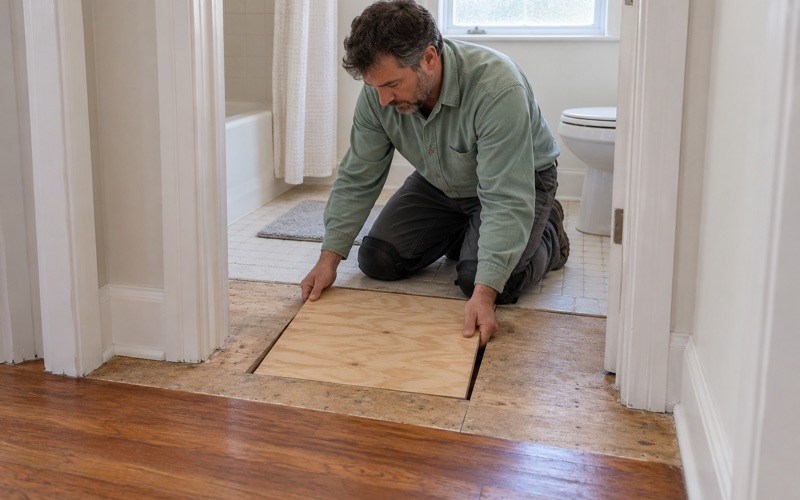
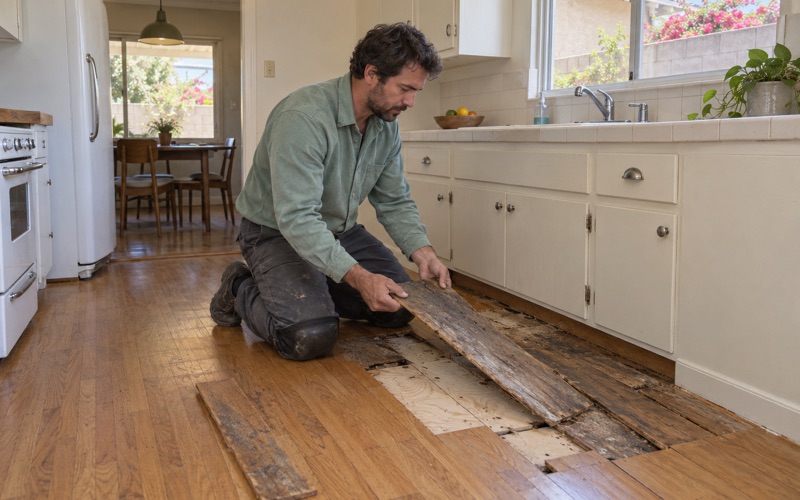
Small prewar houses have had decades to settle. Squeaks, board gaps and sloping floors are common, and they often trace back to the framing rather than the finish floor. We open and inspect the subfloor and floor joists wherever a floor feels soft or bouncy, and we price that fix before we price the finish.
Sometimes a tired joist needs joist sistering, and sometimes a few loose boards just need refastening with cleat nails. Either way, you hear what we found and why before the sanding starts, so a squeak does not come back the month after we leave.
What Might Be Under the Covering
Many older floors have spent years hidden under something newer. Old 9x9 asbestos floor tile and black mastic were common in mid-century remodels, and we treat either one as a possible asbestos question before anything is sanded or scraped. If the material is suspect, an asbestos survey comes first, and SCAQMD Rule 1403 governs how asbestos-containing material is handled in this air basin.
Refinish, Patch or Replace in an Older House
The right answer depends on what is underneath, how much wood is left and how you use the rooms. We walk through the house with you, take readings with a wood moisture meter and give you a written estimate that lays the options side by side.
When Refinishing Makes Sense
If the boards are sound, dry and thick enough to sand, refinishing is usually the best value in a prewar house. It keeps the existing floor and lets you choose a new color and sheen level. We offer waterborne polyurethane, oil-modified polyurethane and hardwax oil finishes, and every product we apply falls under the 275 g/L wood-coating VOC limit set by SCAQMD Rule 1113 for the South Coast air basin.
We set up dust containment and hand you a written cure schedule, so you know which rooms can be walked on in socks, which can take furniture and when rugs can go back down. In a small house where a family is still living, that schedule is often the detail owners care about most.
Patching Damaged Boards
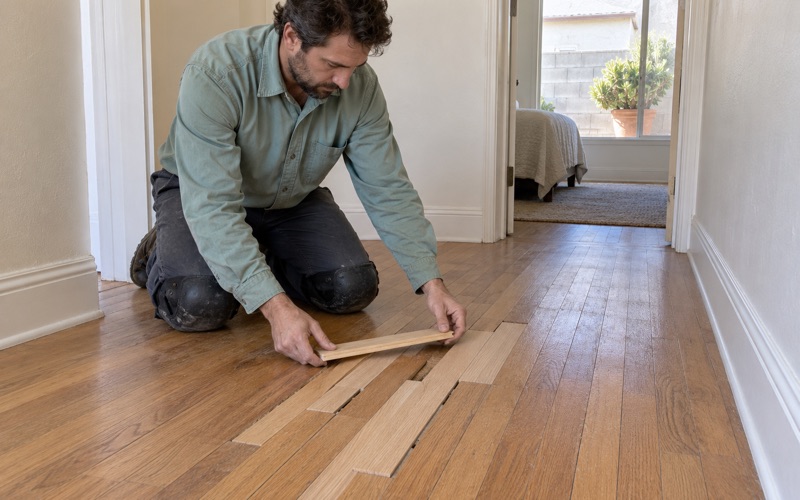
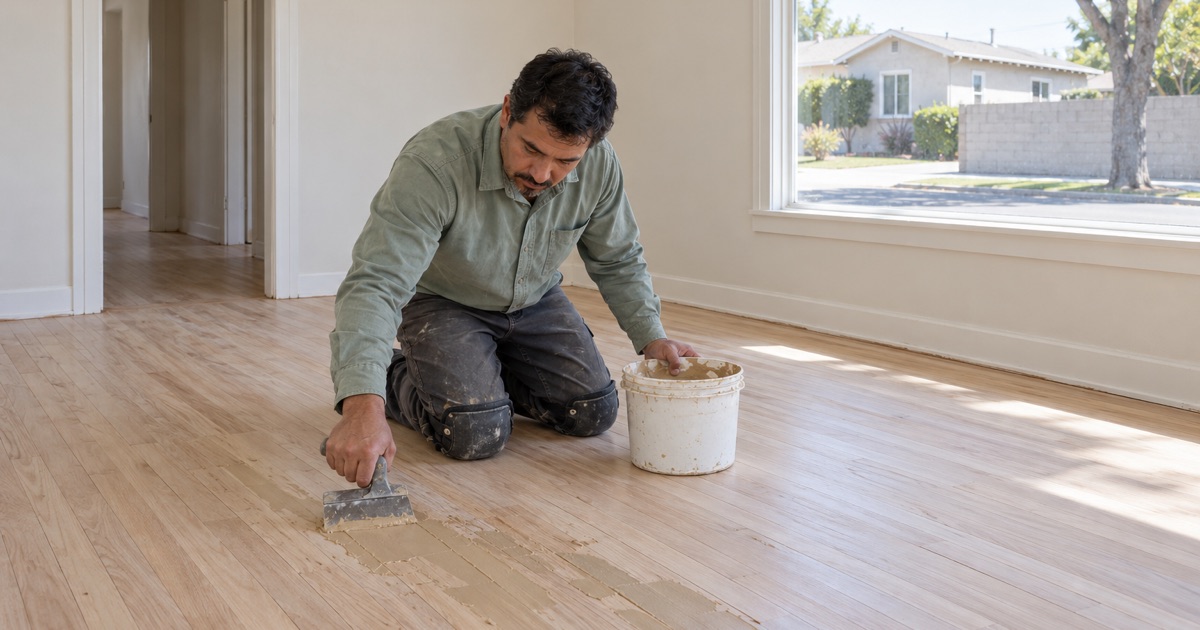
Burned, split or badly stained boards can usually be cut out and replaced with a weave-in repair, staggering the new pieces into the old so the seam does not read as a straight line. Matching an old floor takes some searching, and we say so when an exact match is not possible and a whole-room refinish will blend the repair better.
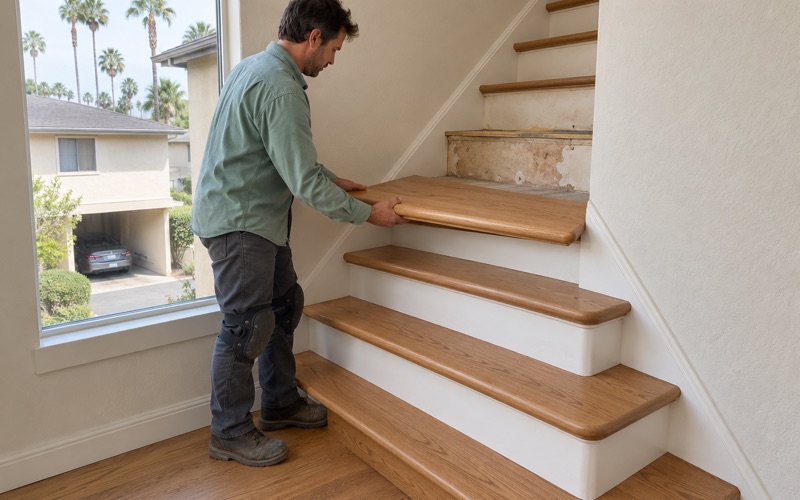
Stairs get their own pricing per tread and riser, nosing included, rather than being folded into a square-foot number. That keeps the estimate readable when a two-room refinish also covers a short run of steps up to a back porch or an addition.
When a New Floor Is the Better Call
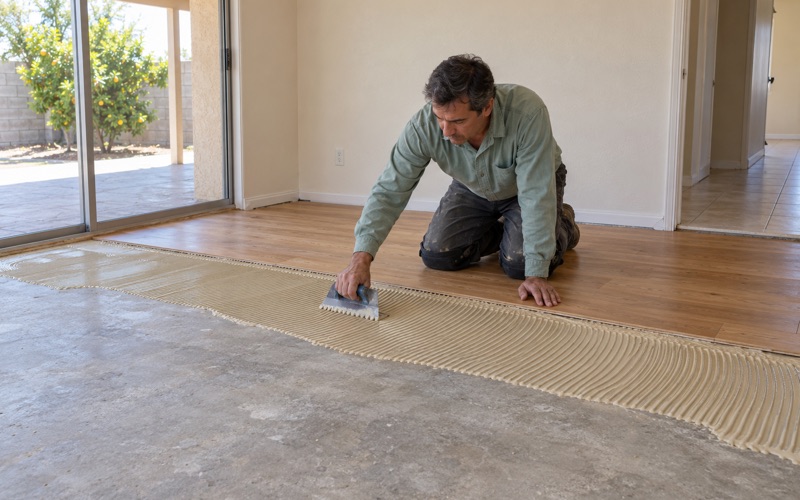
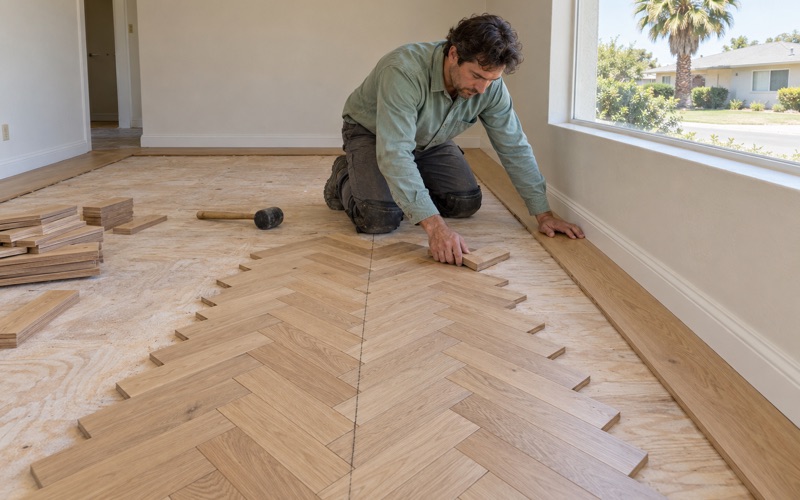
If the old floor has been sanded too thin, or a previous owner laid it over damaged framing, a new floor may be the sensible choice. Solid white oak, red oak, hickory and maple all suit these houses, and we explain the Janka hardness rating so you can weigh durability against cost. Engineered flooring with a generous wear layer is another option where height at doorways is a concern.
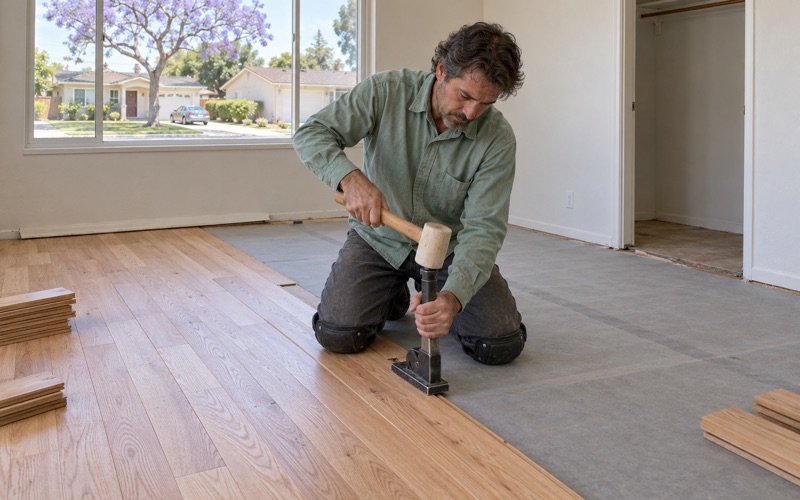
New material is delivered and acclimated in the rooms where it will be installed, with moisture content logged on arrival and again before installation. We follow NWFA installation guidelines for fastening schedules and the expansion gap at walls, then finish with shoe molding, a reducer strip or T-molding where the new floor meets another surface.
Working Near Watts Station and the Towers
Some of the homes we work on sit near the old Main Street along 103rd Street. That brings the neighborhood’s two best-known landmarks into view on certain jobs, and it shapes a few practical things about how we schedule and protect the work.
Around the Landmarks
The historic Watts Station on 103rd Street is a single-story building built in 1904. It is Los Angeles Historic-Cultural Monument No. 36 and was added to the National Register of Historic Places on March 15, 1974. Not far away, the Watts Towers of Simon Rodia, built over roughly 30 years beginning in 1921, were designated a National Historic Landmark on December 14, 1990.
Those designations cover the landmarks themselves, not the houses around them. Our work on nearby homes is ordinary residential flooring, but we plan parking, material deliveries and equipment staging so neighbors and visitors are not boxed in on busy days.
Lead-Safe Practices in Old Houses
Age cuts both ways in a prewar house. In ZIP 90002, 75.5 percent of homes predate 1980, and any home built before 1978 can carry lead paint on baseboards, door casings and shoe molding. We follow EPA Renovation, Repair and Painting rule work practices on pre-1978 housing, containing the work area and cleaning up thoroughly before we hand the rooms back.
This matters most when we pull trim to sand to the wall or replace old boards along the edges. Keeping dust inside the work zone protects the people living in the house as well as our crew.
Air and Weather Notes
Watts sits in the National Weather Service’s Los Angeles County Inland Coast forecast zone and in the South Coast Air Quality Management District. For floors, that mainly means we choose finishes legal in this basin and time each coat around the season, since humidity affects how quickly a coat dries and when the next one can go on. Tell us how you use the rooms, and we will build the schedule around your household.
- 20+ Years on Wood Floors
- Moisture Readings in Writing
- Air-Basin-Compliant Finishes