Carson Wood Flooring handles wood-flooring in Willowbrook for landlords and for the families who rent from them, drawing on more than 20 years of sanding, repairing and laying hardwood in this part of Los Angeles County. Much of that work happens in the short window between one lease ending and the next beginning. A floor that can be patched, screened or resanded on that schedule is worth far more to an owner than one that has to be torn out every few years.
Our approach starts under the surface. We open and check the subfloor before pricing any finish floor, take moisture readings in the wood and in any concrete before ordering material, and write those readings down. Owners and tenants both get the same benefit from that habit: fewer surprises once the work is done.
This page is written for the rented single-family house. It covers what gets done to floors between tenants, when repair beats replacement, what a renter can reasonably raise with a landlord, and how to fit the work into a move-out.
Most Willowbrook Households Rent, and Most Renters Live in a House
Census figures explain the focus. Of 5,914 occupied housing units in Willowbrook, 3,384, or 57.2 percent, are renter-occupied, according to the ACS 2024 five-year estimates. Of those renter households, 1,818, or 53.7 percent, live in one-unit houses rather than apartments, and 1,414 of them rent a detached house.
That means a large share of the floors we see here belong to one person and are walked on by another. The owner decides the material and the budget, while the tenant lives with the result every day. A floor chosen with both people in mind tends to last longer and cost less across several leases.
Tenancies here also tend to run long. Of the renter households counted by the same survey, 1,818 moved in between 2010 and 2017, and only 231 have moved in since 2021. A floor in a rented house may carry one family’s furniture, chairs and foot traffic for close to a decade before anyone looks at it closely, which is why the turnover inspection matters so much.
Older Houses Under the Floors
The housing stock is old. Of 6,143 housing units, 68.0 percent were built before 1980, and 41.4 percent predate 1960. Subdivision in Willowbrook began in the 1890s, so the range runs from prewar cottages to postwar tract homes, each carrying its own history of patches and coverings.
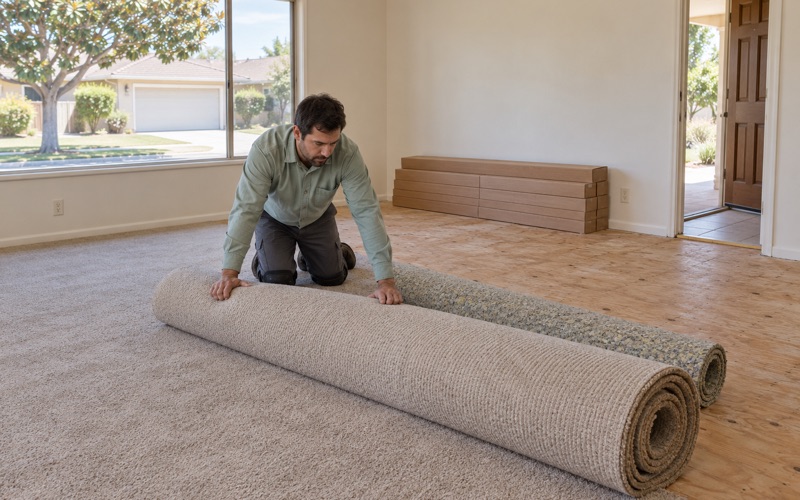
That age changes how we work. Houses built before 1978 fall under the EPA Renovation, Repair and Painting rule, so we use lead-safe practices whenever sanding or removal disturbs painted trim and baseboards. Old 9x9 tile or black mastic found under carpet is treated as a possible asbestos question, and nothing gets scraped or sanded until that question has an answer. Where an asbestos survey is needed, it comes before demolition, and the removal schedule is built into the turnover plan.
Unincorporated County Territory
Willowbrook is an unincorporated community, so there is no city hall to call. The Los Angeles County Board of Supervisors governs it, it sits in Supervisorial District 2, and building questions go to the County’s Southwest Building and Safety Office on Imperial Highway. Whether a particular floor job needs a permit depends on its scope, and we sort that out with the owner before work starts rather than assuming.
Looking for wood-flooring closer to Alondra Park? See Wood-Flooring in Alondra Park.
Between Tenants: Repair, Refinish or Replace
Turnover is when most rental floor work happens. The rooms are empty, the furniture is gone, and every scratch, gap and stain that a rug used to hide is visible at once. We walk the house with the owner, board by board where it matters, and sort what we find into three kinds of work.
Board Replacement and Weave-In Repair
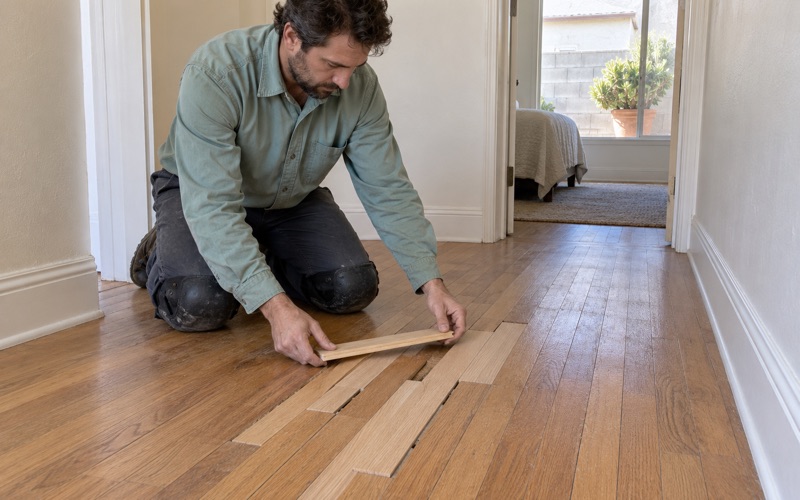
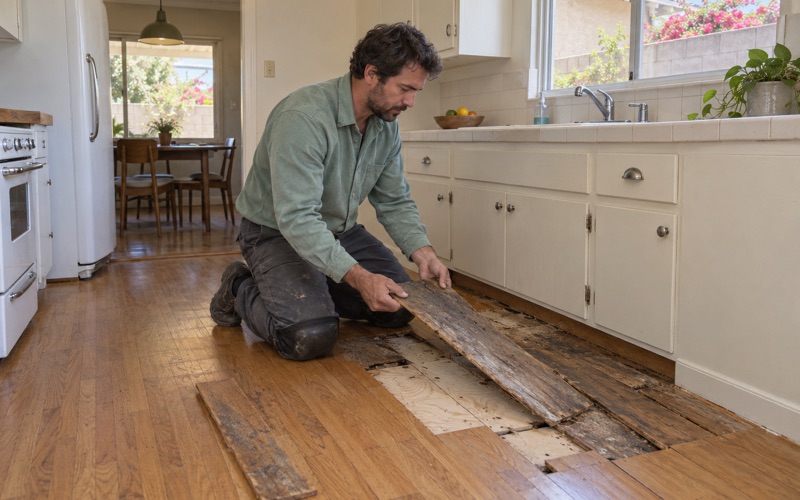
A few damaged boards rarely justify a new floor. On solid hardwood we cut out the bad pieces and weave in replacements so the joints stagger like the original layout, then blend the finish. This is the cheapest way to take a dent, a burn or a water-stained patch out of the picture, and it keeps the rest of the floor in service.
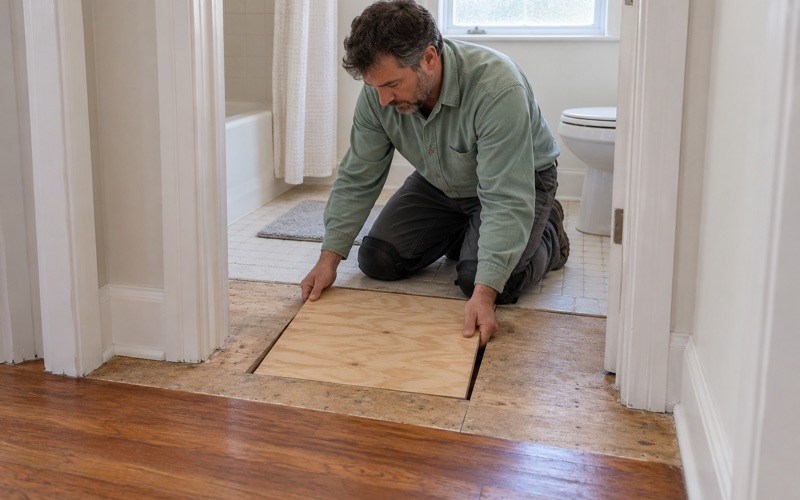
Squeaks, small board gaps and a patch of cupping near a kitchen sink often point to something below. We check the decking and joists from whatever access the house allows, and we trace any water damage to its source before the repair goes in. A board replaced over a slow leak is a board replaced twice.
Screen and Recoat Versus a Full Sand
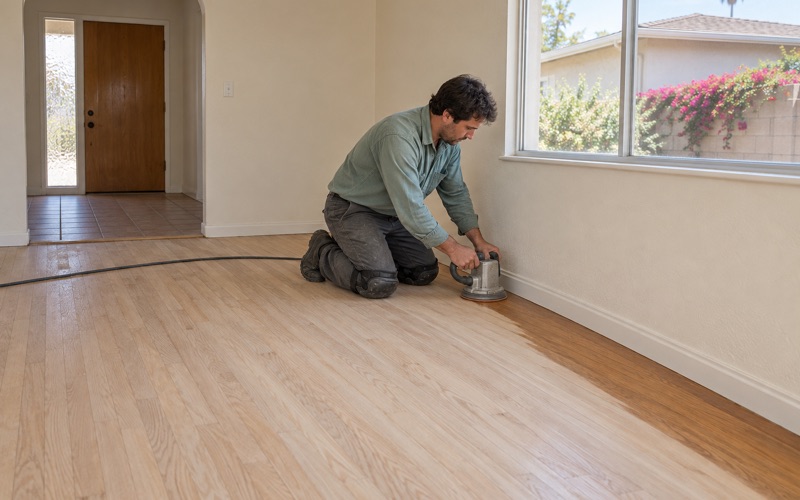
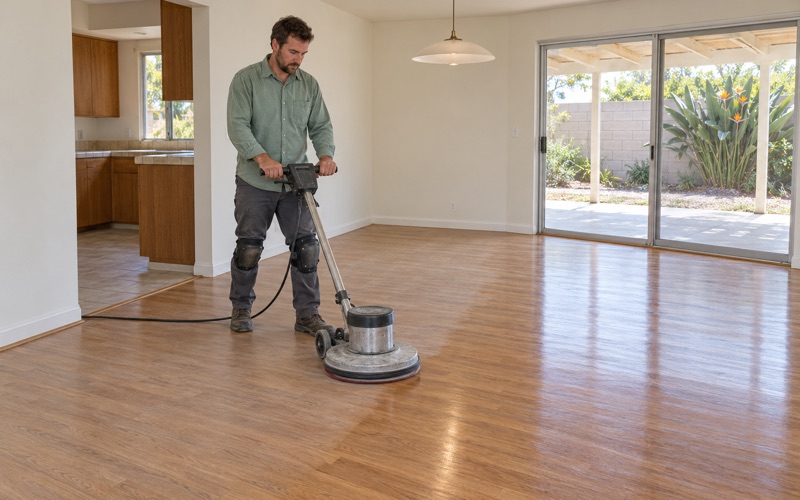
If the wear is only in the finish, a screen and recoat is the fastest fix between tenants. We abrade the existing coat with a buffer and apply fresh polyurethane, which restores the sheen without cutting into the wood. When gray traffic lanes have worn through to bare wood, or the finish is peeling, the floor needs a full sand with a drum sander, an edger and a proper grit sequence.
Every finish we apply is chosen from products legal in the South Coast Air Quality Management District, which holds wood coatings to 275 grams per liter of VOCs under Rule 1113. For rentals we usually recommend a waterborne polyurethane. It cures quickly, keeps its color, and is simple to recoat at the next turnover.
When Replacement Makes Sense
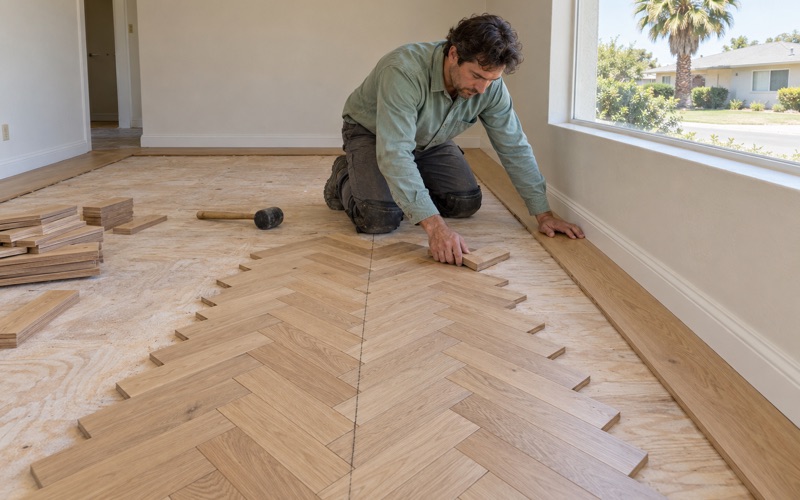
Replacement is the right call when the wear layer is gone, the floor has been sanded too many times, or water has swollen the decking underneath. In those cases we look for a material that will survive several tenancies: a harder species with a strong Janka hardness rating, or an engineered floor with a thick wear layer that can be sanded again later. Thin wear layers save money today and remove the option of a future refinish.
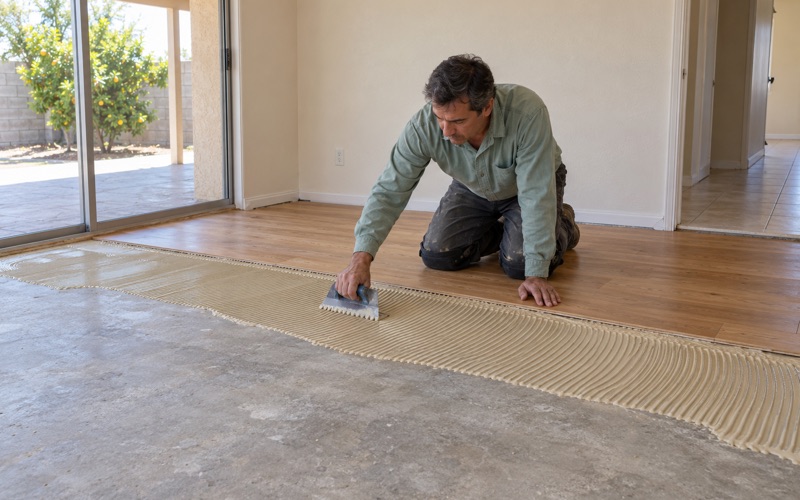
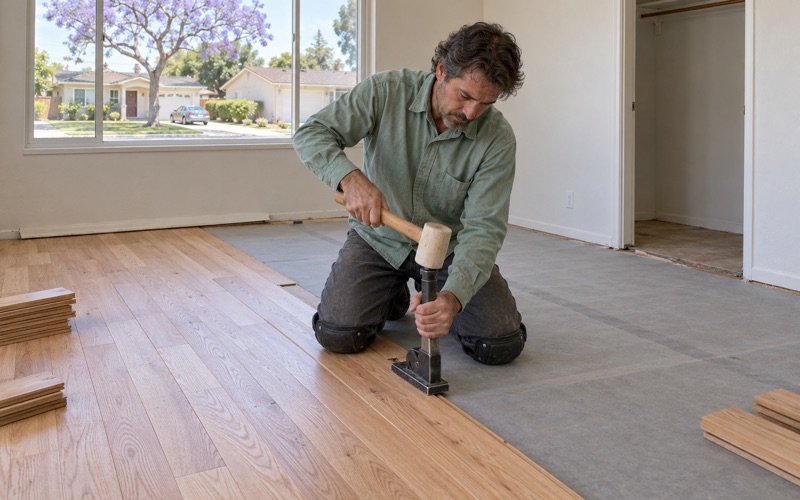
Repairability should shape the choice as much as price. A nail-down solid floor lets us pull and replace individual boards years later, and a glue-down engineered floor with a real wear layer can be screened and recoated between leases. A floating floor goes down fast, but a damaged plank in the middle of a room often means lifting everything between it and the nearest wall, which is a poor trade in a house that turns over every few years.
When the Tenant Asks About the Floors
Tenants call us too, usually because they want to know whether something they are seeing is normal. We can tell a renter what a problem is and what fixing it would involve. We do not tell anyone who is responsible for paying, because that turns on the lease and the law rather than on the condition of the wood.
Describing the Problem Clearly
The most useful thing a tenant can bring to a landlord is a clear description. A cupped board, a soft spot that gives underfoot, a gap that keeps widening or a finish lifting in sheets each point to a different cause. We can inspect, take moisture readings with a wood moisture meter and put the findings in writing, which gives both sides the same facts to discuss.
A soft spot deserves prompt attention in any house. It can mean water-swollen decking or a failing joist, and those problems grow when they are left alone. Reporting it early usually means a smaller and less disruptive repair.
Work While the House Is Occupied
Sometimes an owner agrees to fix a floor while the tenant is still living there. That is possible, but it takes planning: furniture has to move room by room, the family needs a path to the kitchen and bathroom, and finish coats have to cure before anyone walks on them. We set the room order with both parties, seal off the work area, and give the tenant the same written schedule the owner gets.
County Help for Renters and Owners
Renters and owners in Willowbrook have access to county services when a disagreement goes beyond the floor itself. In fiscal year 2023-24 the County recorded $2.71 million in rent relief grants and 3,846 free legal assistance cases in Willowbrook. The Department of Consumer and Business Affairs administers the county’s Rent Stabilization and Tenant Protections Ordinance and runs the Rent Registry for rental properties in unincorporated areas.
Whether a given rented house falls under that ordinance is a question for the Department of Consumer and Business Affairs, not for a flooring contractor. Our part is the documentation: dated readings, photos and a written scope that an owner or a tenant can bring to that conversation.
Scheduling Floor Work Around a Move-Out
The best time to fix a rental floor is the gap between the last box leaving and the next lease starting. That window is often short, so we plan the job before the keys come back. An owner who calls when notice is given, rather than after the house is empty, usually gets the floor finished without losing a month of rent.
Planning the Sequence
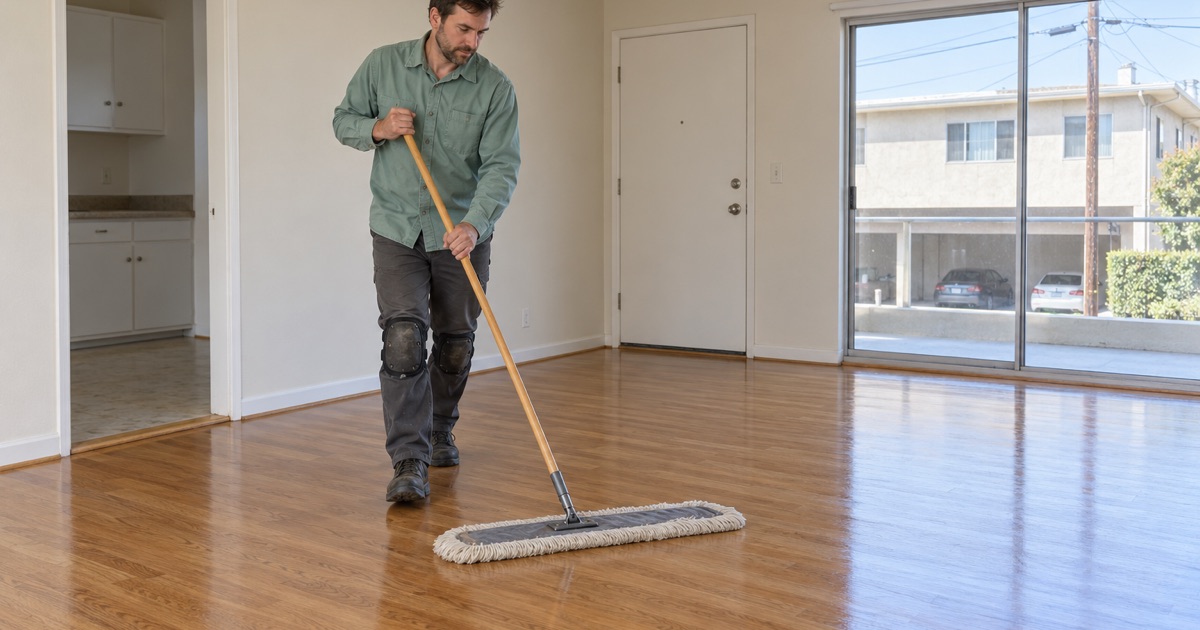
A typical turnover follows a fixed order. We inspect and measure first, then deliver material early so it can acclimate in the rooms where it will be installed, logging its moisture content on arrival and again before installation. Repairs and subfloor work come next, then sanding or installation, then finish coats, with painting and cleaning arranged around the cure.
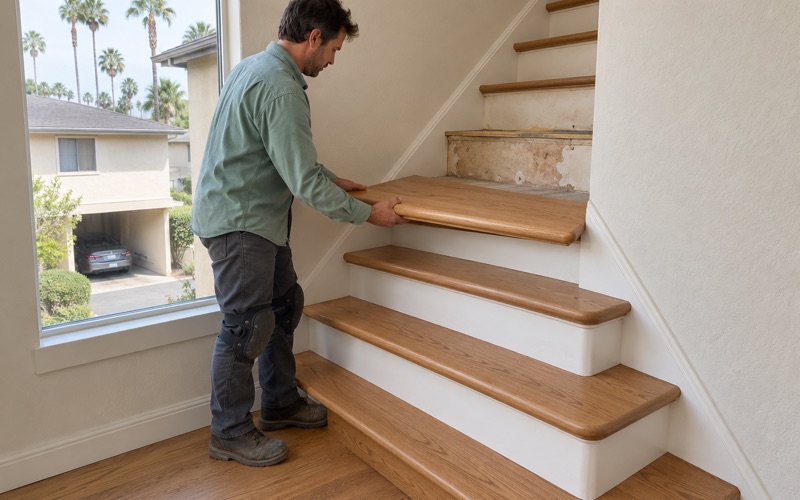
Stairs are quoted per tread and riser, so an owner sees the true cost of a staircase rather than a figure buried inside a square-foot price. Transitions such as reducer strips and T-moldings between rooms are listed on the estimate as separate lines.
When a tenancy ends with a leak behind it, the schedule changes. Wet decking has to dry, and we take readings until the wood and subfloor are back in range before any new boards or finish go down. We photograph and record those readings along the way, so an owner filing an insurance claim has something an adjuster can use.
Cure Time Before Move-In
Finish needs time before furniture comes back. We leave a written cure schedule that states when each room can take foot traffic, when furniture can return and when rugs can go down. That schedule lets an owner give the incoming tenant a realistic move-in date.
Dust is kept down with containment and a dustless sanding system. That matters when part of the house stays occupied during the job, or when a neighbor shares a wall in an attached unit.
Paperwork an Owner Can Keep
Each job ends with a written estimate and invoice that itemize the work room by room. Owners use those records to track what was done to a house over several tenancies and to plan when the next refinish will be due. For a floor meant to last through many leases, that history is nearly as useful as the finish itself.
- 20+ Years on Wood Floors
- Moisture Readings in Writing
- Air-Basin-Compliant Finishes